Written by:


- Opening Bell
- July 28, 2026
- 7 min read
Big Earnings Week: META, AMZN and MSFT in Spotlight
If you were left wondering why markets stumbled after Alphabet’s strong results last week, the answer sits in the capex line. Spending is still climbing, and investors are becoming far less patient about waiting for the return.
That sounds harsh because Alphabet’s quarter was excellent. Cloud demand surged and Gemini kept adding users, yet the shares fell because the bill grew even faster.
This helps narrow down what investors are actually worried about. AI hardware demand is already visible, and consumers are clearly using the products. The missing proof sits between those two points: can AI software and cloud services produce enough revenue to make the infrastructure buildout worthwhile?
Alphabet’s quarter should have worked
Alphabet gave the market plenty to like. Revenue beat expectations, Google Cloud had its strongest growth on record and the cloud backlog expanded sharply. Gemini usage also kept moving higher.
Then came the part investors could not ignore. Alphabet raised its annual capex guidance again, while quarterly spending moved above operating cash flow. Free cash flow turned negative.
The reaction was less about whether people want AI and more about who will make money from it. Alphabet showed that strong usage can live alongside a worsening cash-flow picture. That is why a normal earnings beat may no longer be enough.
| Alphabet Q2 metric | Expected / prior guide | Actual / current guide | Difference |
| Total revenue | $116.9B | $119.8B | +$2.9B |
| Google Cloud revenue | $20.0B | $24.8B | +$4.8B |
| Quarterly capex | $45.1B | $44.9B | -$0.2B |
| 2026 capex guidance | $180B-$190B | $195B-$205B | +$15B midpoint |
So what could calm investors down?
Microsoft and Amazon sit directly in the part of the AI market now under suspicion.
They sell cloud capacity and AI software to businesses. If Azure from Microsoft, and AWS from Amazon keep growing while margins hold, investors would have firmer evidence that companies are paying for the new capacity.
Meta offers a different answer. It is already using AI inside an established advertising business, so stronger engagement or ad pricing would show how the technology can lift revenue without being sold as a separate product.
Apple actually matters less in this AI equation. Its results can show whether consumers are still willing to spend on premium devices, but its AI strategy is far less capital-intensive than those of Microsoft, Meta and Amazon.
That makes Apple a useful consumer-demand indicator, rather than a test of whether heavy AI spending is producing returns. Still, given its size, a positive Apple result could move the Nasdaq and spill over into other technology stocks.
The Fed decides how patient investors can be
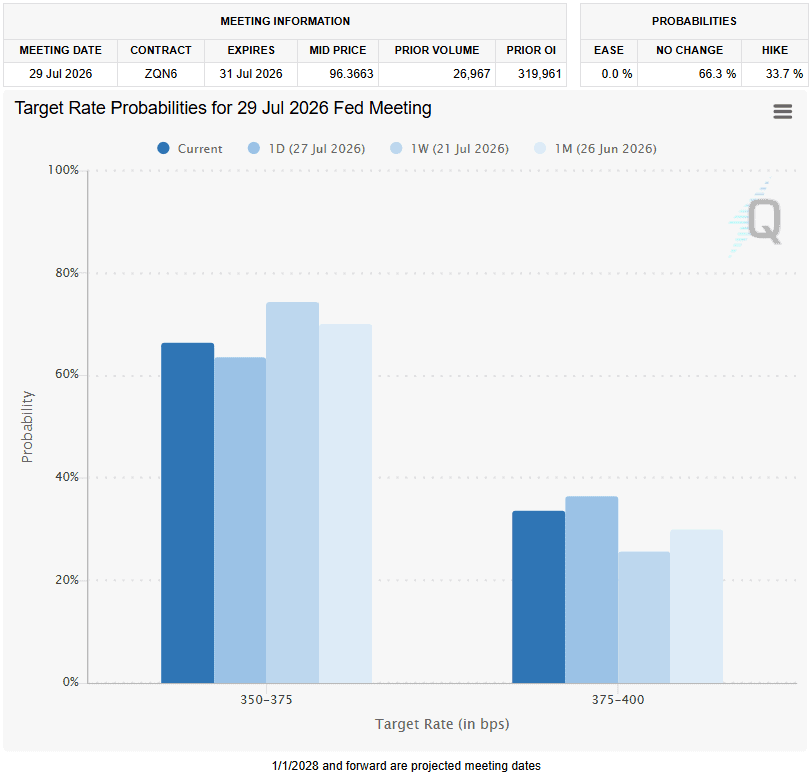
Wednesday’s Fed decision is due at 2:00 pm ET, followed by Chair Kevin Warsh’s press conference at 2:30 pm.
June’s CPI report cooled some of the inflation concerns, but traders have not completely ruled out a rate hike. For now, a hold remains the majority view in the latest CME FedWatch snapshot.
A surprise hike would put further pressure on technology valuations, leaving Microsoft, Meta and Amazon with an even higher hurdle to clear in their earnings calls.
That brings us to this week’s earnings.
Microsoft, Meta and Amazon are all producing enormous amounts of revenue, but they are also committing extraordinary sums to new infrastructure. The question for investors is whether revenue can grow quickly enough to justify that capex.
Microsoft: Is enterprise AI becoming real revenue?
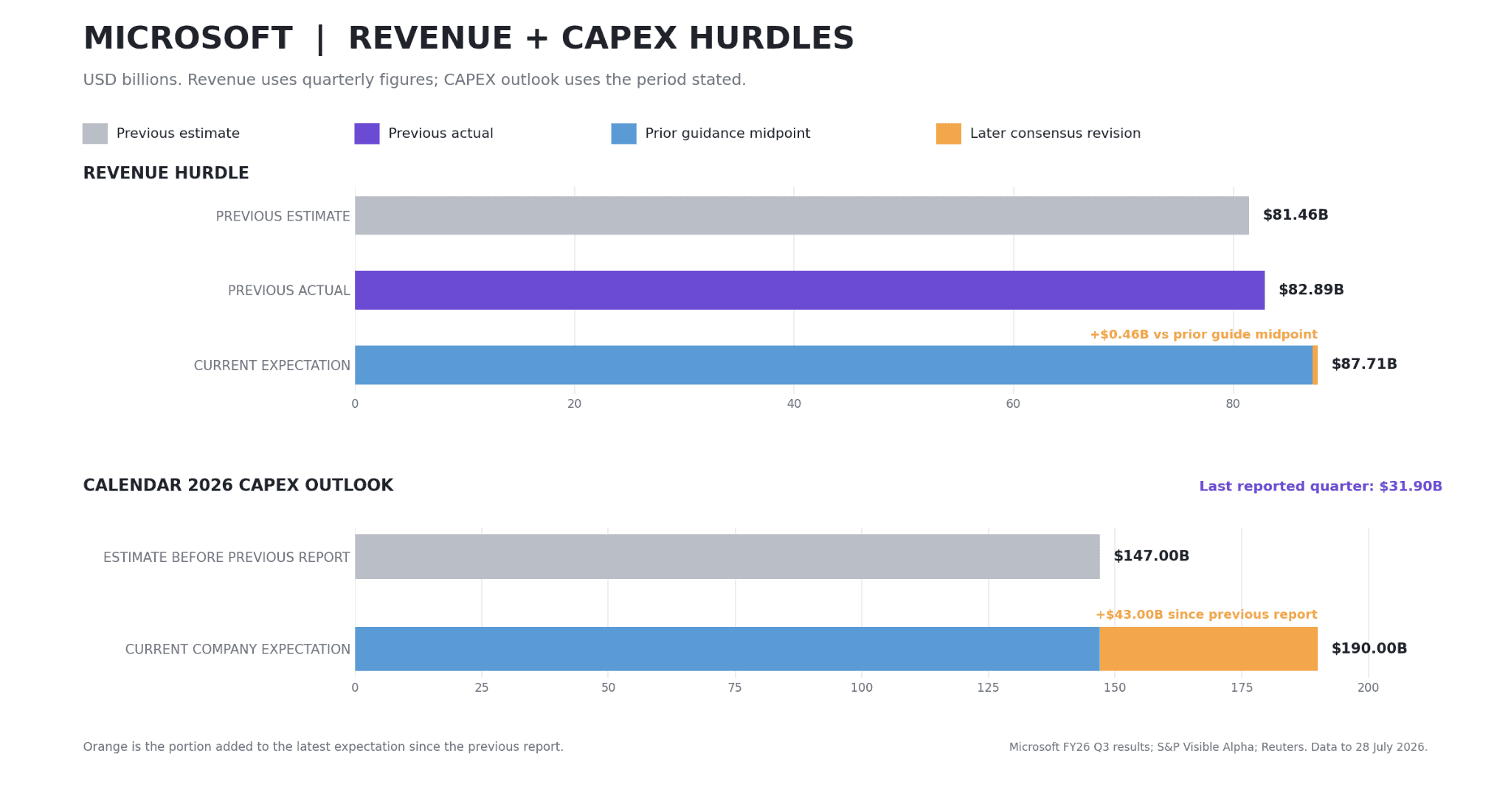
Microsoft may be the cleanest test because Azure and its enterprise software businesses sit directly where companies are supposed to be paying for AI.
Strong Azure growth would therefore matter more than another headline earnings beat. Investors want evidence that Microsoft’s infrastructure spending is translating into larger commercial workloads.
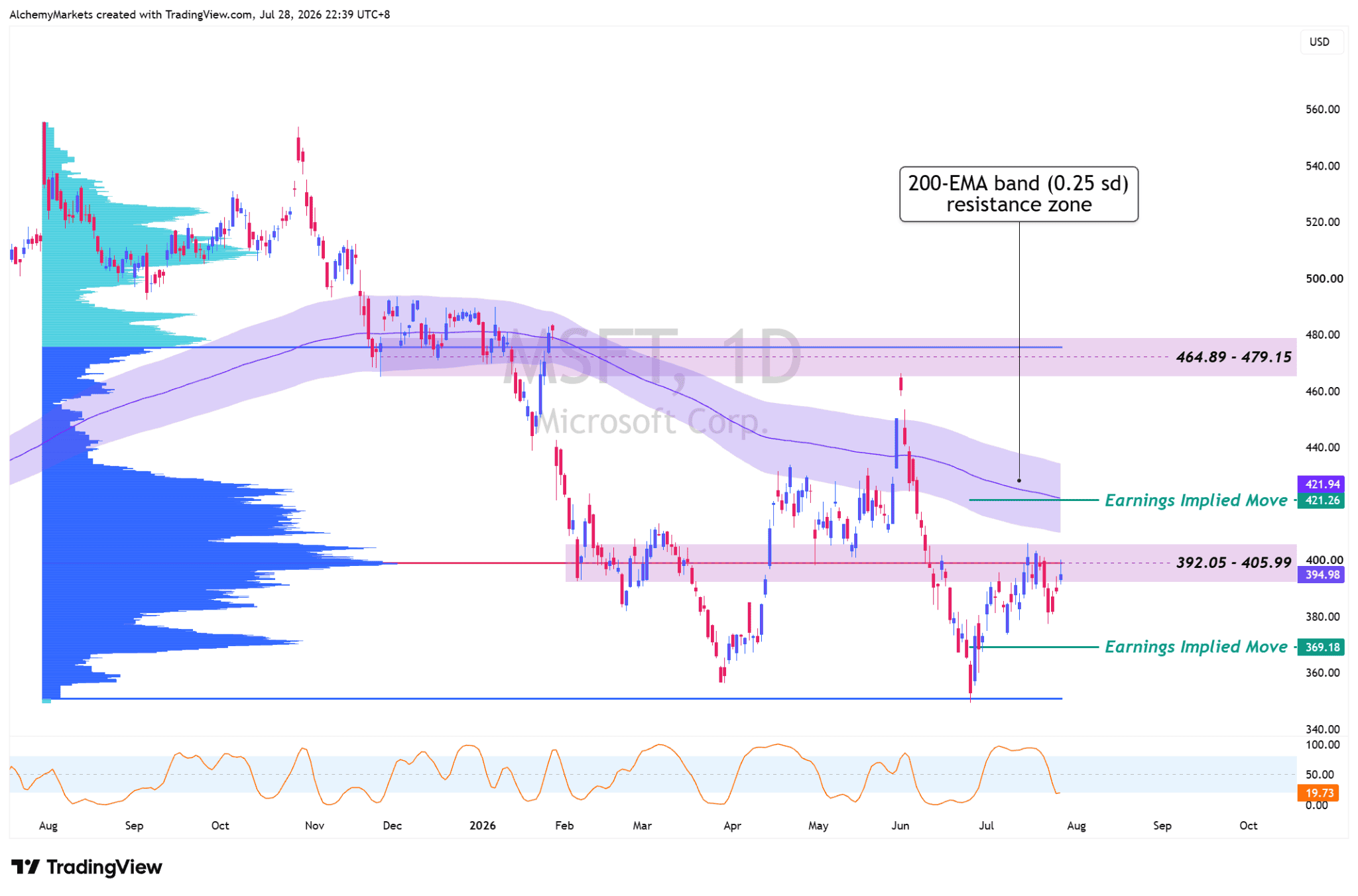
Technically, MSFT remains below its falling 200-day EMA band. The first resistance area sits around $406, followed by the EMA near $421. Support remains around $392, with a break below opening the way towards $369.
Meta: AI may already be paying for itself
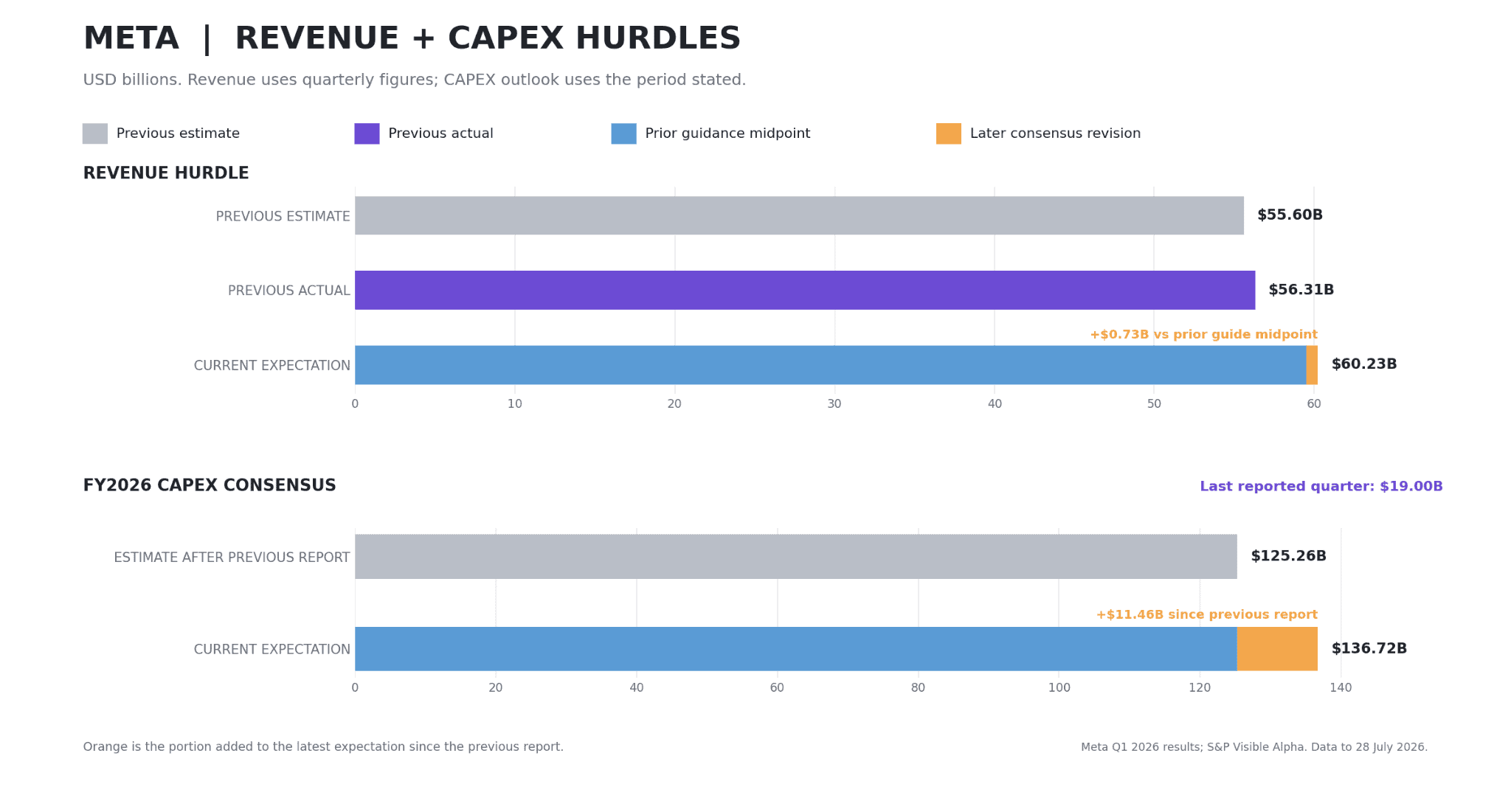
As the home of Facebook, Instagram and WhatsApp, Meta has a unique advantage here.
Its AI tools are already being used to recommend content and improve the ads that fund the business. That means Meta does not need customers to buy a separate AI product for the technology to start generating returns, even as it experiments with newer subscription models.
If engagement remains firm and ad revenue keeps growing, Meta could show investors a much shorter path from AI spending to profit.
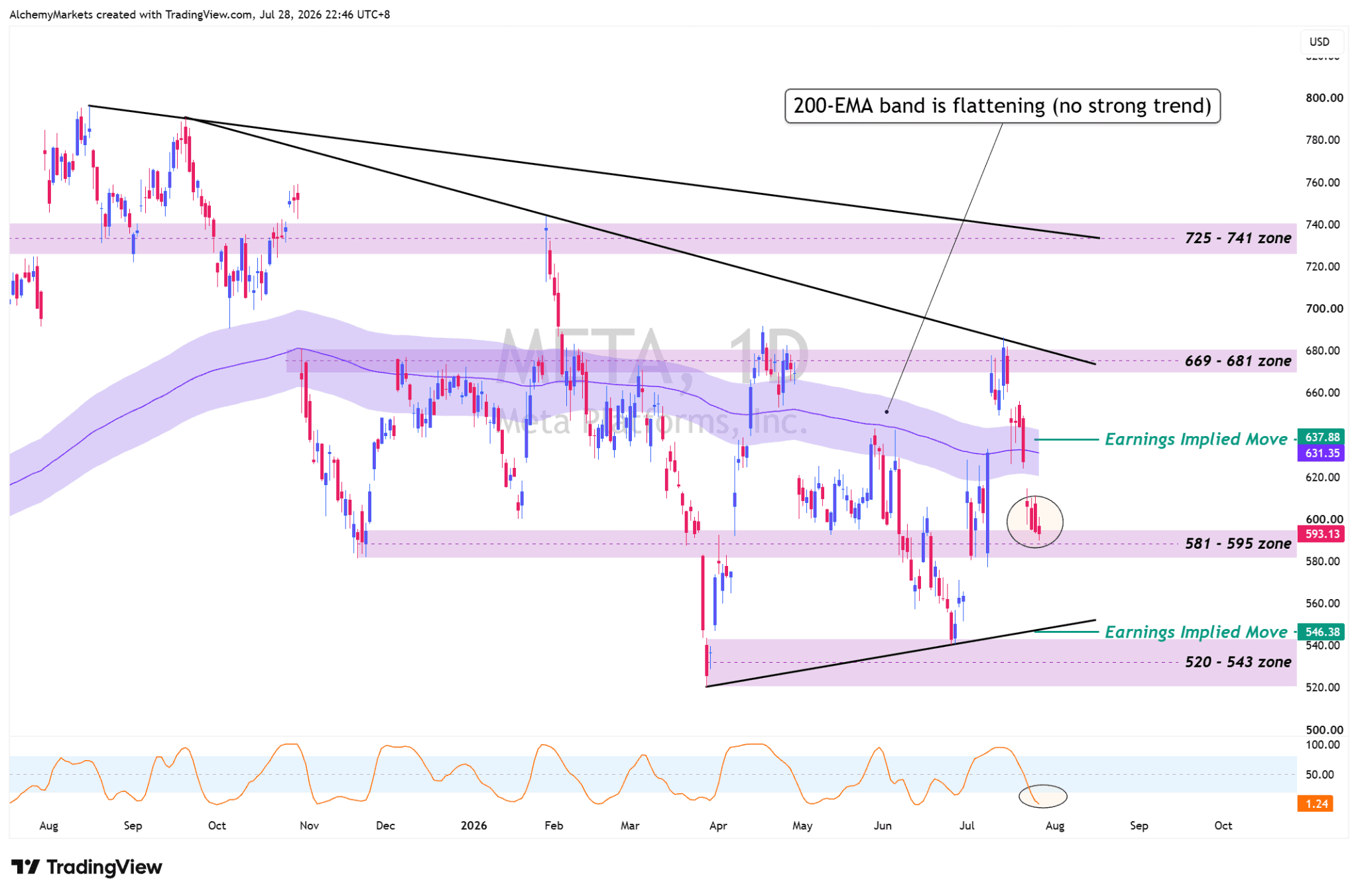
Meta is testing the $581-$595 support area after a sharp pullback, while its Stochastic RSI sits deeply oversold.
Holding it would keep $638 and the 200-day EMA overhead as the next recovery area. A break below $581 would shift attention towards $546 and then $520-$543.
Amazon: AWS has to show the demand is there
Amazon says AWS customers want more AI capacity than it can currently provide. That gives the spending a straightforward justification, provided the new capacity produces faster cloud growth.
AWS therefore becomes one of the clearest tests of whether companies are actually paying for the infrastructure Big Tech is racing to build.
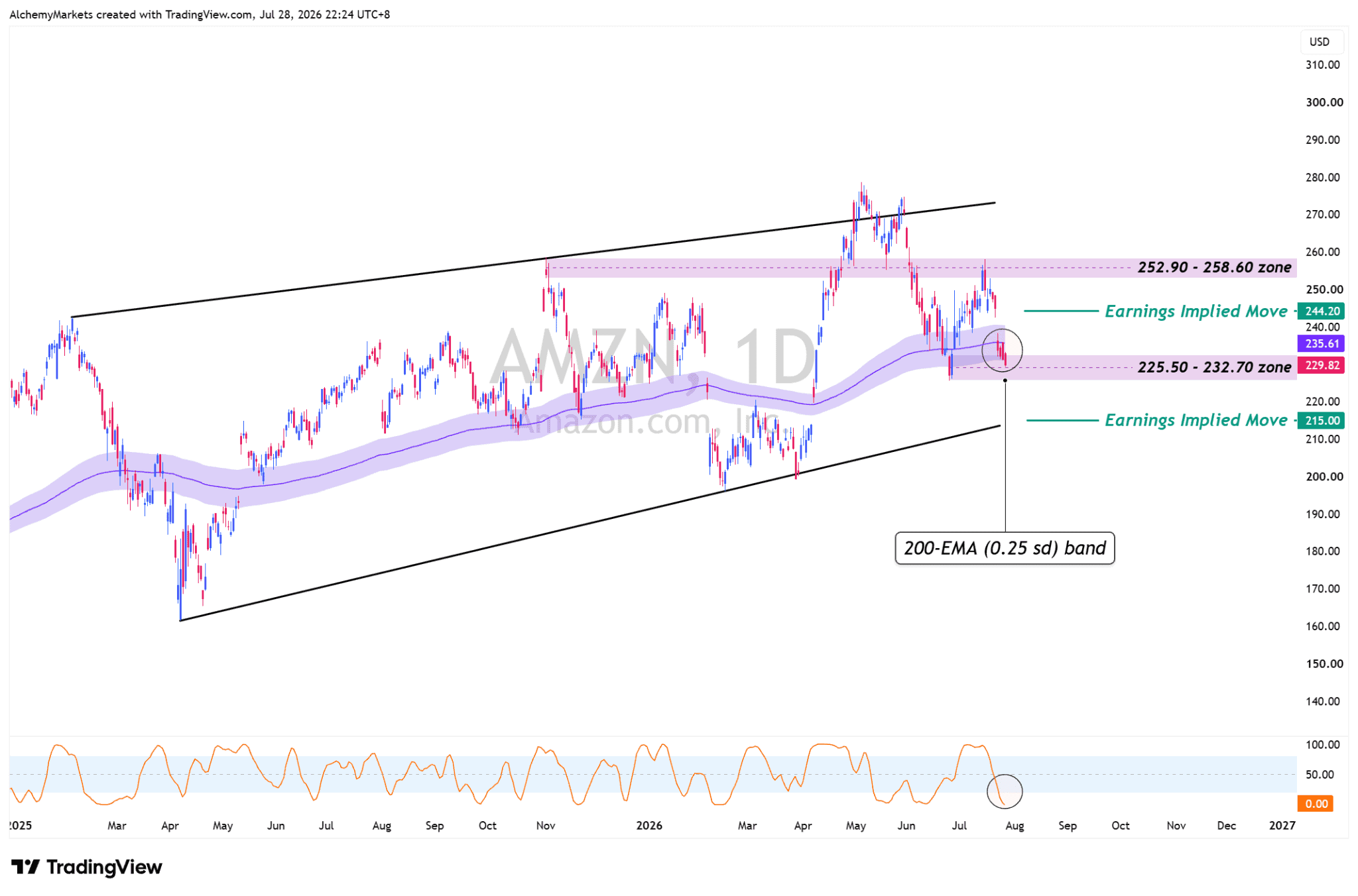
AMZN is testing support around $225.50-$232.70 alongside its rising 200-day EMA band.
Holding the area keeps the broader uptrend intact, with $244 as the nearest resistance. A break lower would expose the rising channel closer to $215.
Apple: The “Control Group” Check-in on Tech Consumers
Apple is the odd one out here, which is exactly what makes it useful as a kind of control group this earnings season.
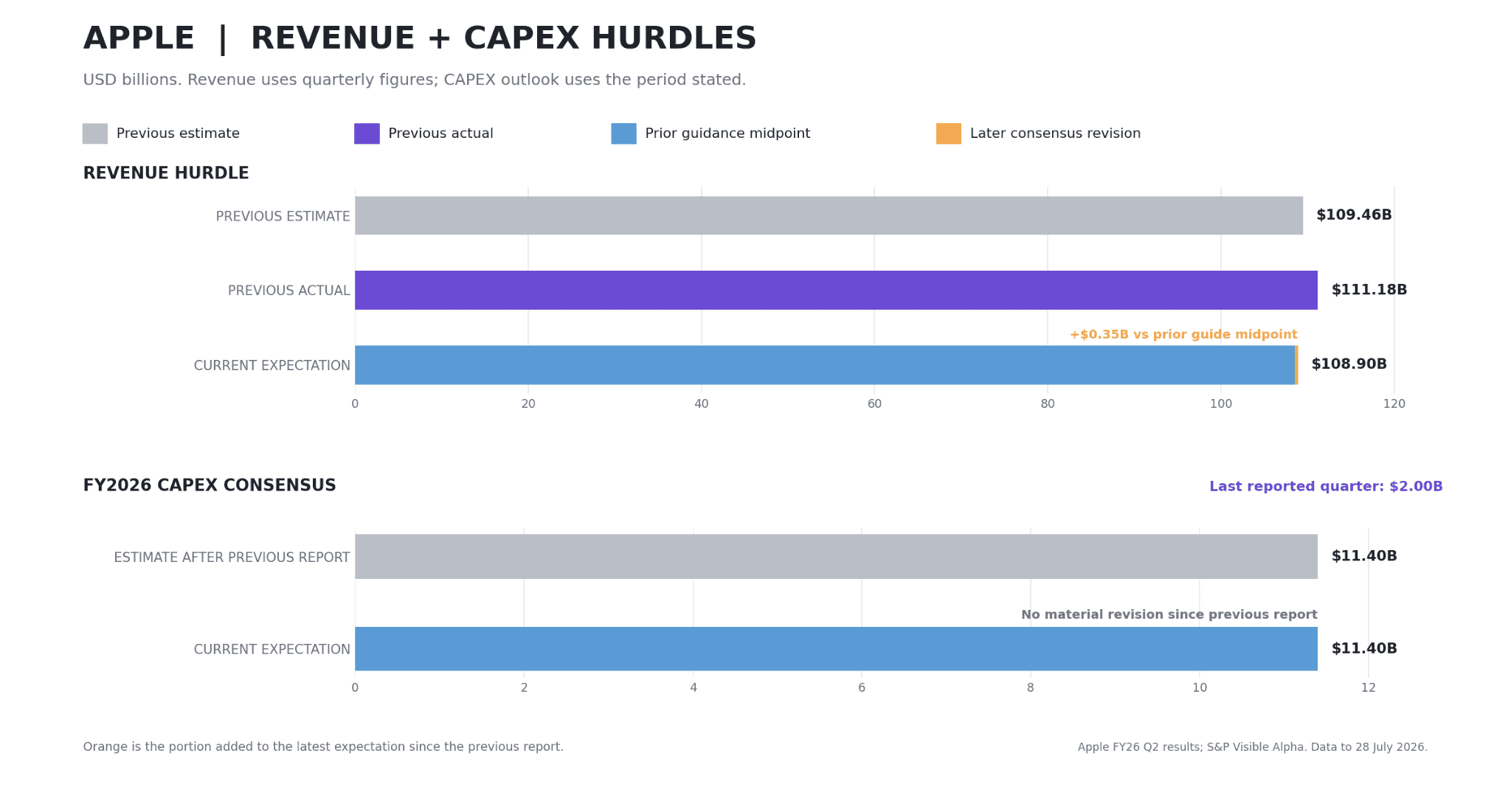
Its capex burden is far smaller, so its results tell us less about the economics of the AI buildout. Instead, Apple gives investors a cleaner read on whether consumers are still willing to spend heavily on premium technology.
Strong iPhone demand would support that view and give us a useful comparison against the more capital-intensive AI stories coming from Microsoft, Meta and Amazon.
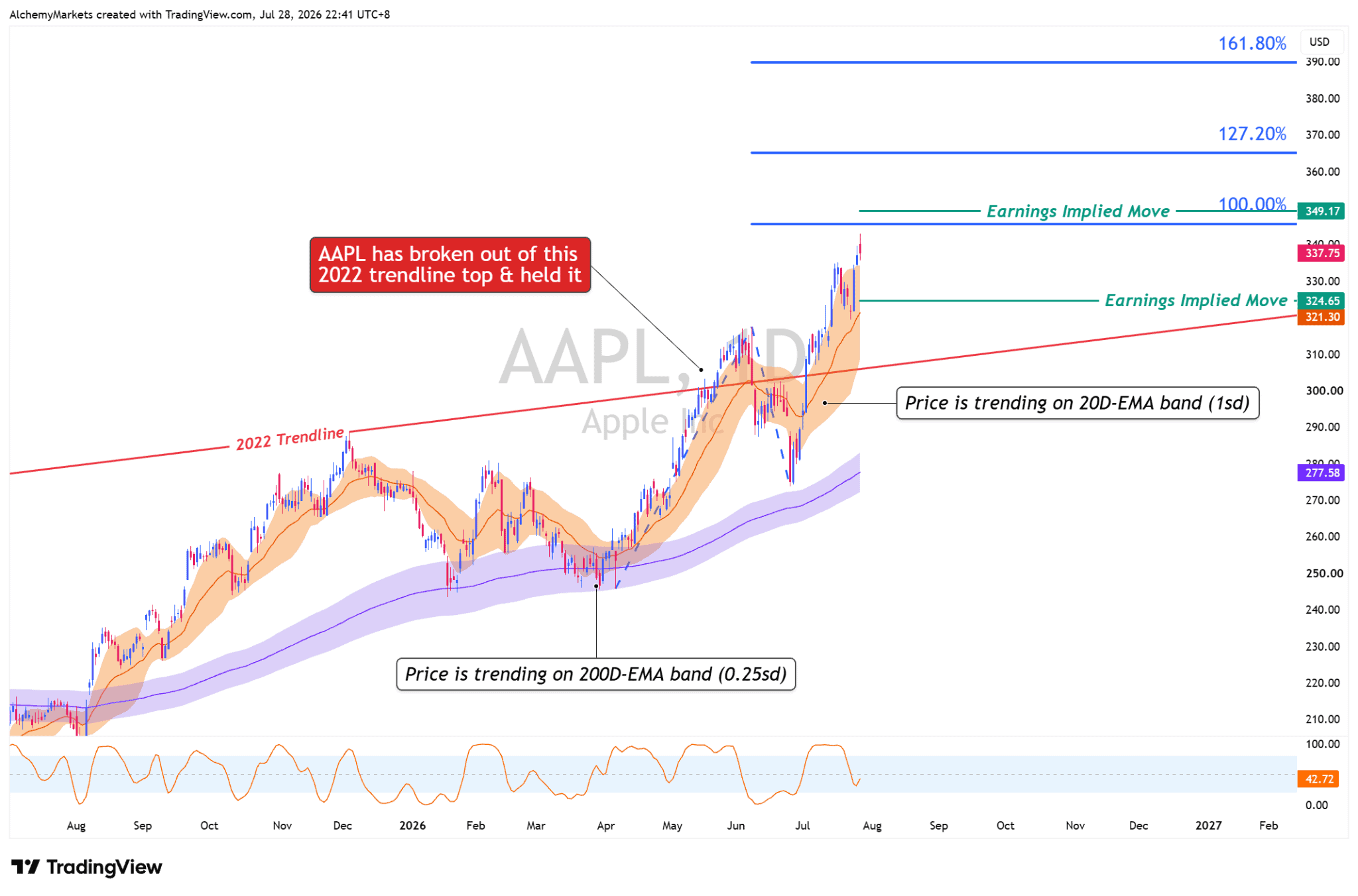
AAPL remains above its long-term 2022 trendline and continues to trade above a rising 20-day EMA band. Until that behaviour changes, the broader trend remains constructive.
A move back below the EMA and trendline area around $321 would weaken the breakout, while continued strength could bring resistance near $349.17 back into focus.
How much the buildout is costing
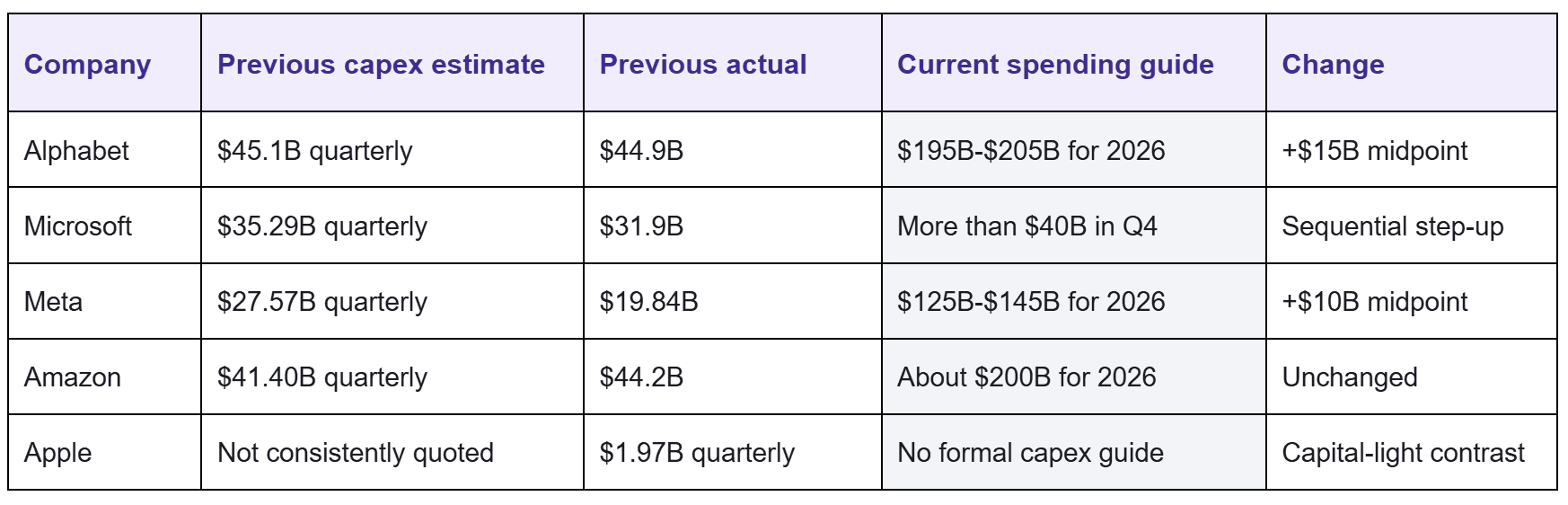
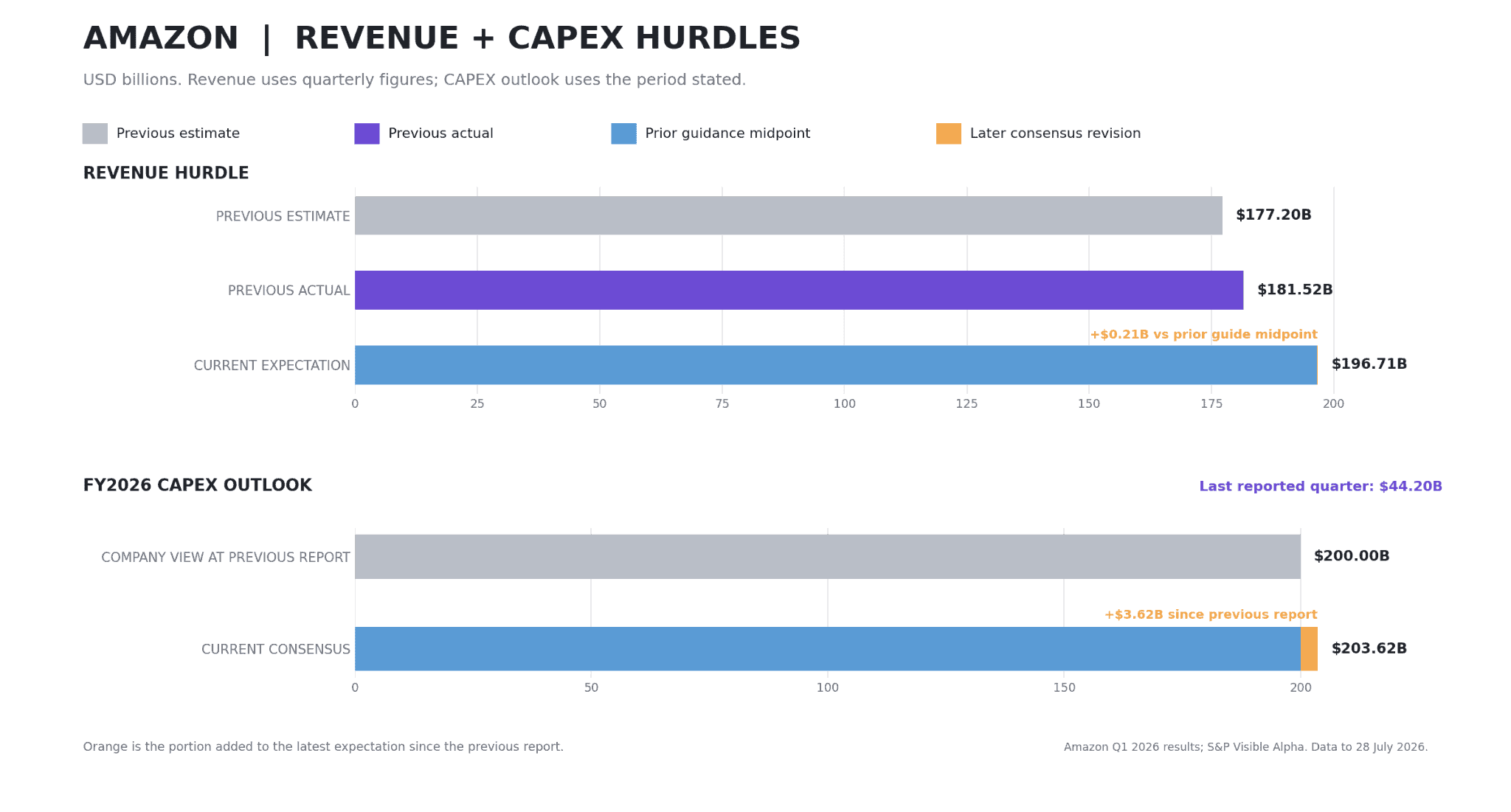
Quarterly capex figures and annual guidance cover different periods, so they are shown separately rather than treated as direct comparisons.
What traders are pricing for the main reports
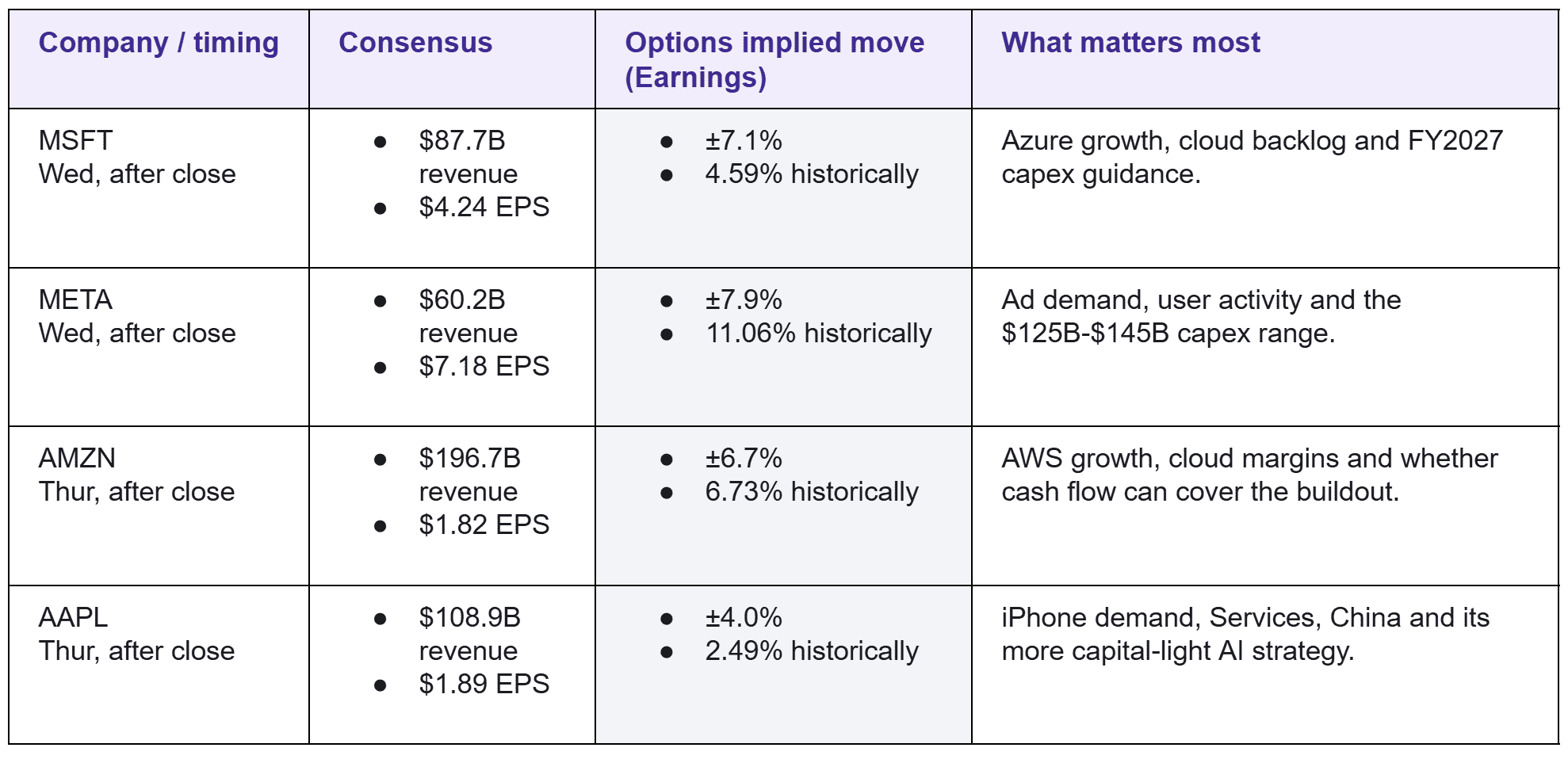
Microsoft and Apple are priced to move well above their average historical reactions during earnings, while Meta’s 7.9% range sits below its 11.06% historical average. Amazon is priced almost exactly in line with its average historical move.
The chip chart shows why earnings matter
The hardware companies may still have full order books, but their stocks are being pulled into the same argument.
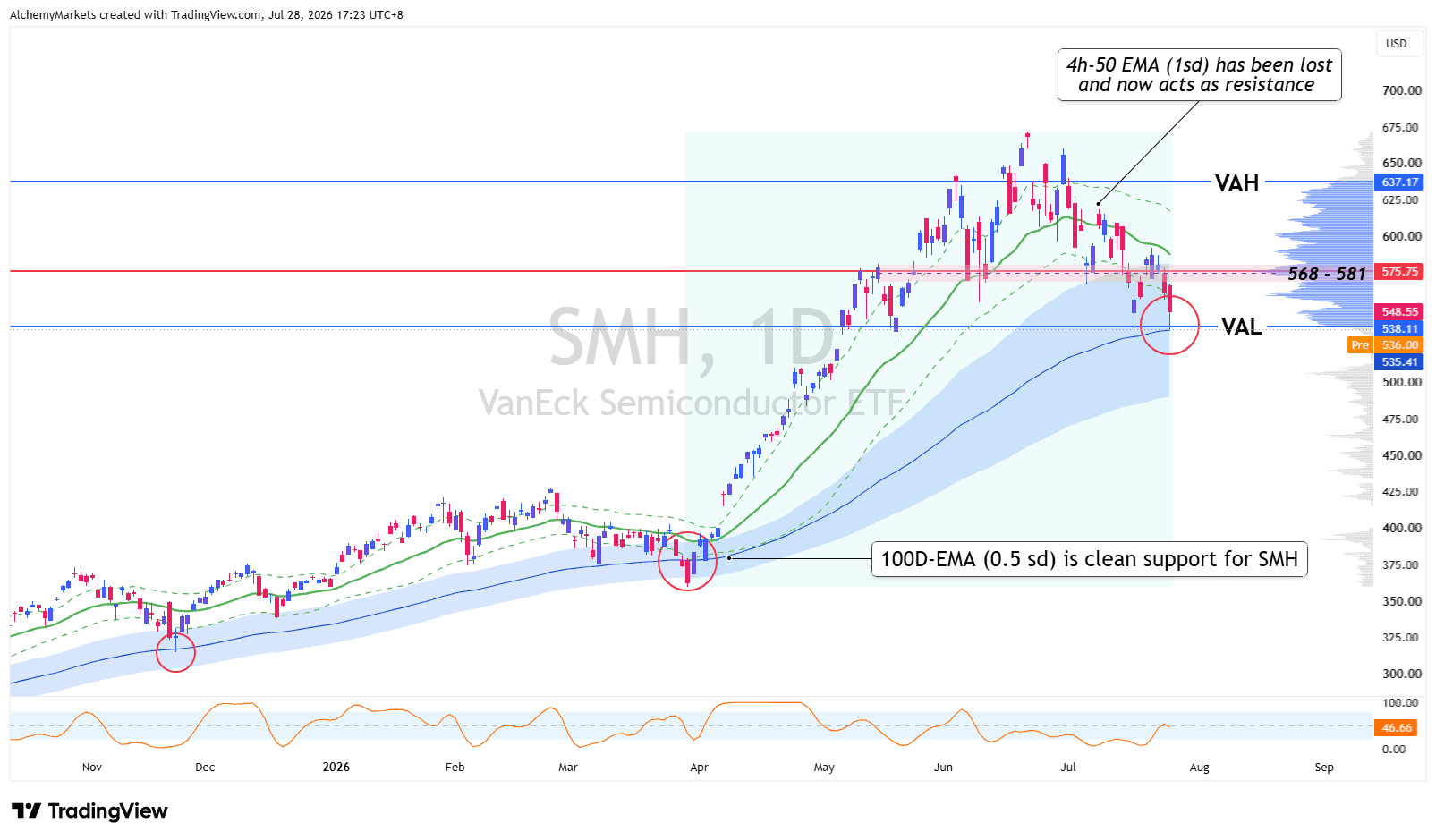
SMH (Semiconductors ETF) broke beneath its four-hour 50-period EMA band and the lower edge of the recent value area. The 100-day EMA band is now the next major support test.
The first sign of relief would be a move back above the broken value area and 50-period exponential moving average band.
What would actually change the mood?
Watch the revenue engines that sit closest to AI. Microsoft needs Azure workloads to keep expanding. Amazon needs AWS customers to absorb the capacity now coming online, while Meta can show that better recommendations are already improving its advertising business.
That would not make the spending concern disappear overnight, especially if the Fed stays hawkish. It would give investors the missing evidence that AI software revenue is beginning to catch up with the hardware bill. Another round of higher capex with weak cash returns would leave Alphabet’s warning intact.