Written by:

- Opening Bell
- September 29, 2026
- 5 min read
McDonald’s vs 10Y: What Is the Consumer Saying?
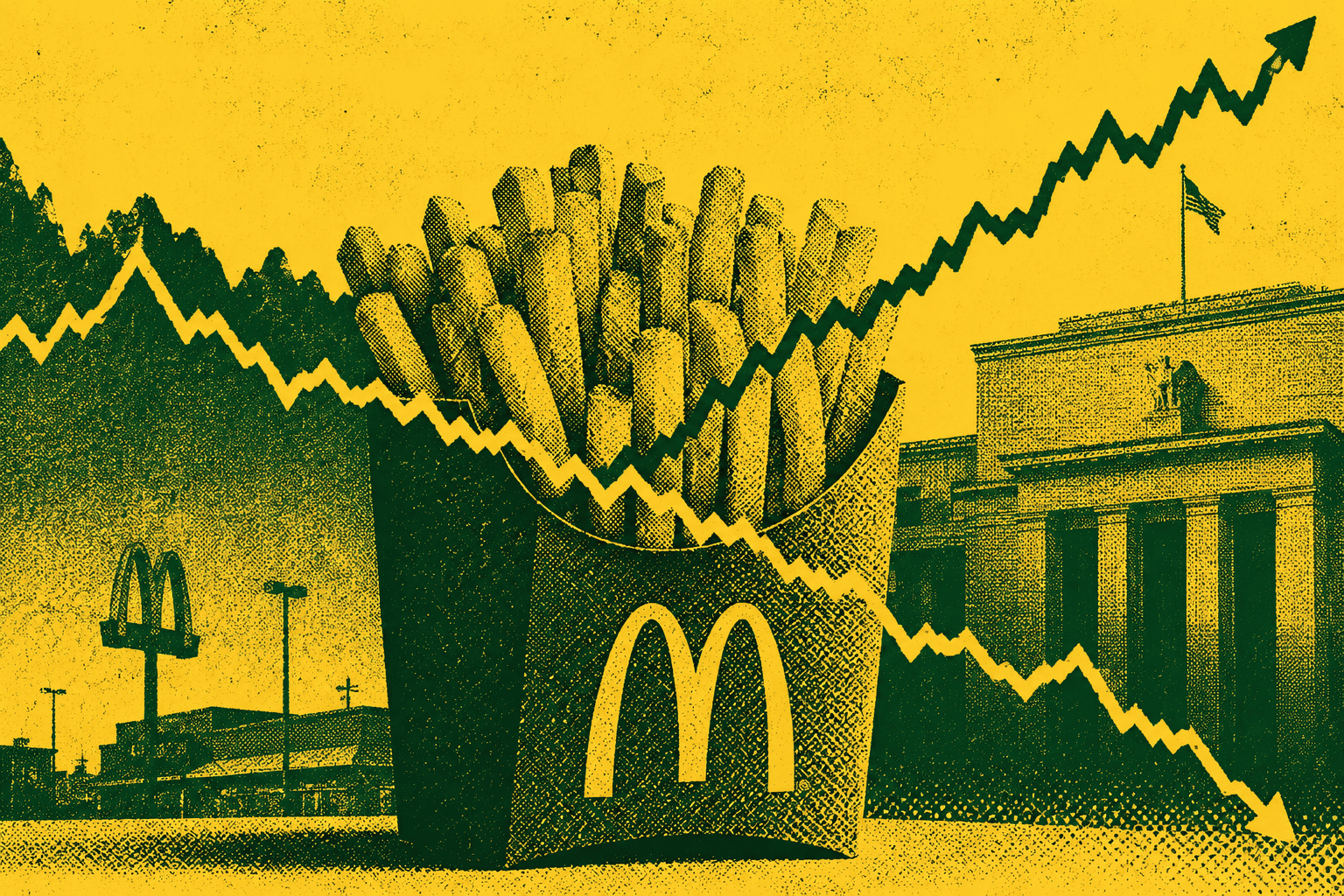
McDonald’s has spent much of this year moving almost like the inverse of the US 10-year yield. As yields climbed above 5%, MCD slid from above $340 to around $234.
The chart is striking, but the more useful question is what sits underneath it. Why are consumers simply not eating McDonald’s?
The simple answer is that consumers seem less interested in spending money on food that no longer feels obviously cheap. McDonald’s US traffic has been down year-on-year in every complete month since March, while second-quarter US comparable sales rose just 0.8%, below expectations.
McDonald’s has tried to fix that with cheaper offers. But its under-$3 menu and $4 breakfast deal still generated less extra traffic than management hoped.
The price gap has become uncomfortable
McDonald’s is now advertising an $8 Big Mac Extra Value Meal. Chili’s, meanwhile, offers its 3 For Me deal from $10.99, including a beverage, starter and full-size entrée.
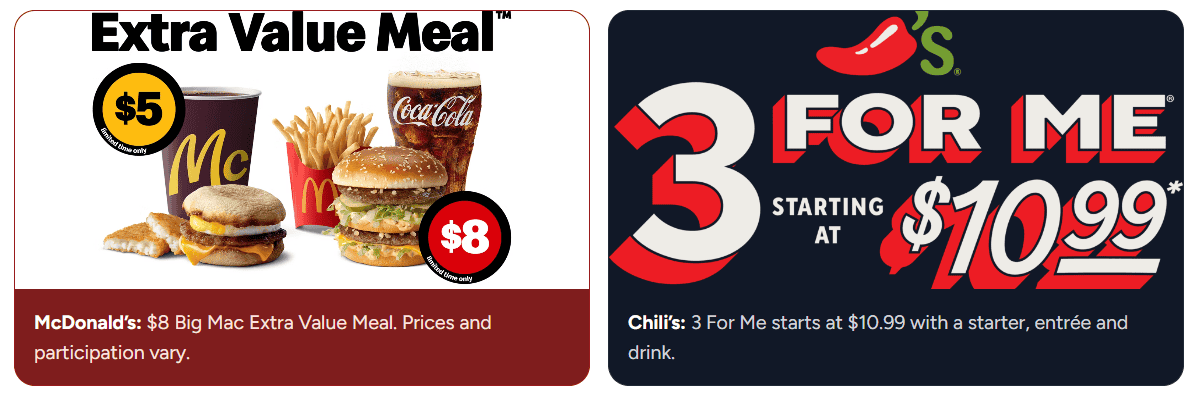
That is only a $2.99 difference. Yet Chili’s has been attracting stronger traffic while McDonald’s has struggled to pull customers back, even with cheaper promotions. That difference is starting to show up in stock prices too.
This tells us something important about US consumers right now. They are responding to tightening cash conditions by being more demanding about what they eat, rather than going for the cheapest options.
A slightly higher bill can still win if the meal feels larger, healthier, or more “Worth it”.
This is not a blanket fast-food collapse
The next clue is Yum Brands. Taco Bell posted 7% same-store sales growth in the second quarter after pairing $5, $7 and $9 value boxes with frequent menu innovation. McDonald’s and Wendy’s were weaker despite leaning harder on discounts.
That suggests McDonald’s is dealing with more than a bad consumer. Execution, menu innovation and perceived value matter too. McDonald’s itself has acknowledged that customers are choosing on more than price and is responding with higher-protein products, more chicken, beverages and a broader restaurant overhaul.
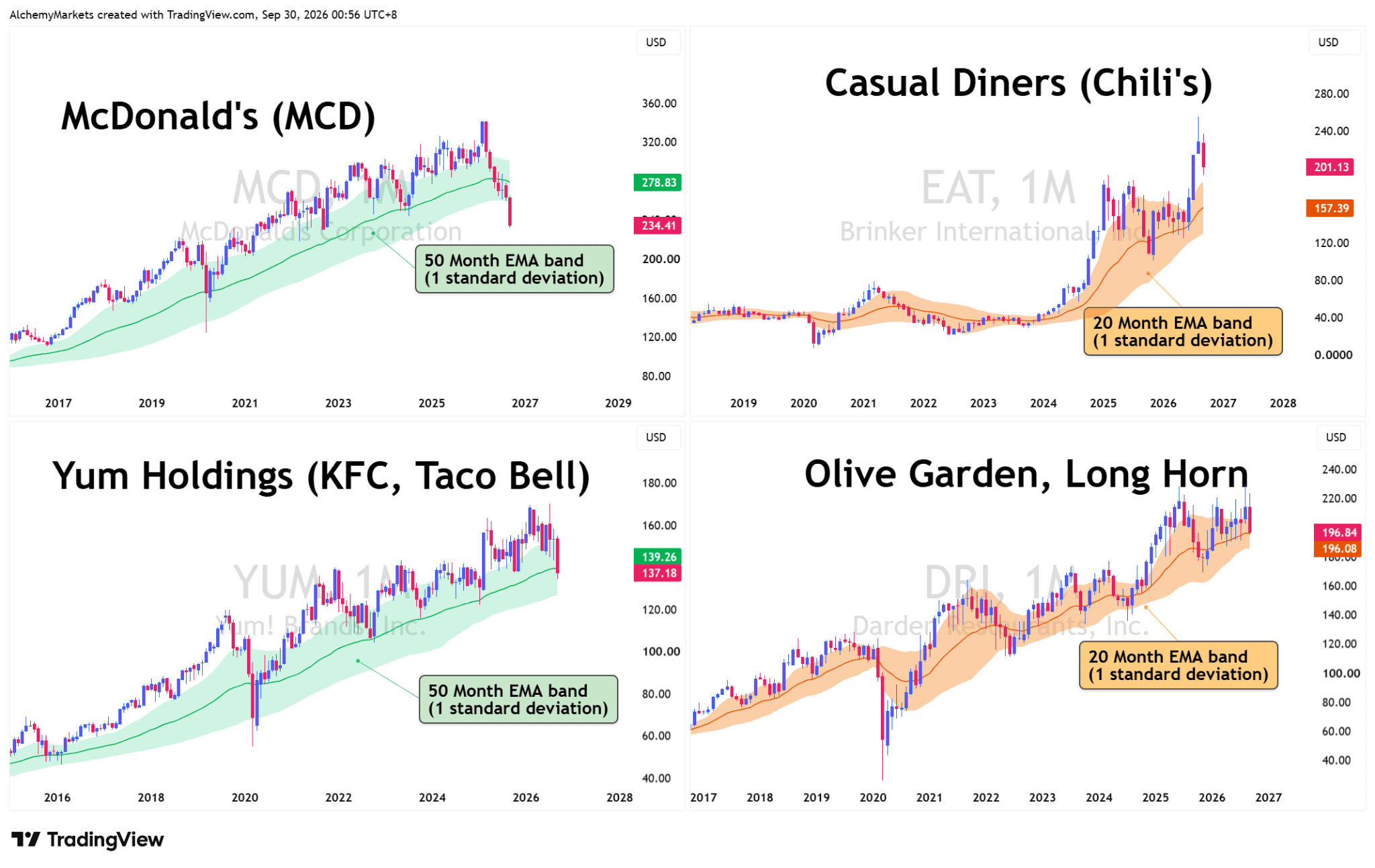
| Restaurant trend comparison: MCD and YUM are shown against 50-month EMA bollinger bands; with MCD breaking far below it. EAT and DRI, casual dining stocks, on the other hand are comfortably on a 20-month EMA uptrend. |
The equity charts reinforce that distinction. McDonald’s has broken much further below its long-term trend than YUM, while Brinker International (EAT) and Darden (DRI) remain in stronger long-term structures.
There is a useful historical contrast here. In 2008, McDonald’s global comparable sales rose 6.9% and guest counts rose 3.1% as branded affordability helped it gain share in a difficult economy. Today, McDonald’s is not getting the same clean trade-down benefit.
That does not mean the consumer is healthier today. It means the definition of value has changed.
JOLTS and confidence explain why selectivity is rising
JOLTS still looks more like low hiring, low firing than a labour collapse. The sharper signal is confidence: households are becoming more pessimistic before employers have begun firing aggressively.
The consumer is losing confidence before employers are losing workers.
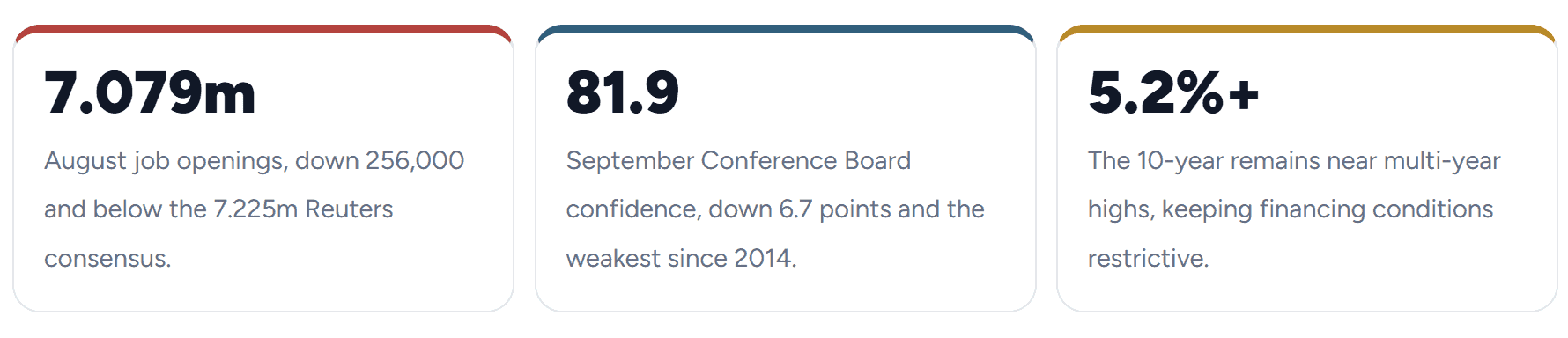
That creates an awkward setup for the Fed. Labour conditions are softening, but not enough to force an immediate rescue. At the same time, inflation and energy costs remain elevated enough to keep rates restrictive.
So because inflation stays sticky, the 10Y must stay high. That makes financing costs remain restrictive, while job openings fall, and thus household spending becomes more limited.
As a result, it appears that consumers are less willing to spend on McDonald’s, but rather on items they perceive as higher quality.
Interestingly, this sentiment appears to be reflected for other consumer discretionary stocks as well, like Nike. Consumers are showing stronger preference for other shoe brands like Adidas and Deckers.
The same regime is hiding inside the S&P 500
The restaurant split has a close parallel in the stock market.
The S&P 500 is still close to record highs, but only 3 out of 11 sectors were positive in September. The equal-weight S&P 500 was also down around 4% for the month.
At the same time, technology, communication services and other tech-heavy companies now make up more than half of the index’s market value.
So while the index’s price still looks strong, a smaller group of companies is doing most of the work.
That is similar to what we are seeing with restaurants. McDonald’s and the 10-year yield’s inverse relationship may simply be showing how selective the current market has become.
- Yes, market conditions are becoming more fragile.
- Yes, high inflation and high interest rates are making cash tighter.
- But people are still spending, and investors are still taking risks.
They are just being more selective about where they put their money.
Consumers may spend less often, but still pay more for something they feel is worth it, and investors are doing the same thing, particularly towards AI-linked companies where growth still looks strong.
Money is still being spent. It is just going into fewer places.