Written by:

- Opening Bell
- September 9, 2026
- 6 min read
Global Bond Yields Surge as Oil Tests $100
The global rates story is becoming harder to separate from the energy story. Brent has pushed back towards $100, refining stress remains elevated, and government bond yields are rising across the US, Europe and Japan at the same time.
The risk is not simply that yields are high. It is that inflation is re-accelerating while governments and AI infrastructure still require enormous amounts of capital, just as Japan is withdrawing one of the world’s largest sources of cheap liquidity.
| What would turn fragility into stress? Oil higher, inflation expectations higher, long-end yields higher and credit spreads wider at the same time. That combination would suggest the higher cost of capital is beginning to damage borrowers rather than merely reprice them. |
Global Bond Repricing
Benchmark 10-year yields have risen across the G7.
The UK and US are near 5%, European yields are materially higher than their post-pandemic lows, and Japan has moved from near-zero yields to around 3%.
This is bad for corporate growth and consumer spending, because long-term bond yields set the interest rates for mortgages, corporate borrowing, infrastructure finance and equity valuations.
Does that mean corporate growth is now stopping?
No. The global economy can still grow with higher yields, especially with AI demand and the efficiency the technology brings.
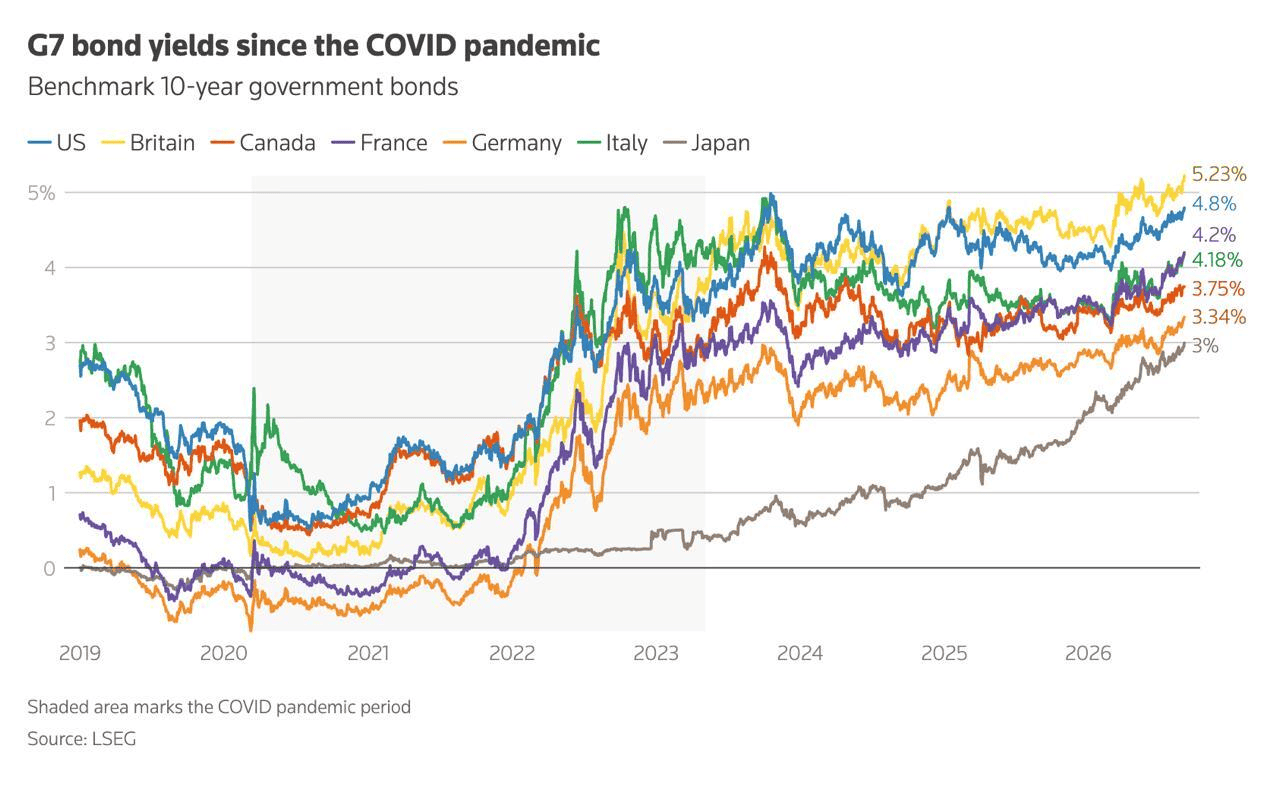
| Chart 1: G7 benchmark 10-year government bond yields. Source: LSEG. |
The kicker here is that global bond yields are rising together. That tightens the coffers of corporations for hiring, building new innovation, and producing goods/services for sale – globally.
For large funds, investing in government bonds in contrast becomes very attractive, as it almost guarantees always guarantee a ROI while corporations suffer a slowdown.
So what we have now is global weakness, not just regional.
Oil Is Feeding the Rates Story
The current oil shock is different from a normal demand-driven rally. OPEC production has been disrupted, refinery margins remain under pressure, and the latest Middle East escalation has pushed Brent back towards the $100 area.
The more important channel to note is diesel and refined products (See below: CRAK chart on the top right).
Higher refined fuels are used for transport and logistics, and as CRAK, the ETF for refined fuels, climbs – it reflects a future where consumer inflation will be high. That puts US PPI and CPI releases directly in focus at the end of this week.
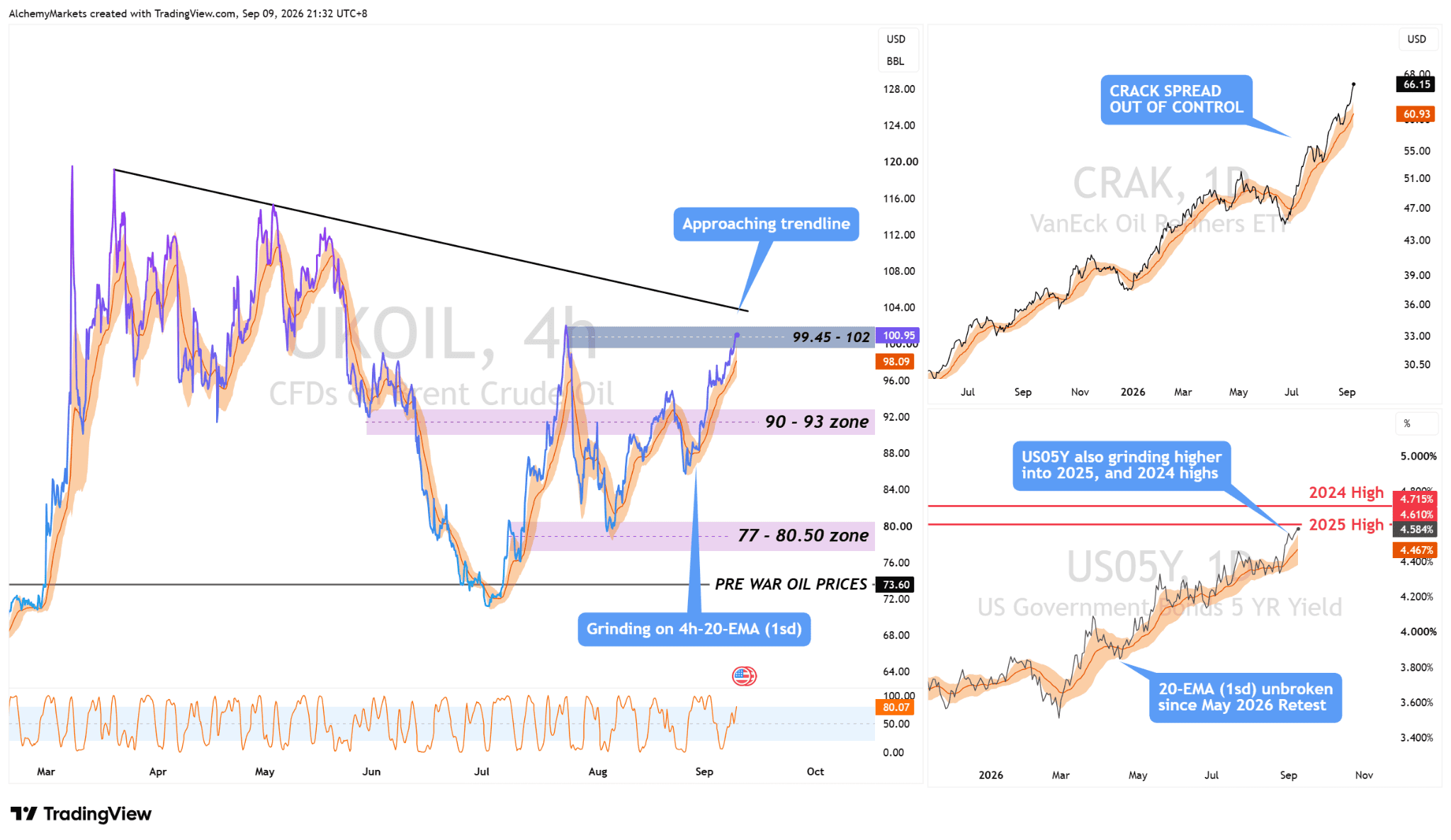
| Chart 2: UKOIL, refining exposure and the US 5-year yield. Source: TradingView / Alchemy Markets. |
PPI and CPI Are the Immediate Test
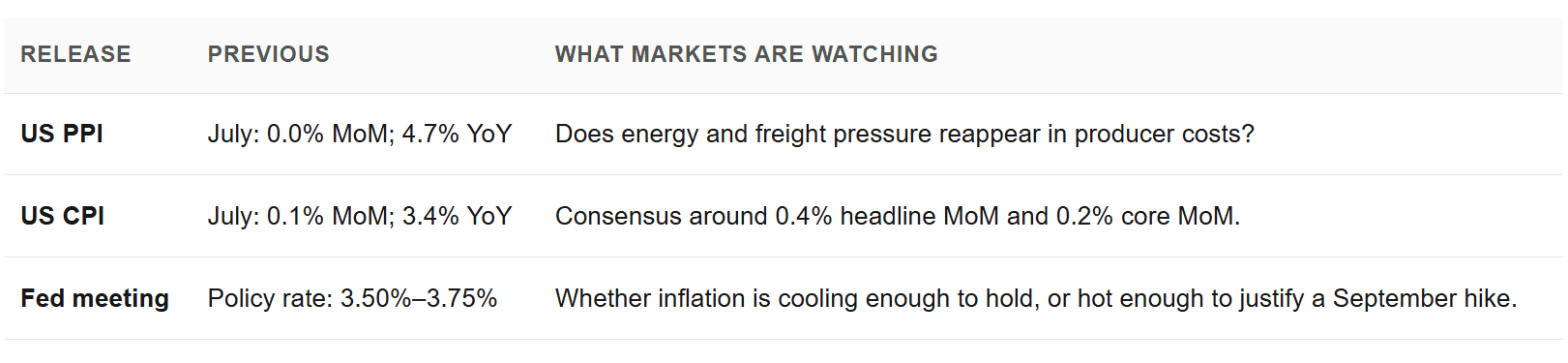
July US PPI was unchanged month on month, but final-demand prices were still up 4.7% year on year. Energy prices within PPI were already up 18.2% from a year earlier.
For August, forecasts vary by provider, but the direction is clear: economists expect producer inflation to rebound from July. Friday’s CPI consensus is centred around roughly +0.4% month on month headline and +0.2% core.
A hot headline print caused mostly by oil can still be treated as a supply shock.
A hot core print would be much harder for the Fed to dismiss because it would imply broader second-round inflation.
The ECB Could Add Another Layer of Pressure
The ECB is widely expected to raise its deposit rate by 25 basis points to 2.50%. Euro-area inflation accelerated to 3.3% in August from 2.9% in July, while energy inflation jumped to 14.3% from 10.3%.
The hike itself is largely priced. The bigger risk is Christine Lagarde signalling that September is not the end of the cycle.
| Why the ECB matters globally: If the ECB sounds hawkish and US PPI is hot only minutes later, European and US yields could reinforce each other. That would tighten global financial conditions before the Fed meeting on Sep 16. |
Waller and Warsh Make CPI a Live Policy Trigger
Fed Governor Christopher Waller has been explicit that his September decision will depend heavily on August inflation. If inflation continues moving towards 2%, he is willing to hold rates steady.
Waller’s threshold: if inflation comes in hot, he would consider a rate hike. He has also described the current policy rate as only slightly restrictive, which means it may not take much acceleration to move him towards tighter policy.
Fed Chair Kevin Warsh has set a firmer credibility test. He has said policymakers need confidence that underlying inflation is moving towards target clearly and at sufficient speed. Otherwise, the Fed still has work to do.
That leaves the Fed divided, but not confused. The disagreement is about how much evidence is needed before hiking again, but they agree that inflation remains above target.
Bessent’s Message Is More Nuanced Than “Hike”
Treasury Secretary Scott Bessent has pushed Japan towards more decisive monetary tightening as the yen weakened and inflation expectations rose. His focus has been on anchoring expectations and reducing currency instability.
For the US, the more useful framework is whether an external supply shock creates secondary inflation effects.
Oil alone does not automatically require a Fed hike, but persistent spillovers into core inflation, wages or expectations would strengthen the case.
Japan Is Removing a Global Liquidity Shock Absorber
Japan adds a separate source of pressure. The BOJ’s government bond holdings are shrinking at a record pace, JGB yields are rising, and the yen has strengthened sharply.
For decades, near-zero Japanese yields pushed domestic investors into foreign bonds.
However, that picture is now changing. Higher JGB yields make it more attractive to keep capital at home, while a stronger yen makes the traditional carry trade less attractive.
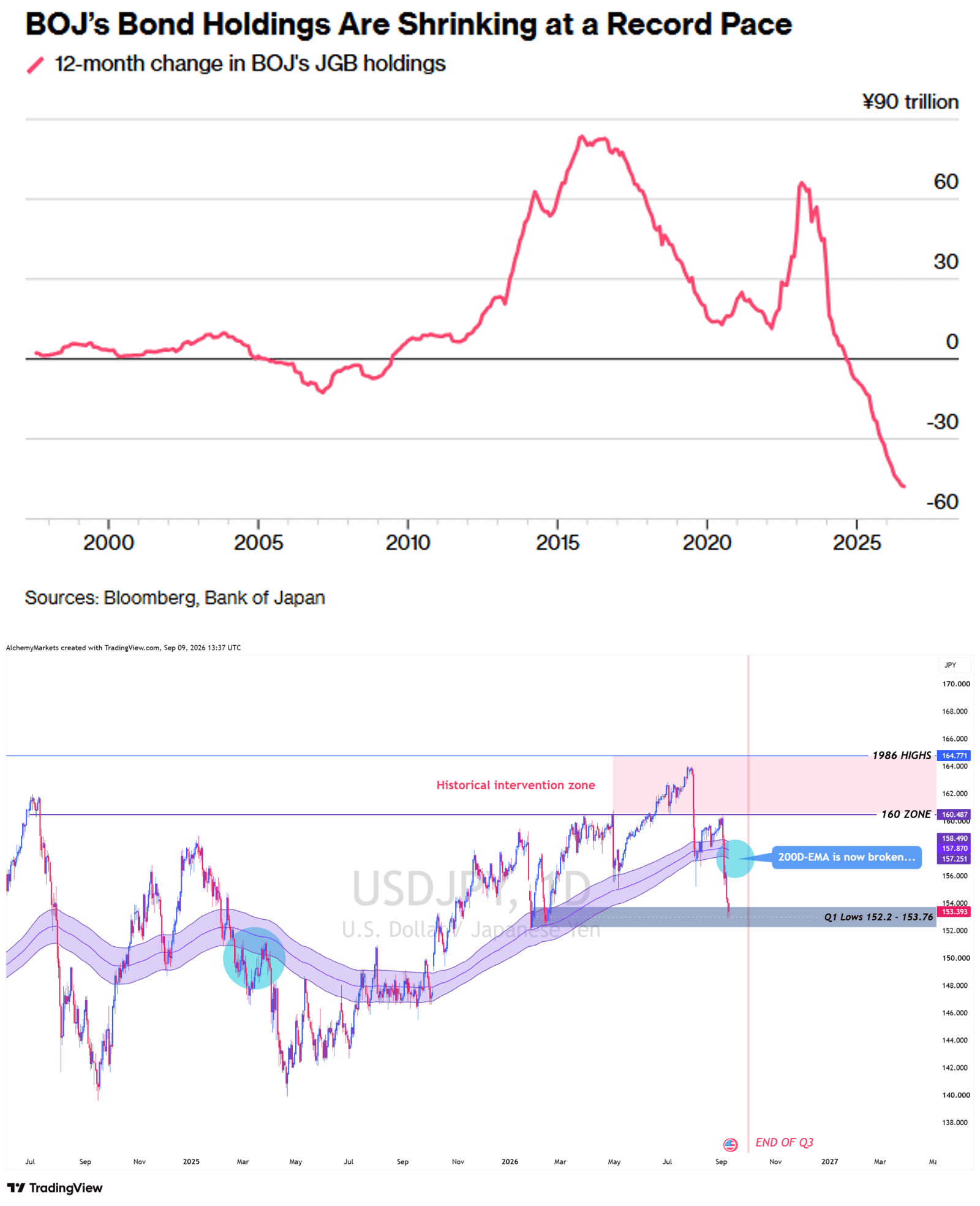
| Chart 3: BOJ JGB holdings are shrinking while USD/JPY breaks lower. Sources: Bloomberg, Bank of Japan and TradingView / Alchemy Markets. |
The Risk Is a Capital-Cycle Break
So far, this still looks like an inflation-sensitive expansion rather than an outright recession regime.
AI capex is strong, energy infrastructure is constrained, and global growth has not collapsed.
But the same forces keeping nominal growth alive are also forcing the cost of capital higher.
AI debt issuance is now large enough to compete with sovereign borrowing for long-duration investors, while Japan is becoming a less reliable source of cheap global funding.
The turning point is not simply high yields. It is when high yields begin to widen credit spreads, cancel marginal investment and break borrowers.