Written by:


- Opening Bell
- September 30, 2026
- 3 min read
Bonds Set the Tone as Markets Head Into Q4
Markets enter the final quarter of the year with one tension sitting at the centre of the cross-asset picture: bond yields remain elevated, but equities have so far refused to fully buckle under the pressure.
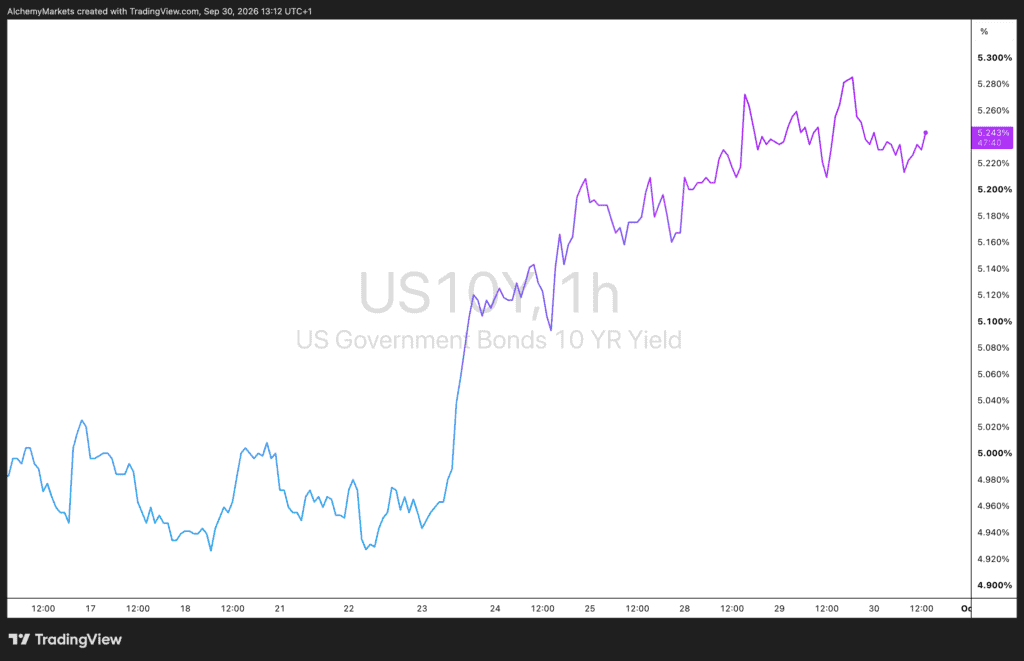
The US 10-year Treasury yield has risen sharply through September and is currently hovering around 5.24%, after gaining more than 80 basis points over the quarter. Inflation risk, higher energy prices and expectations that policy may stay restrictive have all contributed to the move. New York Fed President John Williams has, however, questioned whether another rate hike needs to come immediately, adding some uncertainty to an increasingly hawkish market view.
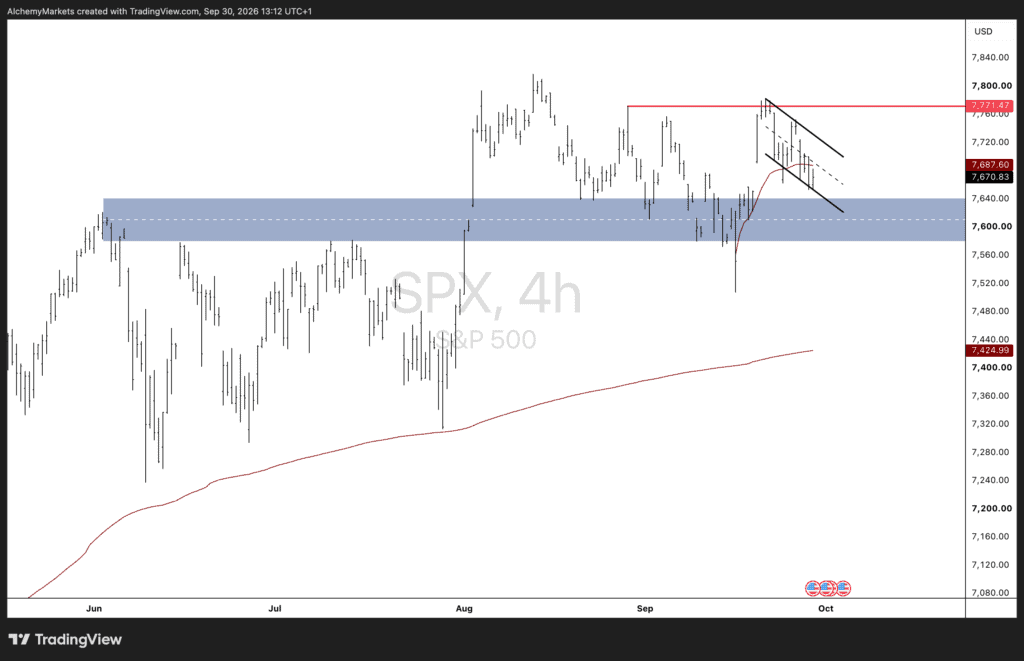
Despite the pressure from rates, the S&P 500 has remained relatively resilient. Technically, the index is now pulling back within a short-term descending channel after failing near the 7,770 area, but price is approaching a broader support zone around 7,590–7,640. If that zone holds, the current structure leaves room for a rebound back towards the upper side of the channel, with 7,770 remaining the key level above.
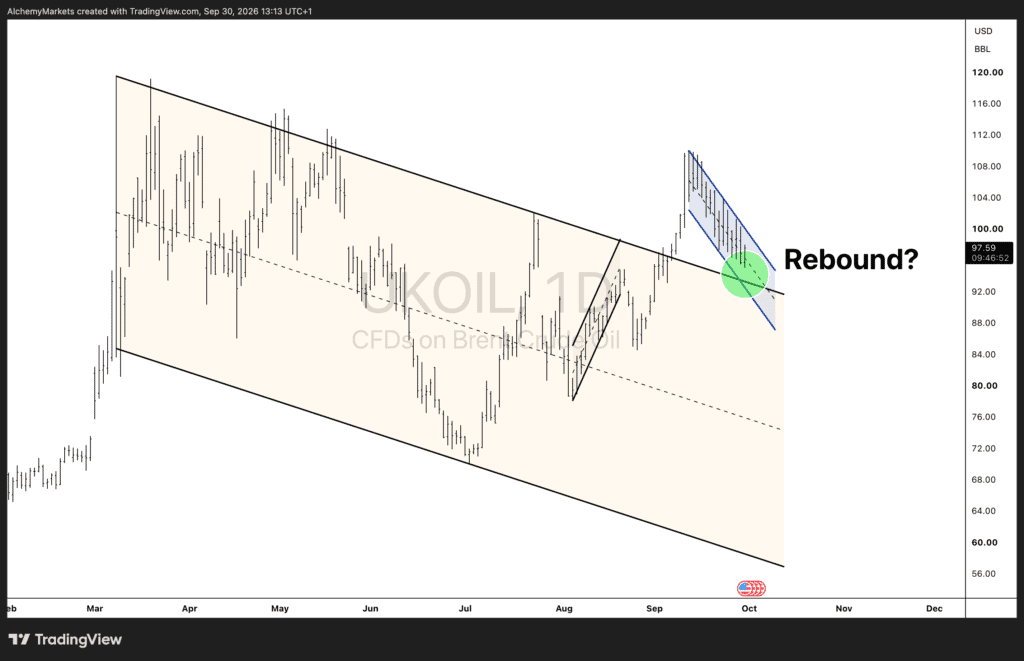
Oil is another major part of the inflation story. Brent remains supported by stalled US-Iran negotiations and tight fuel markets, with front-month prices having posted a strong September gain.
Technically, Brent is pulling back inside a smaller descending channel, but price is now testing the upper boundary of the larger falling structure around the $92–97 region. That creates an interesting potential rebound zone. A break higher from the short-term channel would strengthen the recovery case, while a clean move back below the larger trendline would weaken it.
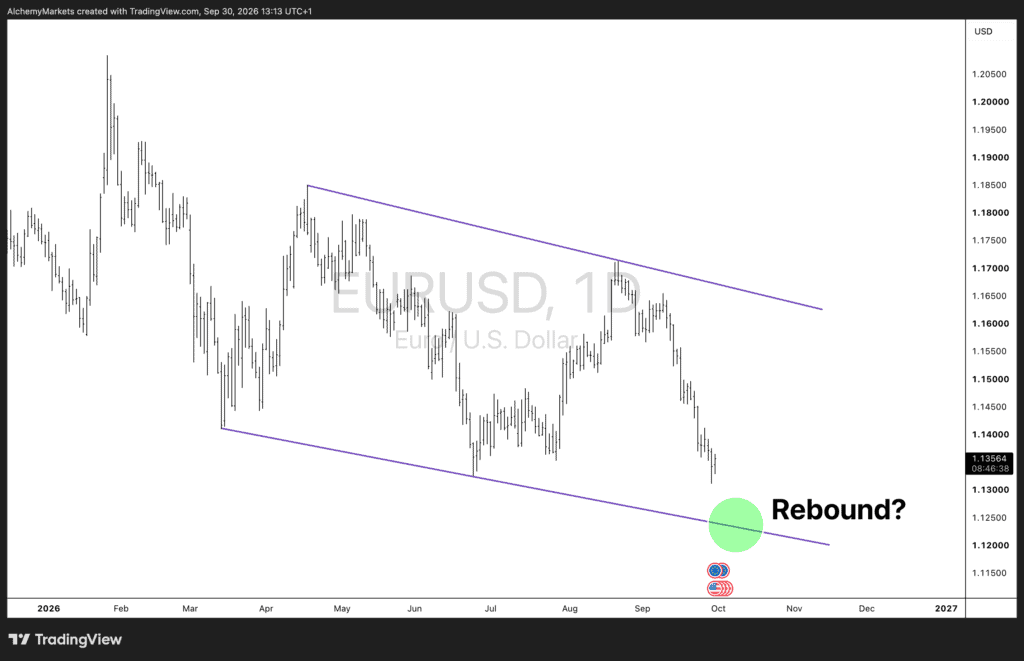
In FX, higher US yields have kept the dollar supported, leaving EUR/USD under persistent pressure. The pair remains inside a broad descending channel and is now moving towards the lower boundary around 1.12–1.13. That area could produce a technical rebound if buyers begin defending channel support, but the wider trend remains bearish while price stays beneath the descending resistance line.
Finally, China offered a slightly more constructive growth signal overnight. Official Manufacturing PMI returned to expansion at 50.1, while New Orders improved to 50.5 and Production reached 51.7. The private manufacturing survey was stronger again at 52.1.
That brings copper into focus. Price remains inside a well-defined rising channel, meaning the trend is still constructive, but upside currently looks limited unless copper can decisively break the channel’s upper boundary. Equally, a downside break from the rising structure would be an early warning that the improving Chinese data is not being confirmed by industrial-metal pricing.
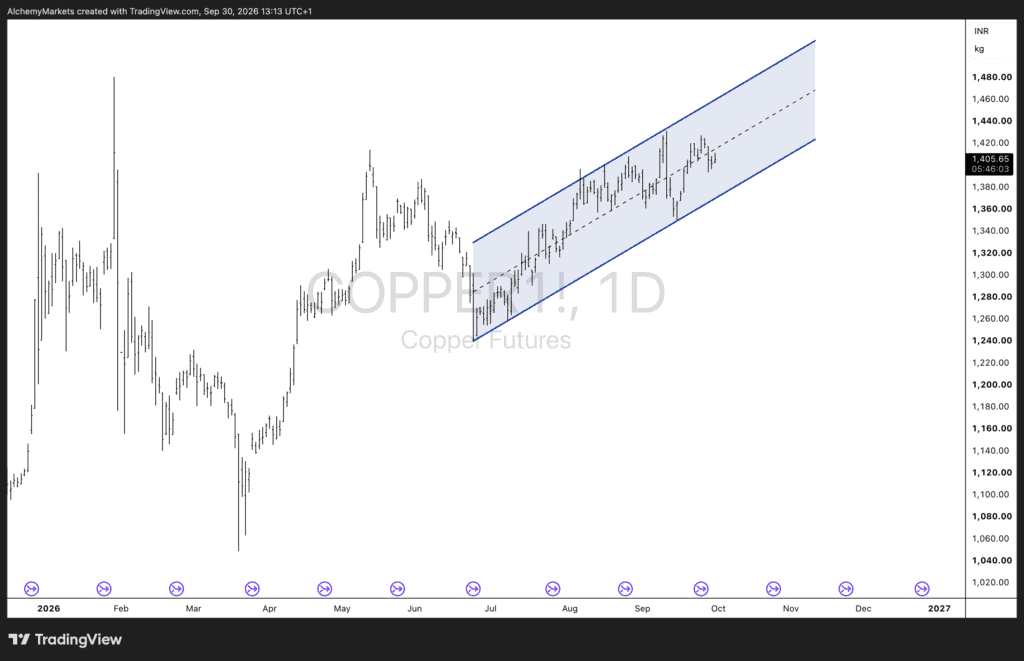
For now, the cross-asset picture is mixed rather than outright risk-off: bonds remain the pressure point, equities are trying to hold support, oil and EUR/USD are approaching potential rebound areas, while copper still needs a breakout to confirm another leg higher.