Written by:

- Chart of the Day
- September 25, 2026
- 5 min read
10Y Yields Hit 5.0%; Markets Don’t Seem to Care
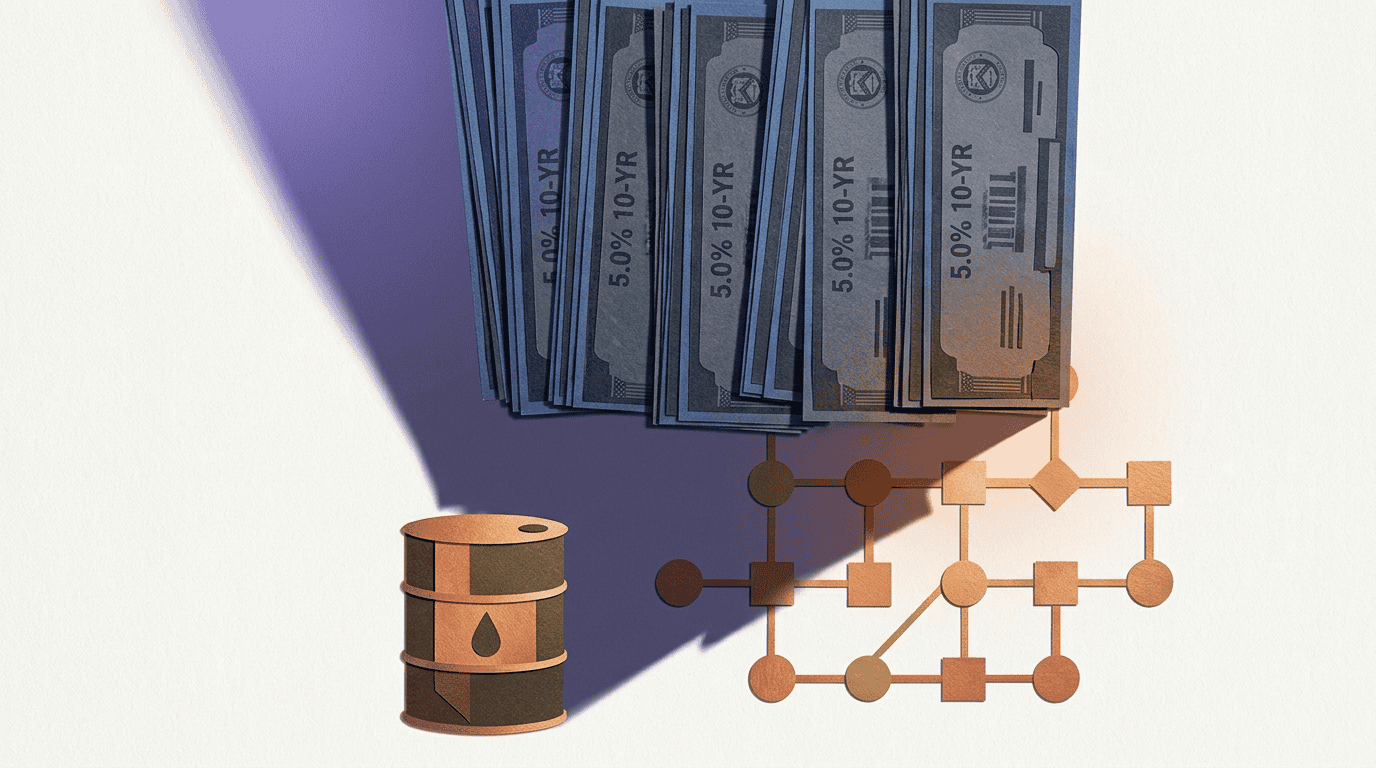
The US 10-year Treasury yield has pushed through 5%, a level that should make almost every risky asset uncomfortable. Yet the immediate response has been surprisingly restrained: equities have softened rather than cracked, while WTI has moved lower from its recent highs.
That does not mean the market has stopped caring about rates. A better reading is that investors are treating the yield shock as serious, but not yet permanent… and they still have offsets in falling oil, strong nominal earnings and concentrated AI leadership.
The bond move looks worse than the equity move
The 10-year has moved back into territory last seen around the mid-2000s. A risk-free rate above 5% raises the hurdle for equity valuations, mortgages and corporate borrowing, even if the S&P 500 does not fall sharply on the same day.
The 23 September five-year Treasury auction added to the pressure. The $70 billion sale cleared at 5.033%, about 3.1 basis points above the when-issued level, while the bid-to-cover ratio fell to 2.21. Investors wanted a better yield before taking more duration.
The 10Y is back in a market-sensitive zone – the question is now if the trend can be maintained, or if it’ll now get rejected here from this significant level:
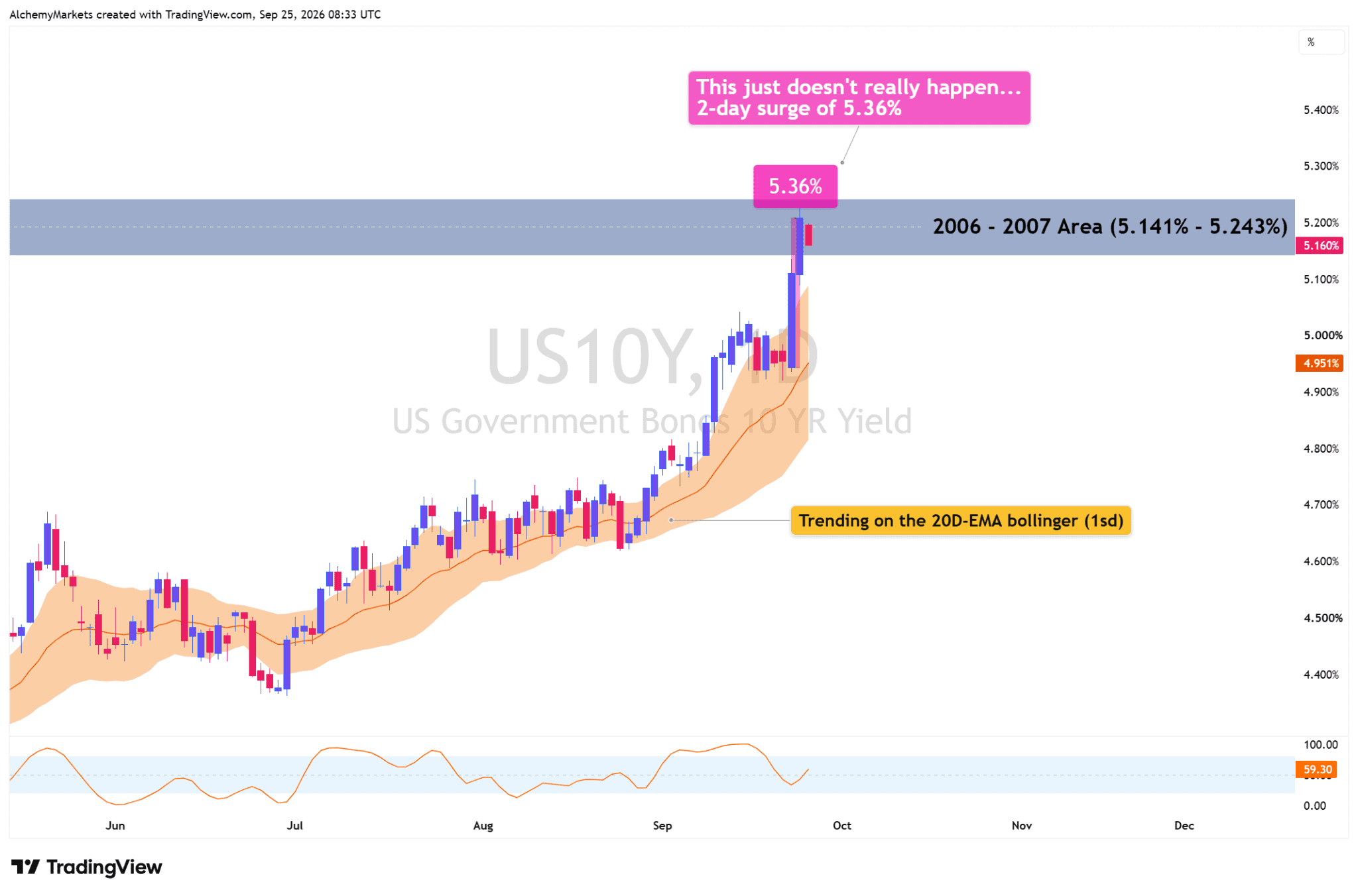
So yes, the move above 5% is significant, but the key question is persistence.
If yields stabilise or retrace from this zone, equities may continue to absorb the shock; if the move extends, the pressure becomes harder to ignore.
This Fundstrat chart shows why 5% matters. At higher yield levels, further increases in the 10-year have historically been associated with lower valuation multiples, although the relationship is not a fixed rule for every cycle.
Stocks are down, just not by much
This is the part that stands out. A much larger equity drawdown would not have been surprising after such a sharp move in Treasury yields. Instead, the major indices are lower, but the reaction still looks controlled rather than disorderly.
The damage is easier to see underneath the index. Breadth has deteriorated sharply, with only around one-quarter of S&P 500 constituents recently trading above their 50-day moving average. That is not a healthy broad market, even if the cap-weighted index remains close to its highs.
So the market is not saying that rates do not matter. It is saying the pressure is being felt unevenly. Financing-sensitive, consumer-facing and lower-return businesses are taking more of the hit, while a smaller group of high-growth leaders is holding up.
AI earnings are buying the market time
Micron is a useful example. AI-linked memory demand has produced strong pricing power and cash generation, which makes the company less dependent on cheap external funding than many marginal growth projects.
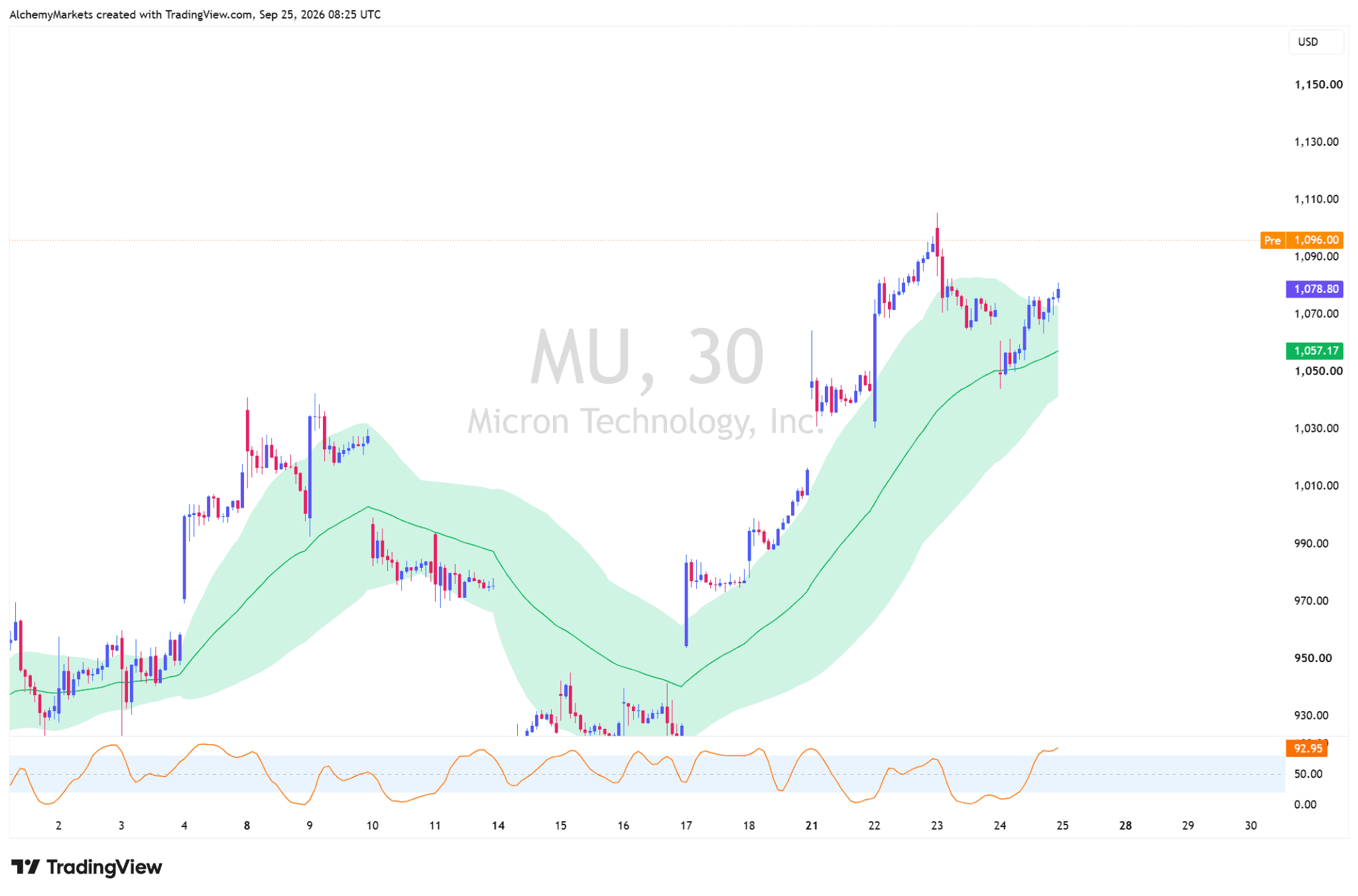
MU is a clean test of the current market logic: exceptional earnings and AI-linked return on capital can still attract money even when the risk-free hurdle rises.
Micron’s latest outlook called for about $50 billion of quarterly revenue, roughly 86% gross margin and around $31 of adjusted earnings per share. Its 30 September report is therefore a clean test of the current market logic:
Can exceptional earnings still outweigh a 5%+ risk-free rate?
If Micron posts strong numbers but fails to hold relative strength, the message changes. It would suggest that the discount-rate problem is starting to overpower even the companies with the strongest earnings support.
Falling oil is helping
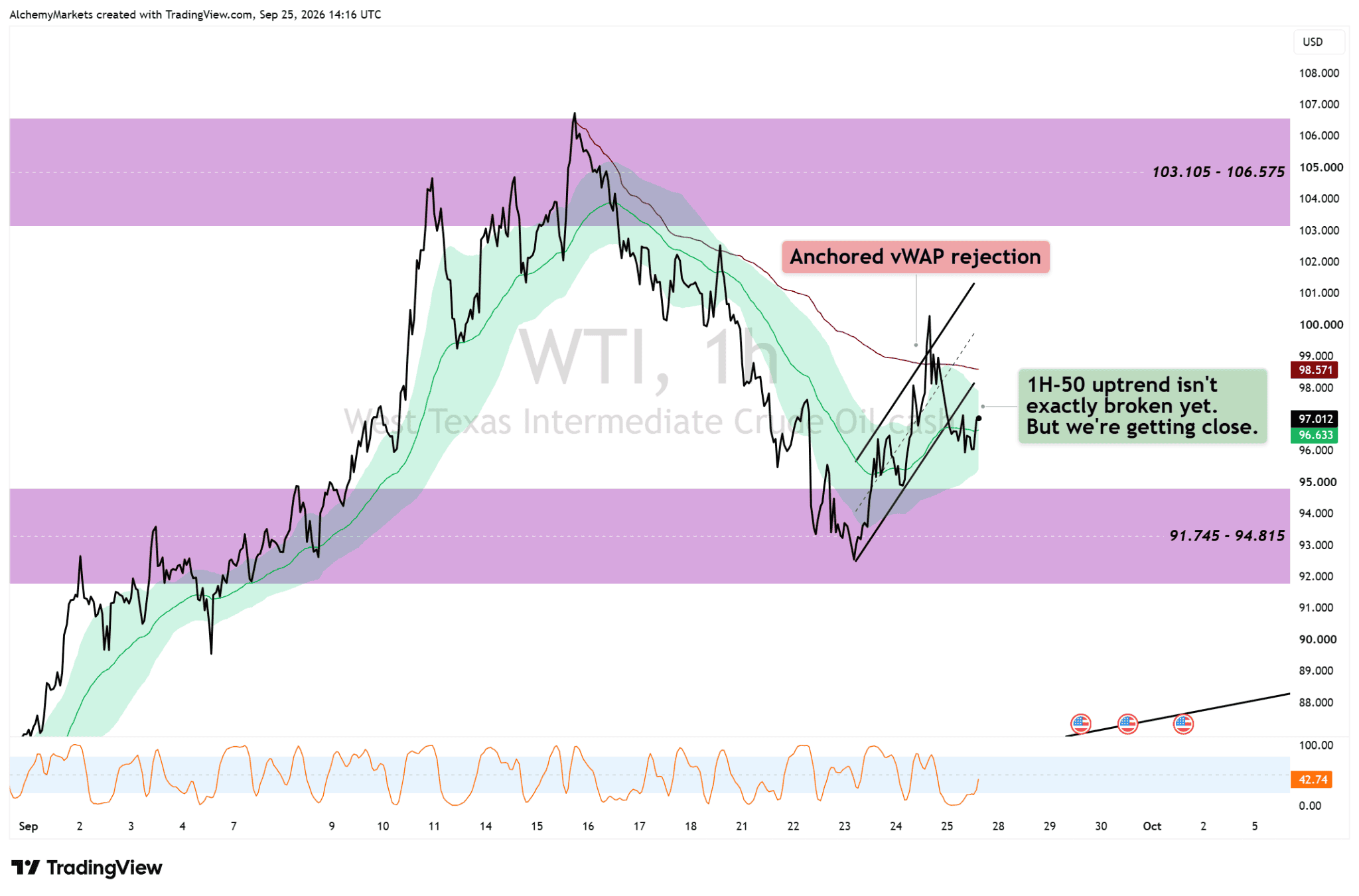
WTI is moving in the opposite direction to yields. Crude has rolled back from its recent rebound and rejected the anchored VWAP. That matters because lower oil can take some pressure off the inflation side of the rates story.
Technically, WTI is now testing the lower edge of its 1H 50-EMA band at one standard deviation. A confirmed break would strengthen the near-term bearish crude case and give markets another reason to expect some relief in inflation pressure.
WTI is close to losing its 1H uptrend:
There is still a catch. Lower crude does not automatically mean diesel, freight and refinery stress have normalised. Product tightness can keep part of the inflation impulse alive even while WTI falls.
What matters from here
Right now, the market is absorbing 5% yields better than expected. Oil is easing, AI leadership is holding, and most of the damage is showing up in breadth rather than in a full index selloff.
The warning sign would be a different combination: the 10-year stays above 5%, semiconductors lose relative strength, breadth keeps deteriorating and credit starts to weaken. That would show that the bond move is no longer being contained beneath the surface.
Bottom Line
5% Treasury yields are a real constraint, but the market has not treated them like a breaking point. As long as oil keeps easing and earnings leaders hold, the response can stay contained. The risk changes if yields remain high and semis, breadth and credit weaken together.