Written by:

- Chart of the Day
- September 14, 2026
- 6 min read
Gold, the Fed and the U.S. Debt Trap
Gold is entering Wednesday’s Fed decision with a bearish technical problem.
On the 4-hour chart, XAUUSD has slipped beneath its 50-EMA bollinger bands® and is testing the neckline of a head-and-shoulders pattern.
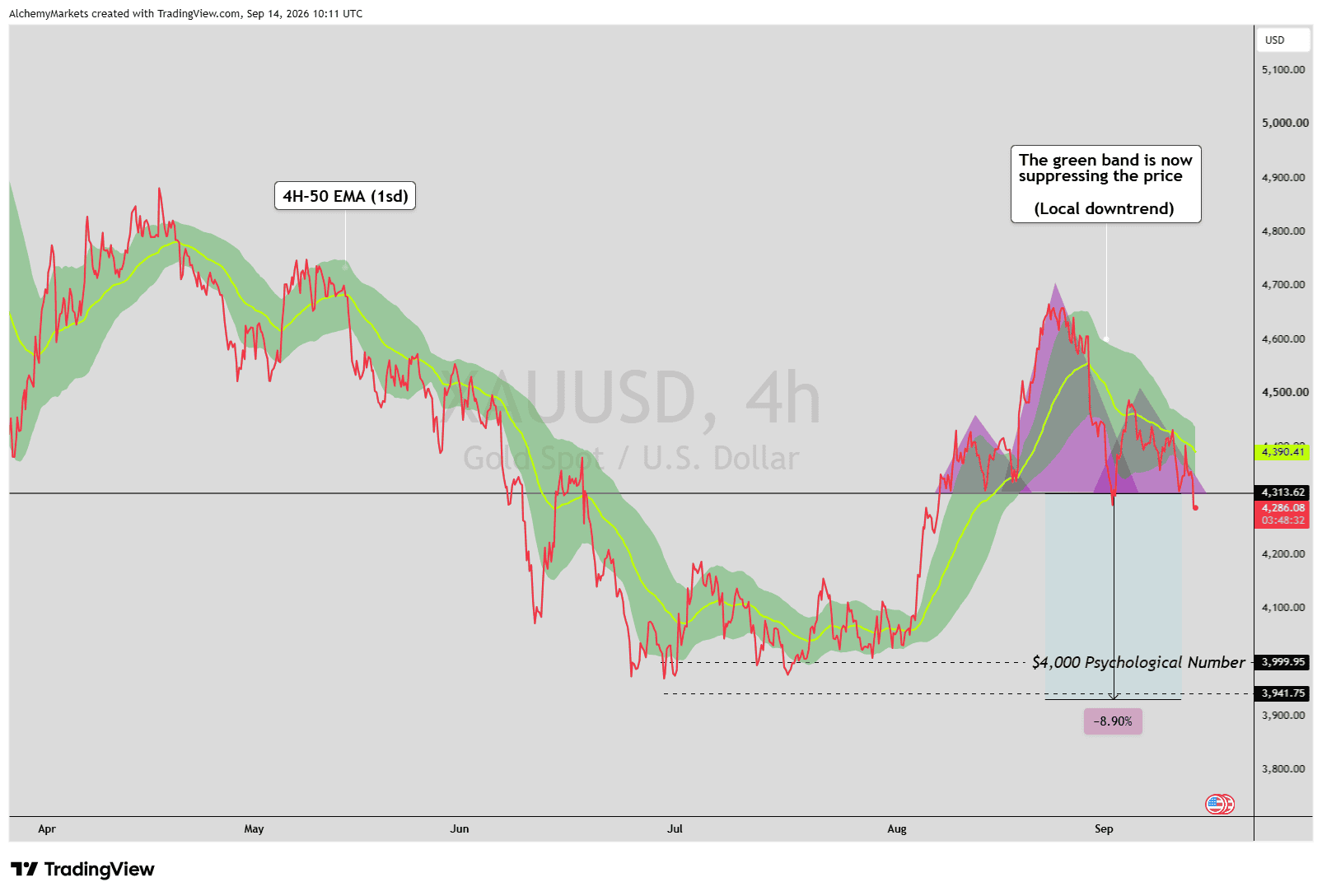
This is all converging as the Fed approaches a heavily priced September hike, which if confirmed, could send gold down to its measured move target of $3,940 to $4,000.
The important macro twist is this: the U.S. debt burden makes both hiking and holding potentially dangerous for long-term yields.
So it is still very much up in the air whether or not the Fed hikes under Warsh’s leadership.
QUICK READ
A 25 bp hike with a one-off / data-dependent guidance is the most likely base case. It answers the inflation-credibility problem without committing the Fed to a long hiking cycle that would intensify fiscal and growth stress.
For gold, that doesn’t mean it’ll instantly collapse. It has a 4H downside target near $3,940–$4,000, but needs more than a hike.
Bearish pressure may already be priced in, so Gold needs hawkish guidance strong enough to keep real yields and the USD elevated after the decision.
Why the Fed is boxed in
The FOMC decision lands Wednesday, 16 September at 2:00 p.m. ET, followed by the press conference at 2:30 p.m. ET.
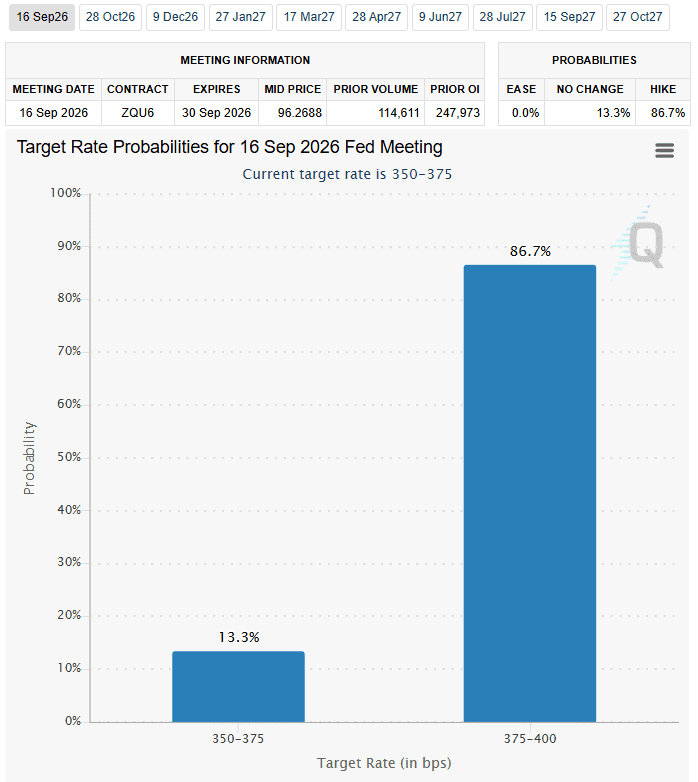
The FedWatch tool today shows 86.7% odds of a hike as the market base case.
However, the debate between a hike and a hold is intensely polarised, driven by conflicting economic signals:
The Case FOR a Hike (The Bear Case for Gold)
i. Sticky Inflation Data: U.S. CPI rose 3.4% YoY and accelerated 0.4% MoM, largely driven by a 4.3% MoM surge in fuel prices.
ii. Services and Telecom Skew: The ISM Services Prices Index jumped to around 72, a massive red flag. Additionally, an isolated 5.9% spike in wireless phone service prices (the “AT&T Effect”) directly contributed roughly 10 basis points to the core CPI reading.
iii. Inflation Credibility: A hike signals that the Fed will not tolerate second-round inflation effects stemming from transport and goods PPI spikes. A hold however, may signal the Fed’s erosion of independence from the government.
The Case AGAINST a Hike (The Bull Case for Gold)
i. Supply-Shock Reality: The current inflation spike is heavily tied to external supply constraints; specifically the Saudi East-West pipeline outage, which threatens up to 4% of global oil supply. Rate hikes destroy consumer demand but cannot produce more oil.
ii. Cracks in the Macro Foundation: Underlying economic growth is faltering, with weak PMIs, retail sales, and consumer confidence. Hiking now risks shattering a fragile consumer base.
iii. Midterm Timing & Policy Time-Lags: Monetary policy operates with significant time lags, and long-term Treasury yields (10Y/30Y) are already executing the tightening for the Fed. Triggering a severe credit freeze or market downturn immediately ahead of midterm elections invites intense political scrutiny
Why the Fed May Support the Treasury
The Fed is increasingly constrained by an inescapable fiscal debt trap. Gross U.S. federal debt has exceeded $40 trillion, and net interest plus entitlements now consume nearly 98.4% of total government receipts.
As 30-year Treasury yields push past 5.3% under pressure from “Bond Vigilantes” and $200 billion in corporate AI debt issuance, Treasury Secretary Scott Bessent has intervened by tripling bond buybacks to $6 billion per operation to suppress yields.
If the Fed pushes policy rates higher for an extended period, it threatens to explode Treasury refinancing costs and destabilise the long end of the curve (Sending long term yields even higher).
To prevent a severe rift with the Treasury and avoid triggering a bond market revolt, the Fed has a powerful incentive to cap the terminal rate and align with fiscal liquidity needs.
The “One-Off” / Hold Decision Logic
The AI Funding Squeeze and Competition for Capital
While headline inflation runs hot, the Federal Reserve is acutely aware of the massive capital requirements currently keeping the U.S. economy afloat. Major hyperscalers, such as Amazon, Alphabet, Microsoft, and Meta, are engaged in an unprecedented AI infrastructure buildout that now accounts for roughly 2% of U.S. GDP.
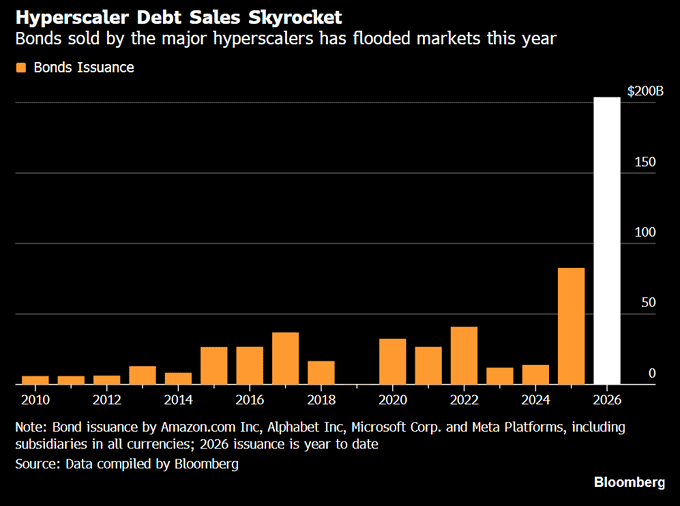
To fund this $700 billion capex sprint, these tech giants have flooded the market with over $200 billion in bond issuance this year alone.
This massive corporate borrowing is directly competing with heavy U.S. Treasury issuance, driving up borrowing costs across the board.
If the Fed were to commit to a sustained rate-hiking cycle, they risk pushing yields to a breaking point, widening credit spreads, and choking off the marginal AI projects that are currently driving economic growth.
Midterm Elections and the Need for Political Neutrality
Adding to this delicate balancing act is the looming November midterm election.
The current inflation spike is heavily tied to an external, geopolitical supply shock, specifically the Saudi pipeline disruption, which a monetary rate hike simply cannot fix.
Crushing consumer demand and risking a corporate credit freeze right before an election invites intense political scrutiny. Therefore, the Fed is highly motivated to maintain economic stability.
If they do deliver a 25-basis-point hike to protect their inflation-fighting credibility, it will likely be framed as a strict “one-and-done” move. This satisfies bond vigilantes in the short term while avoiding the political and economic disaster of halting the nation’s primary growth engine.
Gold Trading Setups
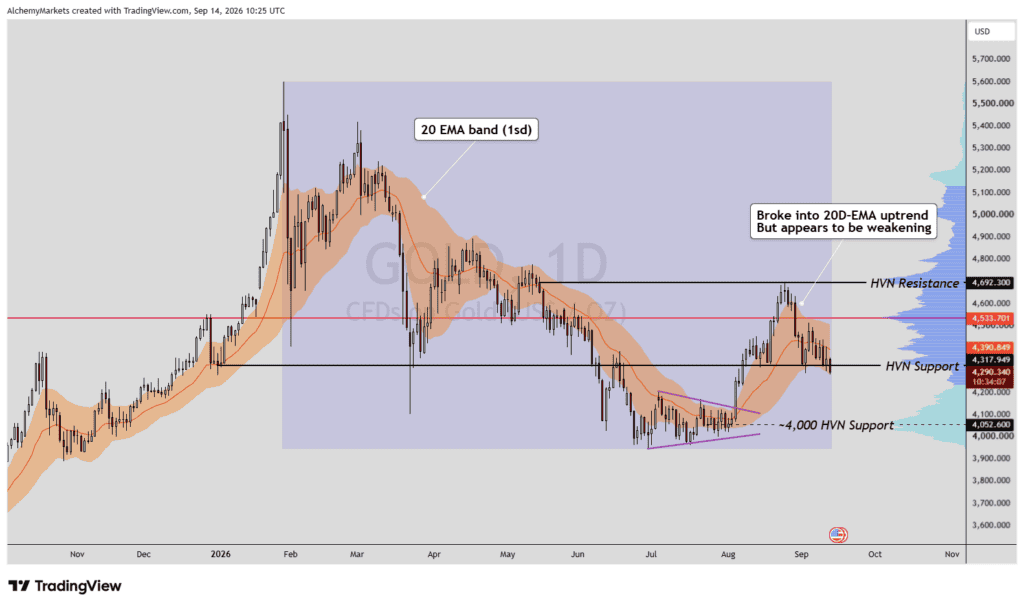
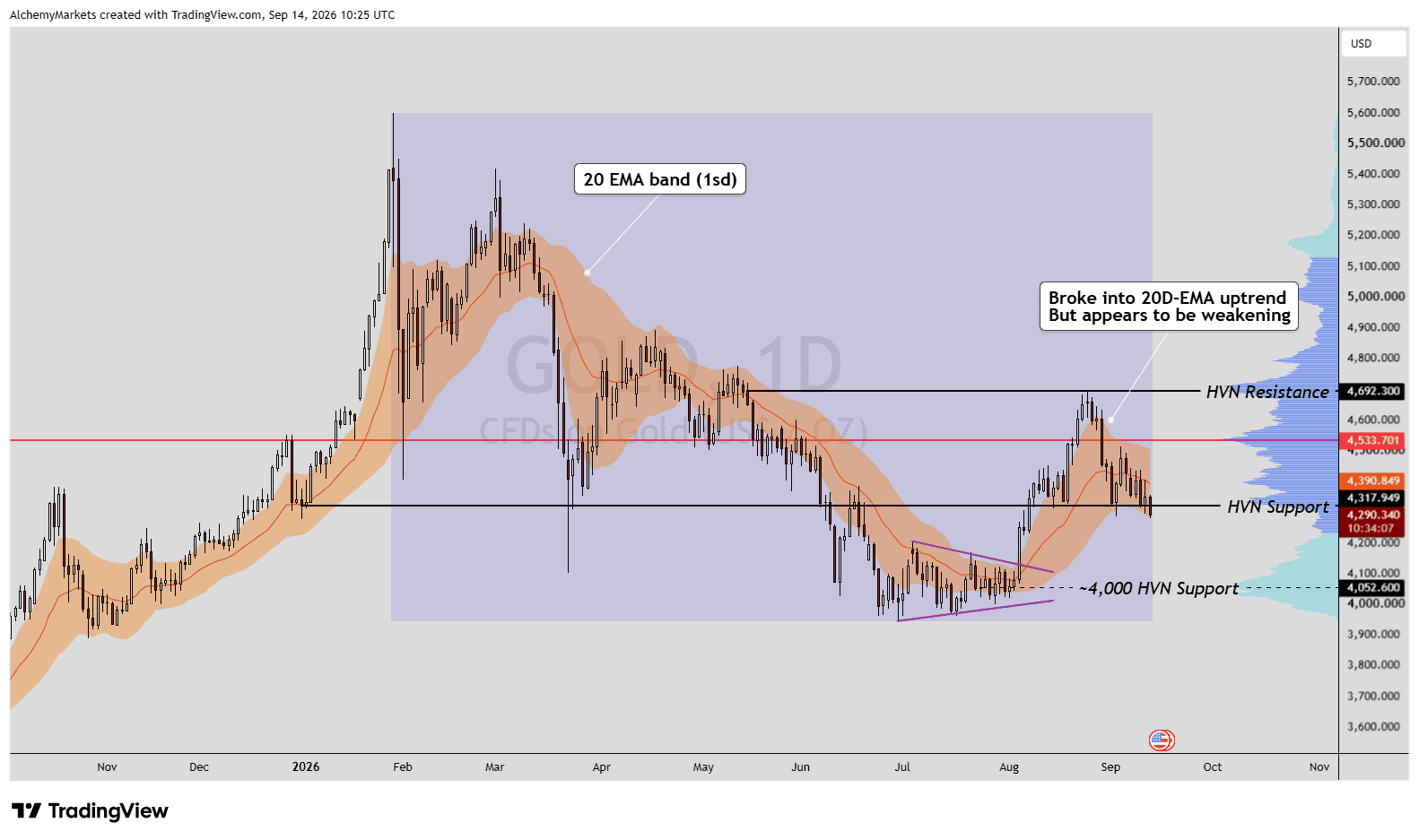
Gold is technically in a short-term uptrend on the daily timeframe, holding within a 20D-EMA band, but a breakdown is looking increasingly realistic.
Should it hold this band, however, it would mean Gold has not broken its daily uptrend yet and could simply be chopping sideways until it stabilises.
On the 4-hour chart however, XAUUSD is currently suppressed by the 50-EMA band (1 standard deviation) and is forming a head-and-shoulders pattern that could be breaking down.
The measured move target for this pattern points to the $3,940 to $4,000 psychological support zone.
The Open-Ended Outlook
Because the market is already pricing in an 86.7% probability of a hike, the actual catalyst for Gold’s breakdown won’t just be the 25 bps. It relies entirely on the Fed’s guidance.
If the Fed hikes with hawkish guidance: Real yields and the USD remain elevated, validating the bearish pattern and pushing Gold toward the $3,940-$4,000 target.
If the Fed holds or offers dovish/one-off guidance: Acknowledging the energy supply shock and underlying macro weakness, the bearish pattern would likely be invalidated, paving the way for the bullish, under-the-surface thesis to take control.