Written by:

- Chart of the Day
- September 17, 2026
- 3 min read
Why the VIX Is Falling After a Hawkish Fed
The Fed raised rates by 25 basis points on Wednesday to 3.75-4.00% and kept the door open to further tightening.
But by Thursday, the VIX was back near 15-16, and WTI had fallen back towards $100.
The market appears to be pricing a hawkish Fed alongside a smaller immediate energy shock – but one would expect the VIX to climb higher, not get rejected here. So what gives?
The Fed is still the hawkish part of the story
There was little in Wednesday’s decision to suggest an immediate return to easier policy. The Fed raised rates unanimously, while the September projections showed policymakers becoming less worried about growth and unemployment even as inflation risks remained skewed higher.
That leaves traders with elevated Treasury yields and a Fed that believes the economy can tolerate tighter policy. The question is whether the Middle East energy shock will keep adding to that inflation problem.
Oil is giving the market some breathing room
WTI surged above $100 as the Middle East conflict disrupted shipping and threatened Saudi energy infrastructure. That move is now reversing.
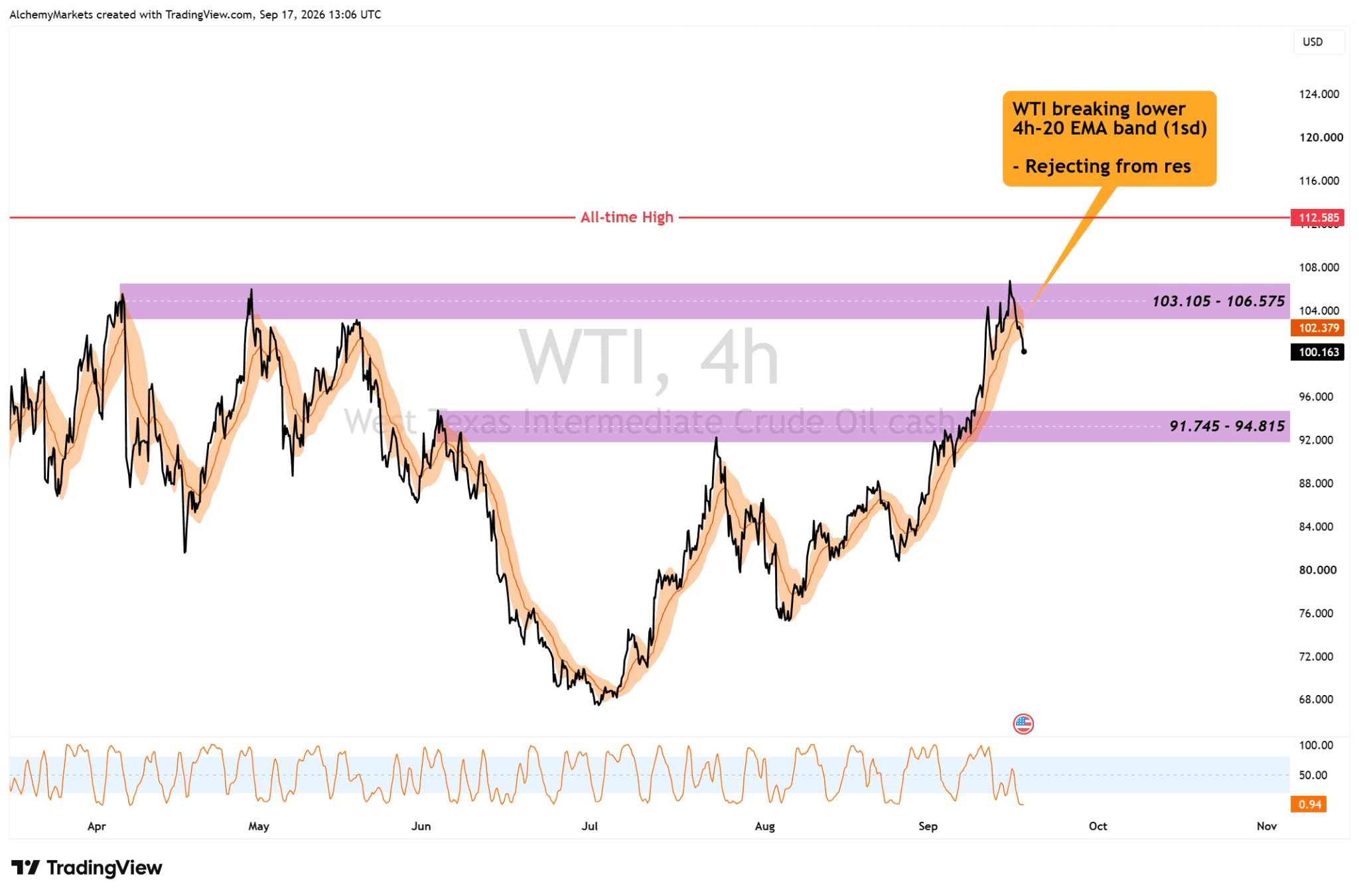
On the 4-hour chart, WTI has rejected the $103.10-$106.58 resistance zone and broken back below its 20 EMA band.
US crude dropped to around $99.43 on Thursday as immediate supply fears eased, helped by additional Saudi cargoes moving through Oman.
And, expectations that damaged export infrastructure could recover faster than initially feared.
Oil matters directly to the Fed debate. Higher crude feeds into diesel, freight and production costs; if those pressures keep rising, the Fed has less room to look through the shock. A retreat in oil does not solve inflation, but it reduces the risk that the shock broadens.
Diplomacy is becoming part of the oil trade
There has also been a shift in the diplomatic backdrop. US officials met Houthi representatives in Muscat, Oman, with Oman helping to organise the talks. Houthi representatives said they intended to continue observing their existing ceasefire with the United States.
Separately, Saudi Arabia has asked China to help restrain the Houthis. Reuters reported that Beijing subsequently pressed Iran to use its influence over the group as concern grew over threats to Saudi oil exports and Red Sea shipping.
None of this resolves the conflict. The Houthis still pose a major shipping risk around the Bab el-Mandeb, but traders do not need a final settlement to remove some geopolitical premium from oil. They need evidence that the direction of risk is changing.
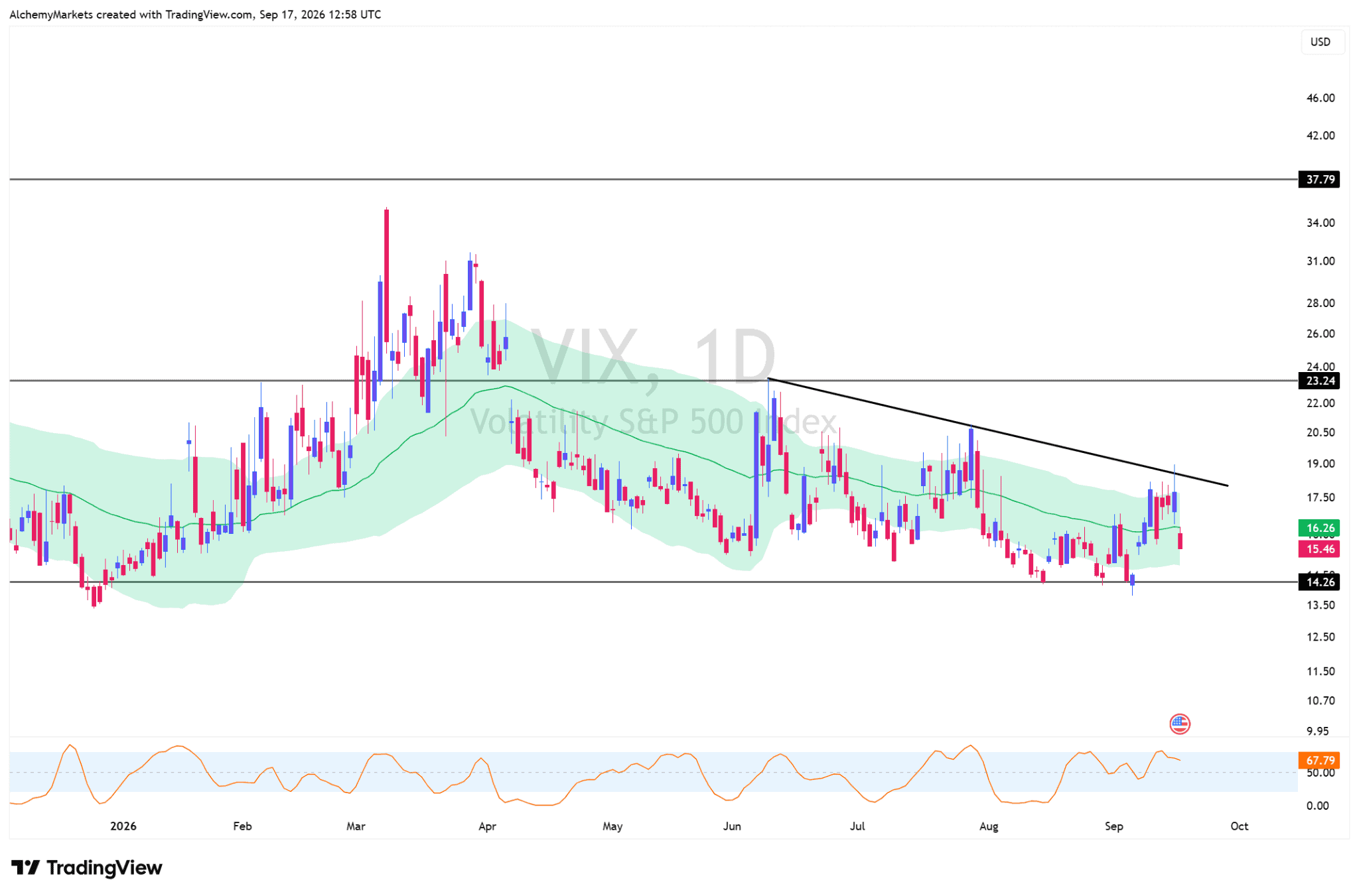
That helps explain the VIX, which has again failed to break its descending trendline and has fallen back towards 15-16. However, that does still prime it in a position for another push higher.
The market is separating Fed risk from energy risk
The Fed has tightened again, inflation is still too high and another hike remains possible.
At the same time, the immediate Middle East de-escalation news is easing the margin.
That creates a straightforward transmission: diplomatic progress lowers the geopolitical oil premium; lower oil reduces the inflation tail risk; that reduces the risk of an even more aggressive Fed path; VIX falls; equities get room to recover.
That doesn’t mean the market has decided the Fed is dovish. It means one of the risks that could have made a hawkish Fed much more damaging is being repriced lower.
What confirms the move?
For the VIX, a move back above roughly 18-19 would start challenging the current calm. That opens up a rise to the 20’s levels.
For WTI, a reclaim of $103.10-$106.58 would put the energy-inflation risk straight back into the market.