Written by:


- Chart of the Day
- October 15, 2026
- 4 min read
TSMC Beats, But Is the AI Sell-Off Overdone?
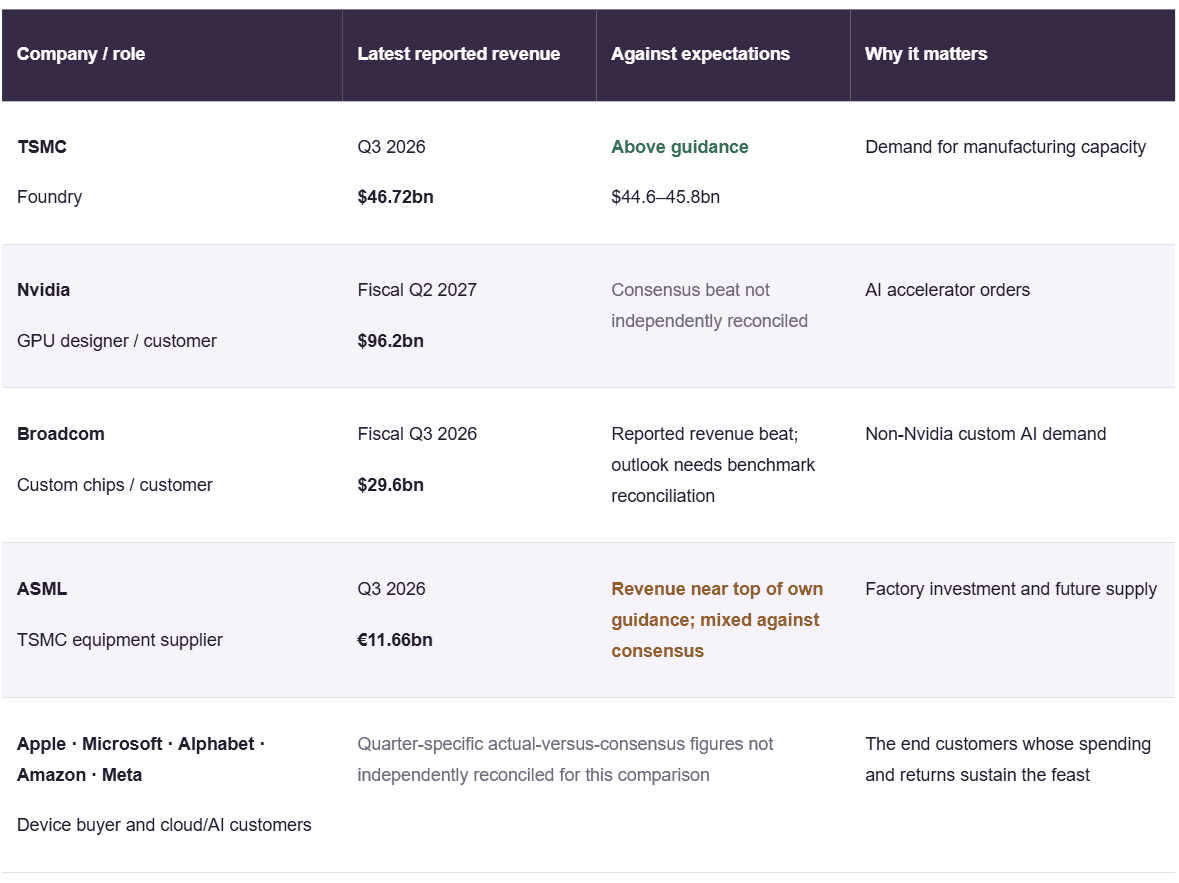
TSMC runs the busiest soup kitchen in the AI market. Nvidia wants more GPUs. Apple wants smaller, better chips. Microsoft, Google, Amazon and Meta keep ordering more computing power.
TSMC is the chef who has to feed them all. And today, chef delivered.
TSMC reported US$46.72 billion in Q3 sales, up 41.2% from a year earlier in US dollars.
Gross margin was 66.4% and operating margin reached 58.7%, above its previous guidance. Management expects fourth-quarter revenue of US$52.3–54.3 billion.
And, orders are still coming. So why are chip stocks selling?
Who is waiting for a bowl?
TSMC manufactures advanced chips designed by companies such as Nvidia, Apple, AMD and Broadcom; hyperscalers also depend on that supply directly or through chip partners.
ASML is another important key player – they are the equipment supplier to TSMC, not a chip customer. But, they benefit from directly from the demand for chips,
How the market got here
Here is the timeline and event summary tabulated for quick reference:
Financial & Tech Market Developments Timeline
| Date / Time | Event / Catalyst | Details & Market Impact |
| 13 October | CXMT Tech Plans & HBM Market | Chinese memory maker CXMT’s updated technology plans revived questions about future DRAM pricing power. Commercial High Bandwidth Memory (HBM) displacement remains unproven. |
| 14 October | US CPI Release | US Consumer Price Index (CPI) surprised higher at 3.7% YoY, putting valuation pressure on richly valued AI shares. |
| 15 October | Asian Market Sell-Off | Severe selling hit South Korea’s semiconductor heavyweights (e.g., Samsung Electronics, SK Hynix), while Japanese technology shares also weakened. |
| 15 October | TSMC Q3 Earnings & Guidance | TSMC reported strong earnings alongside an ambitious Q4 outlook, challenging the immediate AI-demand-collapse narrative. |
| Today (15 Oct, 8:30 ET) | US PPI Release | September US Producer Price Index (PPI) scheduled at 8:30 ET offers the next major inflation test for global markets. |
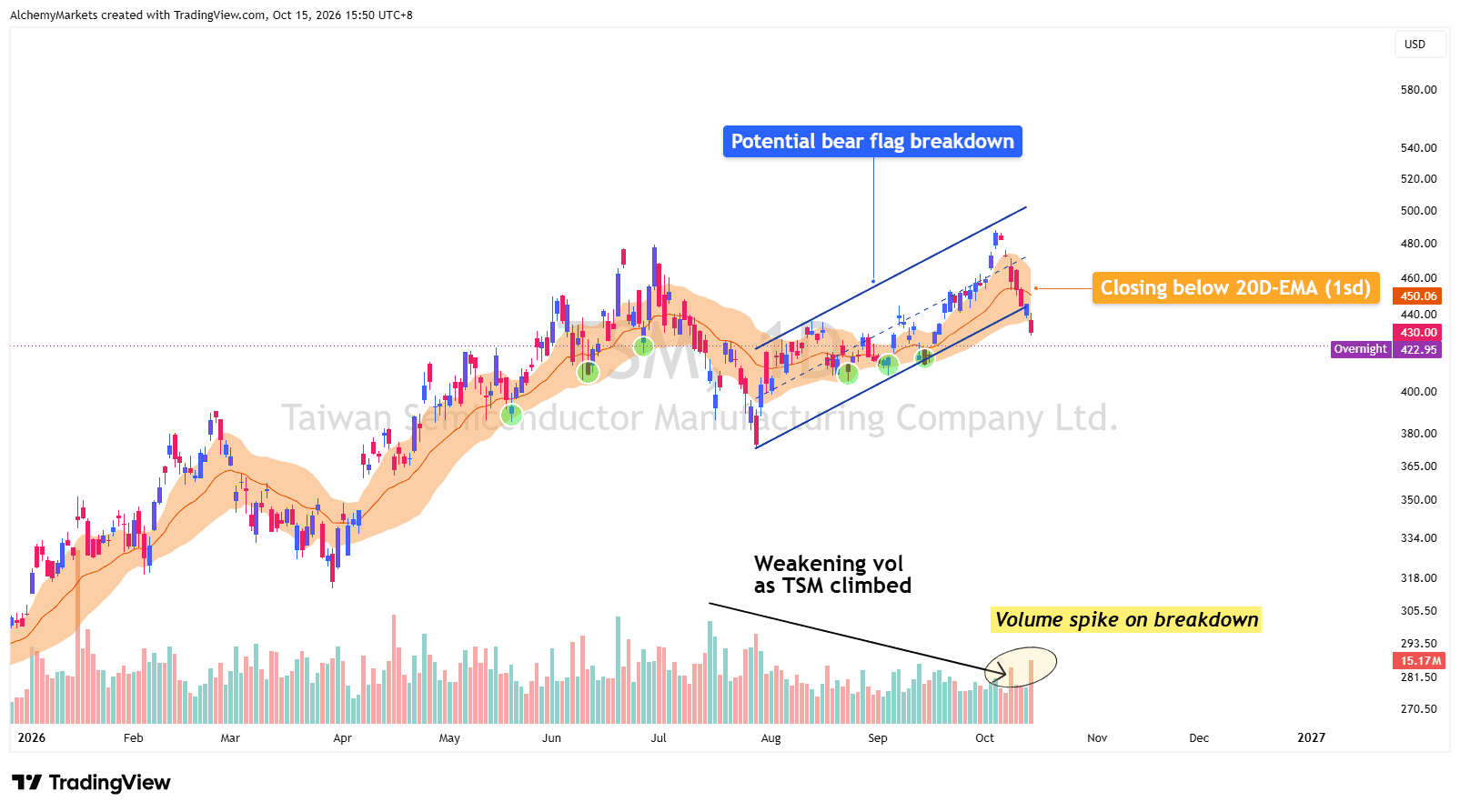
First test: can TSM reclaim the band?
For me, the first sign of a bounce would be TSM reclaiming its 4H-20 EMA band and holding it on a retest.
The earnings do not make the chart bullish by themselves. Another rejection would tell us sellers are still in control.
Second test: are bonds taking equities’ money?
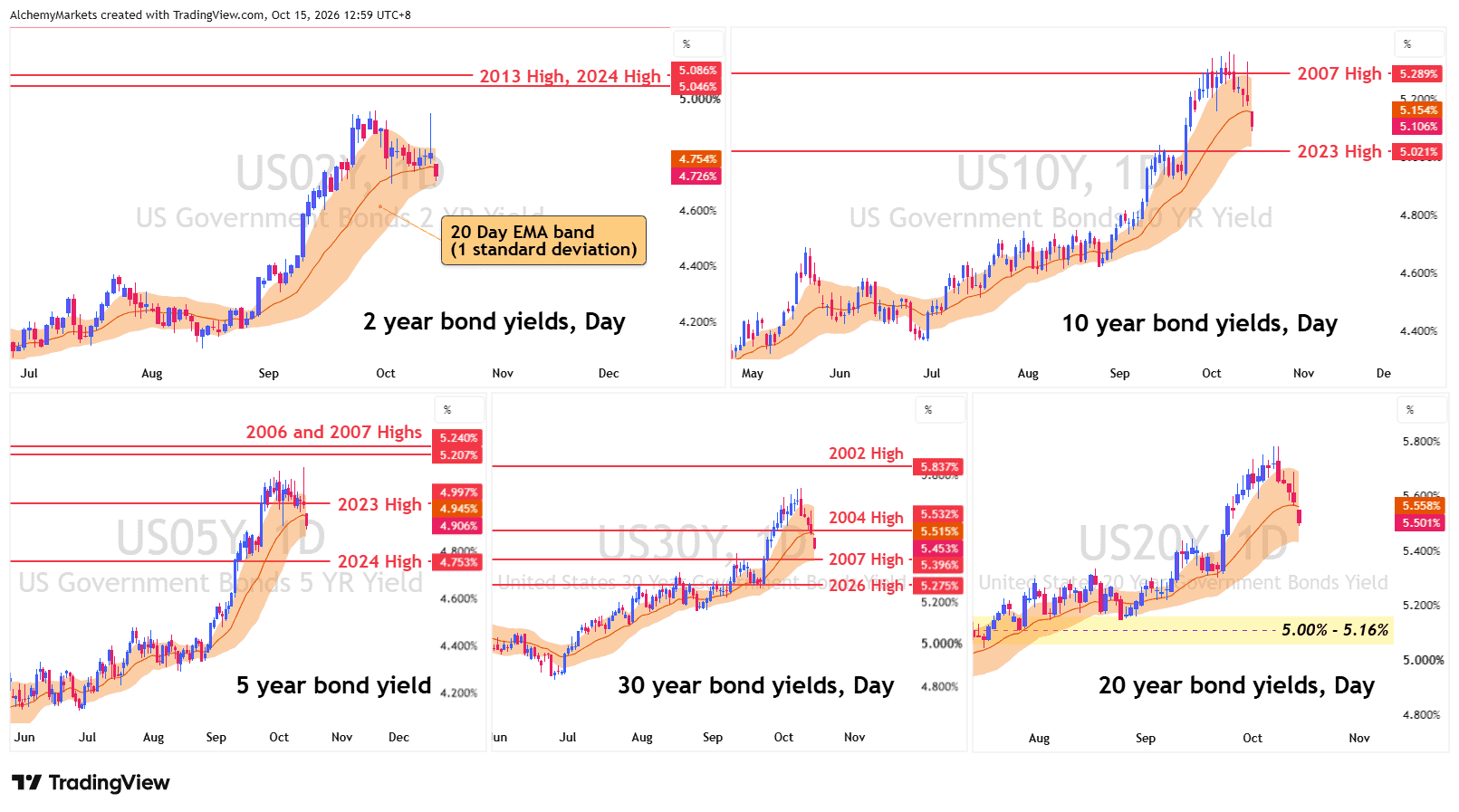
The bond market gives us another clue. Longer US Treasury yields fell after the CPI scare, even as the 2-year yield rose.
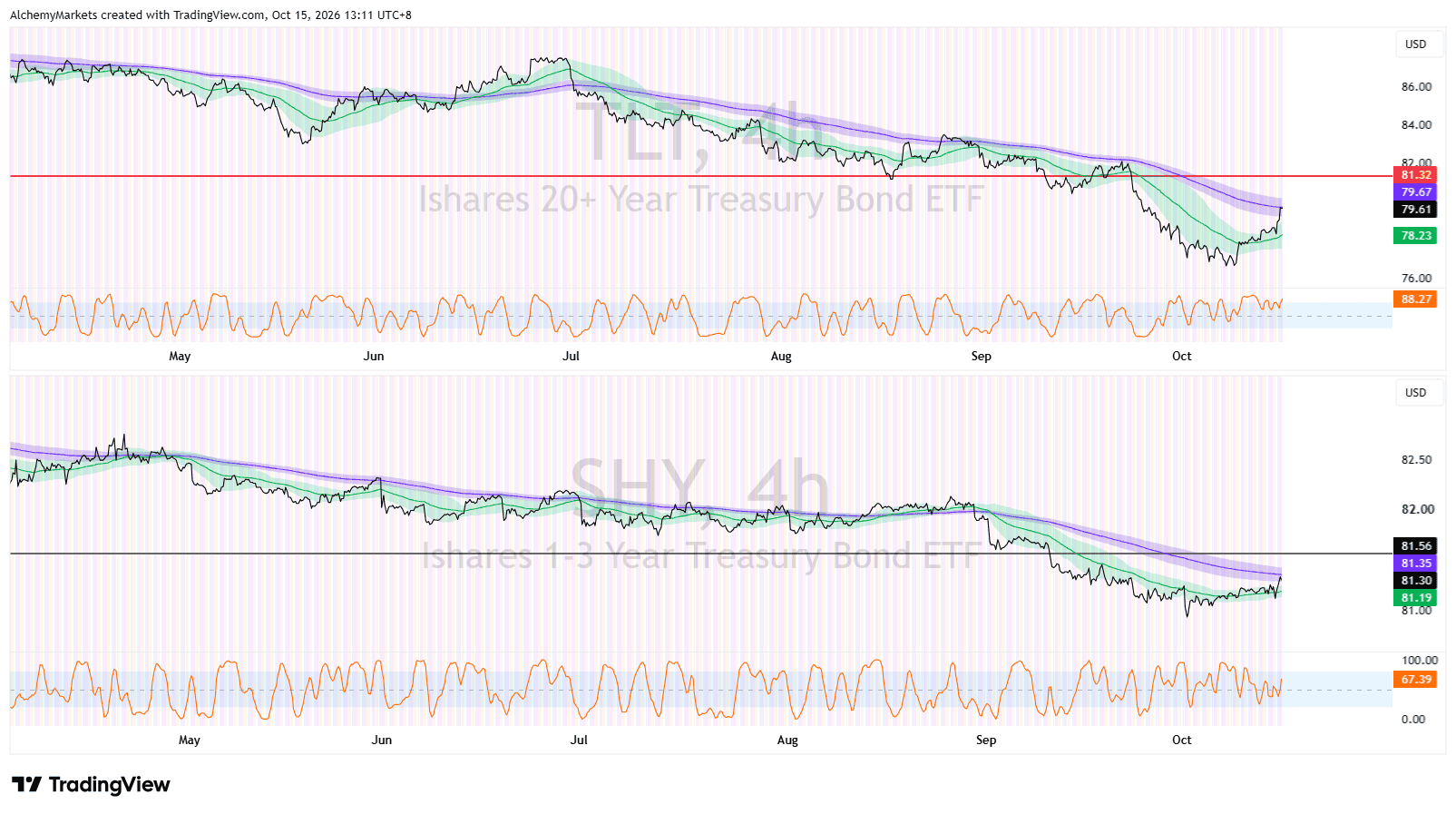
TLT and SHY can help show where bond buying is concentrated. That can give tech shares some breathing room, but only if investors are buying bonds for value rather than running from stocks.
Fed officials have suggested the next hike need not be immediate, but inflation is not beaten.
Today’s PPI could keep the sell-off going or give the market a reason to steady.
Bottom line: AI demand is still strong, the earnings show this. But, the markets may be more interested in derisking (or investing in bonds) for now, until the price action says otherwise.
A TSM 4H band reclaim would strengthen the case for a recovery. If TSM fails the reclaim, or the upcoming PPI reignites yield pressure, the market may need more time, even with great earnings.
FAQ: The risks behind the feast
What about the dollar?
DXY could continue falling before finding support at 101. The index has lost its uptrend on the 4H-20 EMA band (1sd), which has been a clean trending support for the entirety of September:
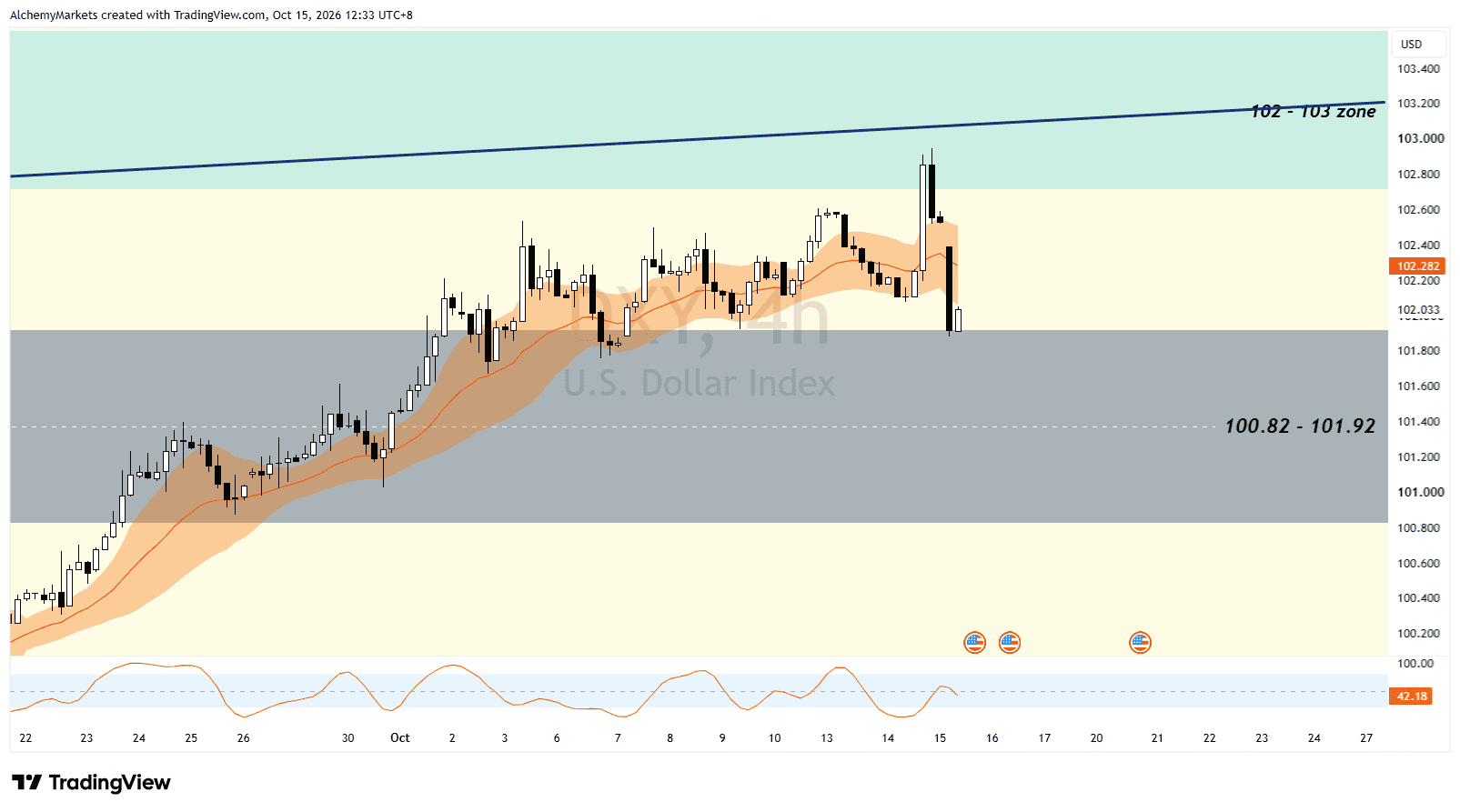
However, that alone does not erase the markets’ risk-off appetite (if they do choose to derisk into bonds), and ultimately we’ll need TSMC to make a recovery to show that AI markets can stabilise.
Does CXMT threaten the entire AI market?
CXMT may increase competition in standard/server DRAM over time, but that is not proof it can immediately replace advanced HBM or TSMC manufacturing. Lower hardware costs could also make AI services cheaper and more widely used, which is supportive in the long run, but bearish in the short term for Micron and SK Hynix.
What would prove this is a genuine AI-demand downturn?
Look for several independent signs across the bigger AI names: weaker chip orders or pricing, downward capex and revenue revisions, poorer utilisation, falling customer returns and widening funding stress.