Written by:

- Opening Bell
- May 18, 2026
- 4 min read
EUR/USD Outlook: Why a Breakout Toward 1.20 Could Be Closer Than Markets Think
Markets Are Ignoring Growing Macro Risks
Much like equities, the FX market has spent recent months trading with a “glass-half-full” mindset, largely brushing aside the growing geopolitical and macroeconomic risks building beneath the surface. Investors continue to lean into risk assets, encouraged by the ongoing AI-driven rally and optimism surrounding a potential de-escalation between the US and Iran.
However, this optimism may be masking a more dangerous reality.
Inflationary pressures are beginning to broaden across major economies, while growth expectations are simultaneously weakening — a classic stagflationary backdrop. Historically, this combination creates instability across both equity and currency markets, especially when central banks are forced to maintain tighter monetary policy for longer than markets anticipate.
The result is a market environment where the US dollar may remain stronger in the short term before eventually weakening later in the year as economic momentum slows and the Federal Reserve pivots toward rate cuts.
Why the Dollar Could Stay Stronger for Longer
Despite mixed performance so far this year, the dollar still has room for additional upside in the near term. Markets are increasingly pricing in the possibility that the Federal Reserve may need to maintain restrictive policy as inflation remains sticky.
With US economic activity still relatively stable, rising inflation expectations could temporarily support higher Treasury yields and renewed dollar demand.
This dynamic creates pressure on EUR/USD in the short run, particularly as traders reassess expectations for aggressive Fed easing.
Even though the European Central Bank is still expected to hike rates in June, the euro could struggle initially if US inflation surprises to the upside again. Under this scenario, EUR/USD could revisit the 1.15 region before finding stronger support.
Still, the broader macro outlook suggests that dollar strength may ultimately fade later in the year as:
- US growth slows materially
- Political risk premiums rise ahead of the November midterms
- Financial markets begin pricing in Federal Reserve cuts by December
That longer-term outlook continues to support a year-end EUR/USD target near 1.20.
Commodity-Linked Currencies Continue to Outperform
As inflation becomes the dominant market theme once again, central bank reaction functions will remain the primary driver of FX trends.
Currencies backed by:
- Higher real interest rates
- Strong commodity exports
- Resilient economic activity
are likely to continue outperforming.
Among the G10 currencies, the Norwegian krone and Australian dollar remain attractive due to their favorable export mix and relatively hawkish central bank positioning.
Meanwhile, currencies with deeply negative real rates and weaker commodity exposure — particularly the Japanese yen — are likely to remain under pressure.
Technical Analysis: EUR/USD Bull Flag Signals Potential Move to 1.20
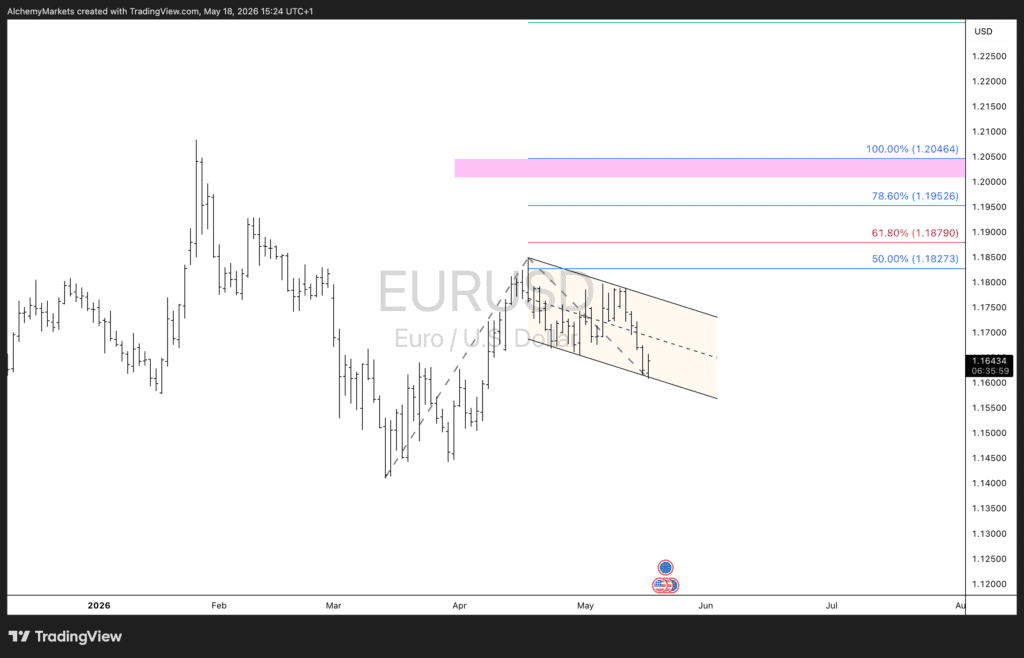
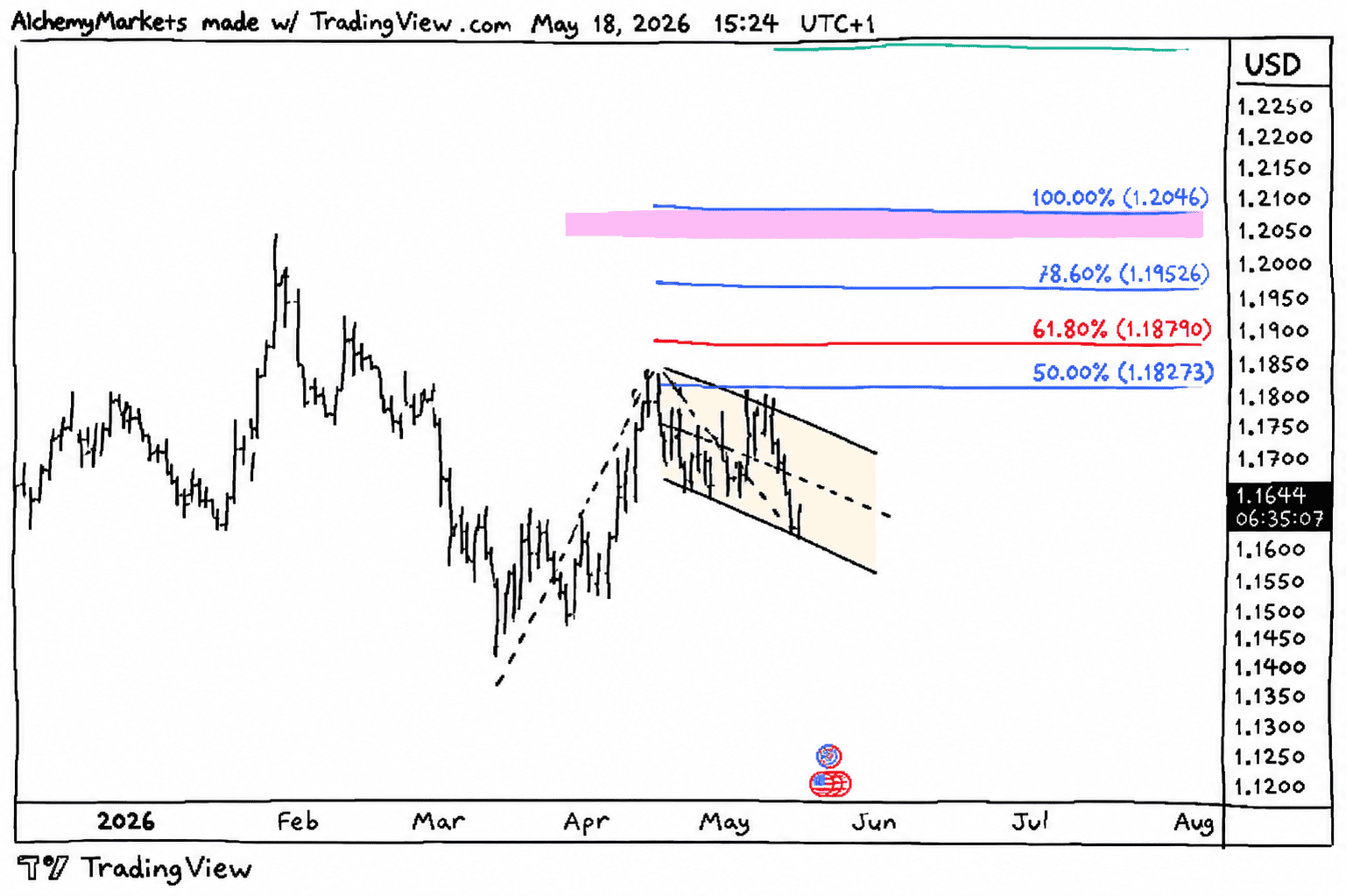
From a technical perspective, EUR/USD is currently trading inside a descending bull flag formation following its impulsive rally earlier this year.
The recent consolidation appears corrective rather than bearish, suggesting the broader uptrend may still be intact.
A confirmed breakout above the upper trendline of the bull flag could trigger a continuation move toward the 1.20 region.
Importantly, the 1.20 level is not just a psychological round number.
It also aligns with:
- The 100% Fibonacci extension target
- Major horizontal resistance from previous price structure
- A historically significant EUR/USD supply zone
This confluence adds substantial technical weight to the 1.20 target and strengthens the probability of a larger upside extension if momentum accelerates.
The chart structure suggests that once the bull flag breaks decisively, buyers could quickly target the 1.18 region initially before extending toward 1.20.
What Traders Should Watch Next
Several catalysts could determine whether EUR/USD reaches the 1.20 target:
Bullish Catalysts
- Slowing US growth data
- Softer labor market conditions
- Federal Reserve dovish pivot
- Declining US yields
- Improved Eurozone growth expectations
Bearish Risks
- Persistent US inflation
- Escalation in Gulf tensions
- Stronger-than-expected US economic activity
- Risk-off market sentiment
For now, markets remain heavily positioned toward optimism. But if inflation continues broadening while growth weakens, volatility across FX markets could increase sharply heading into the second half of the year.
Final Thoughts
The FX market may currently be underestimating the risks associated with stagflationary pressures and geopolitical uncertainty. While the dollar could remain firm in the near term as markets price tighter Fed policy, the broader macro backdrop still points toward eventual dollar weakness later this year.
Technically, EUR/USD remains constructive despite recent consolidation. A breakout from the current bull flag structure could pave the way toward the 1.20 level — a major psychological target that also coincides with the 100% Fibonacci extension and significant horizontal resistance.
If momentum and macro conditions align, EUR/USD could be setting up for one of the market’s most important FX moves of the year.