Skriven av:


- Opening Bell
- oktober 19, 2026
- 5 min läsning
Stocks Rebound Pre-Market amid War Risks & Extreme Fear
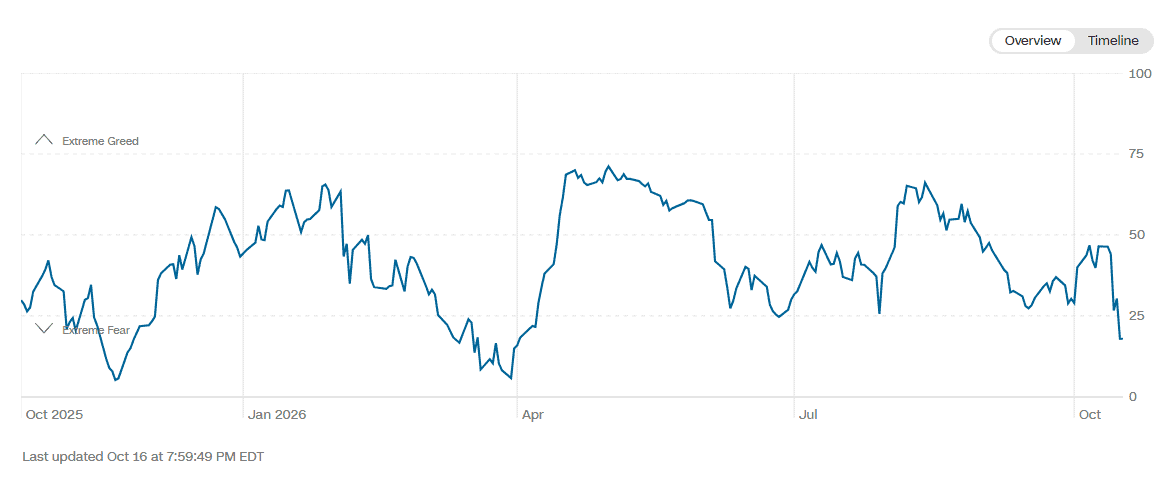
Last Friday (Oct 16), markets entered Extreme Fear, with CNN’s Fear & Greed Index falling to 18.
WTI crude reached $100, while Brent climbed towards $110.
Yet today, US stock CFDs are rebounding ahead of the New York cash-market open.
With geopolitical tensions sending mixed signals, this raises two interesting questions:
- Has the market become fearful enough to trigger a short-term rally?
- Could escalating war risks send stocks even lower later this week?
My personal bias is yes to both. I expect markets to recover first, before potentially resuming their decline.
Before explaining why, let’s look at what happened over the weekend.
Friday (Oct 16): Trump waived major new sanctions against Russia, potentially easing pressure on Russian oil exports and keeping peace negotiations open.
Saturday (Oct 17): Tensions between Washington and Kyiv intensified over the sanctions decision and Ukrainian attacks on Russian energy infrastructure. This complicates peace negotiations, even as Washington pushes for a settlement.
Sunday (Oct 18): Trump accused Zelenskyy of being unwilling to end the war, although diplomatic discussions continued.
Meanwhile, tensions in the Middle East escalated.
Egypt pledged military support to Saudi Arabia against the Houthis, following attacks on Saudi energy facilities and Riyadh’s airport.
Israeli PM Netanyahu also spoke of eliminating Iran’s nuclear threat alongside Trump, while making regime change in Tehran an explicit objective.
These developments raise the risk of a wider regional conflict, potentially threatening oil supplies.
Yet despite the growing war risks, oil is retreating from technical resistance, while US stocks are attempting to recover from extreme fear.
So, what’s driving the recovery, and why might it not last?
Dow is Holding Up Better than Technology Stocks
The recovery is not equally convincing across the three major US indices. The Dow has held its value better than the Nasdaq, while the S&P 500 sits somewhere in between. That is worth noting before calling this a broad market recovery.
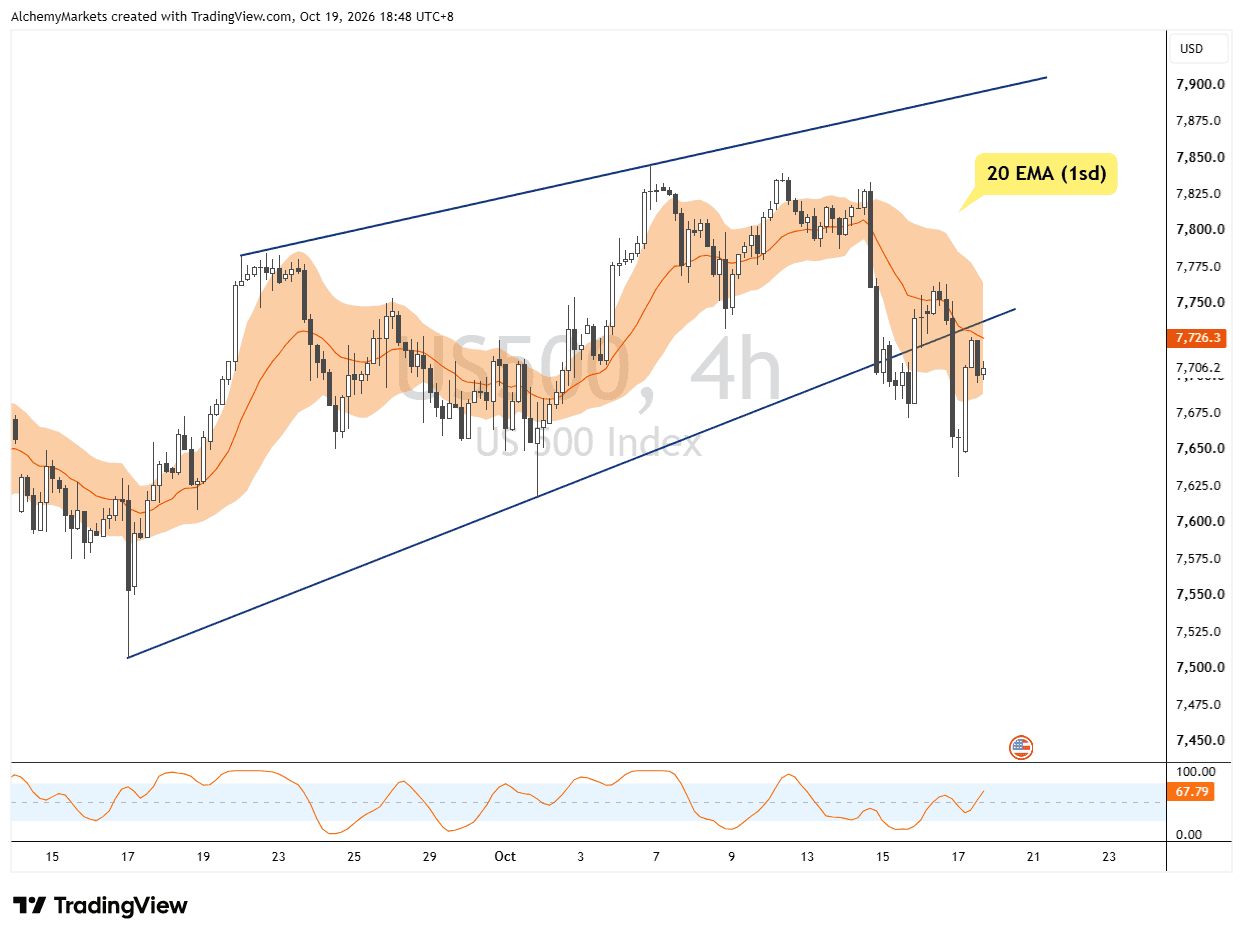
US500, 4H chart: The S&P 500 CFD is bouncing after a sharp decline, but price is struggling around its orange 20 EMA band. Alchemy Markets / TradingView, 19 October 2026.
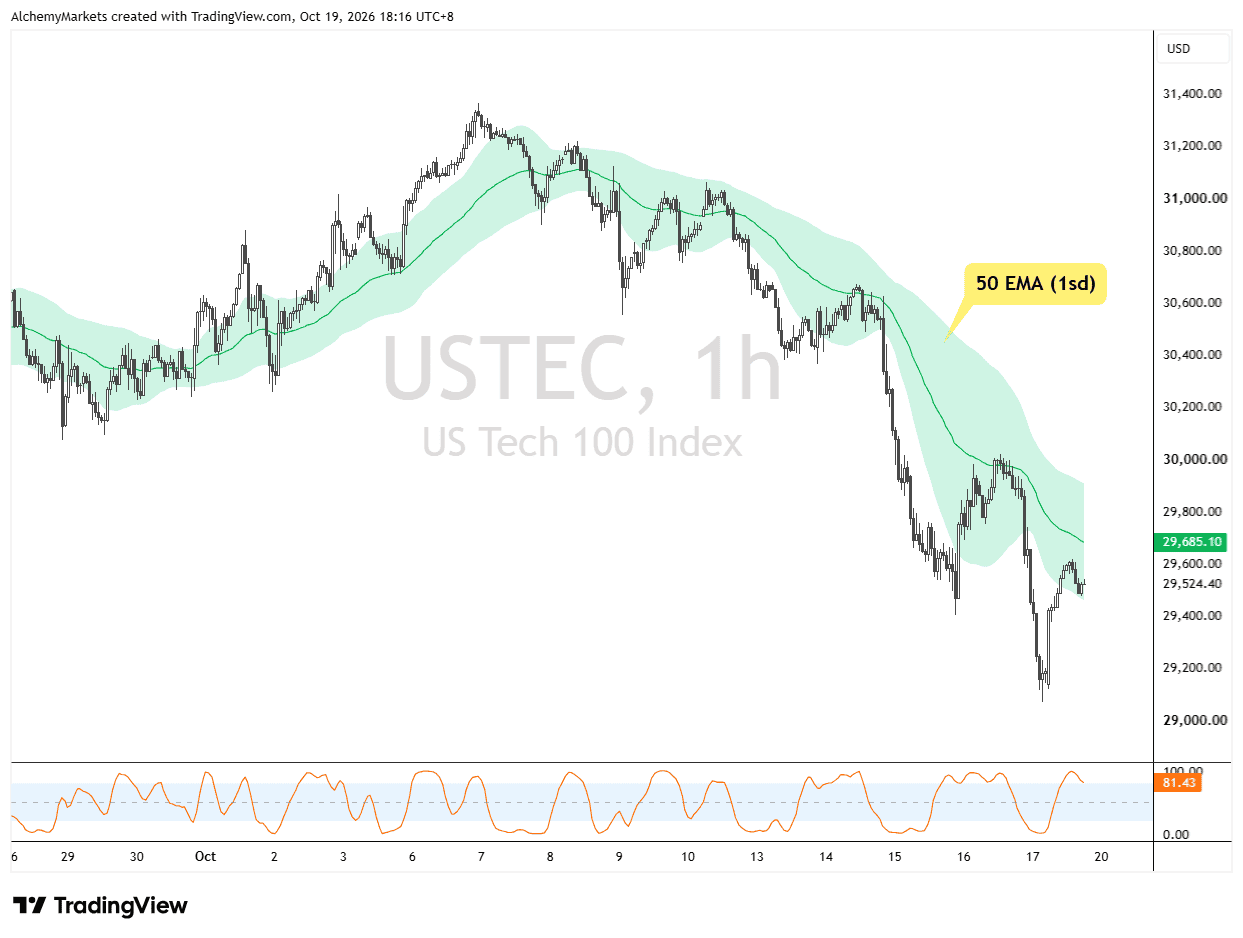
USTEC, 1H chart: The Nasdaq 100 CFD has bounced from its lows but remains below its green 50 EMA band. Alchemy Markets / TradingView, 19 October 2026.
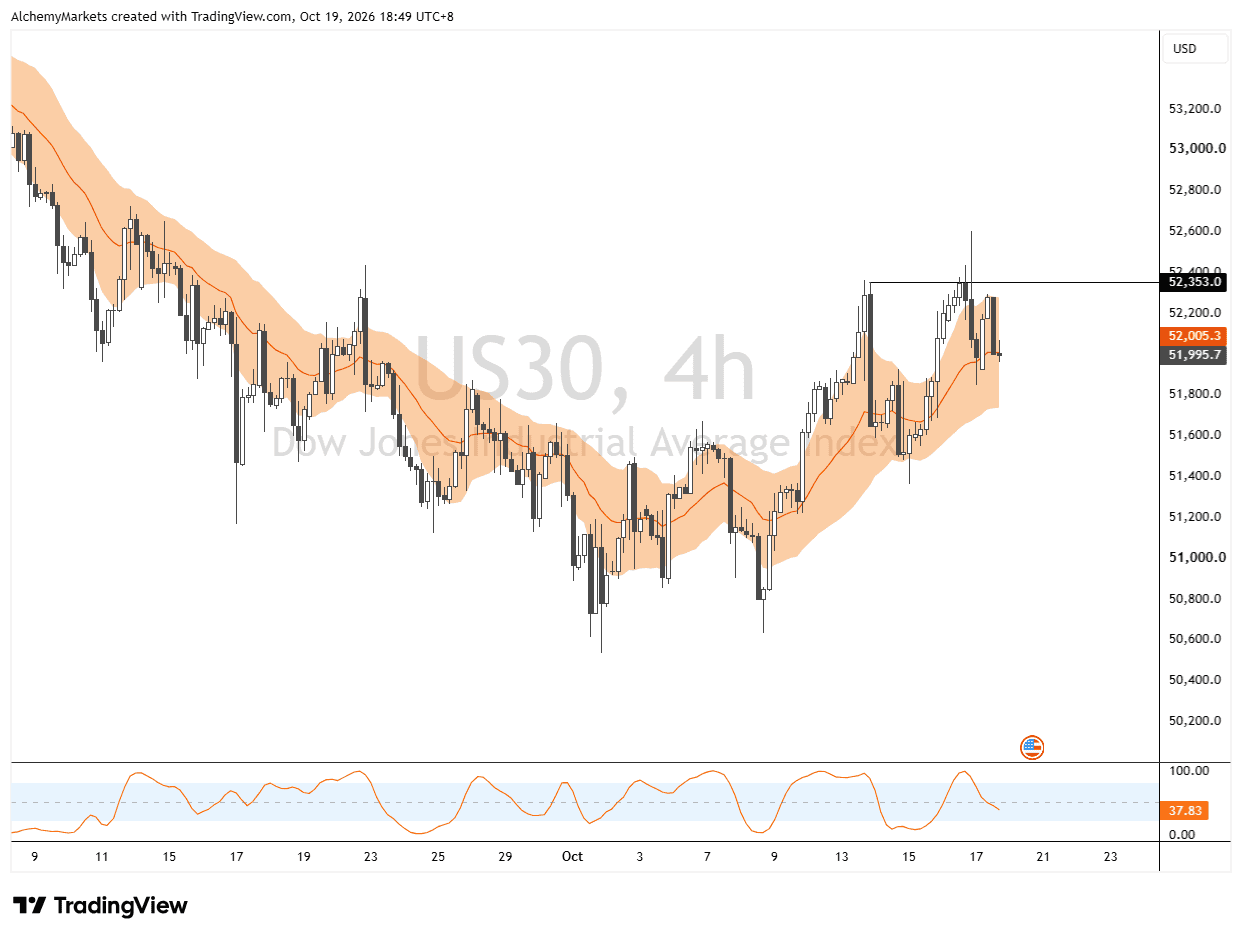
US30, 4H chart: The Dow CFD has held up comparatively better, hovering close to its orange 20 EMA band. Alchemy Markets / TradingView, 19 October 2026.
For these charts, the orange band tracks the 20-period EMA and the green band tracks the 50-period EMA, each with a one-standard-deviation envelope. The Dow’s relative resilience is welcome. But the Nasdaq has further to recover before I would call the broader sell-off over.
Oil is retreating, but the supply risks remain
One explanation for the stock rebound is oil. Trump’s decision to waive the new Russia sanctions has raised hopes that more Russian crude and fuel could reach buyers.
That eases some of the pressure on supply expectations, even though it does not put additional barrels on the market overnight.
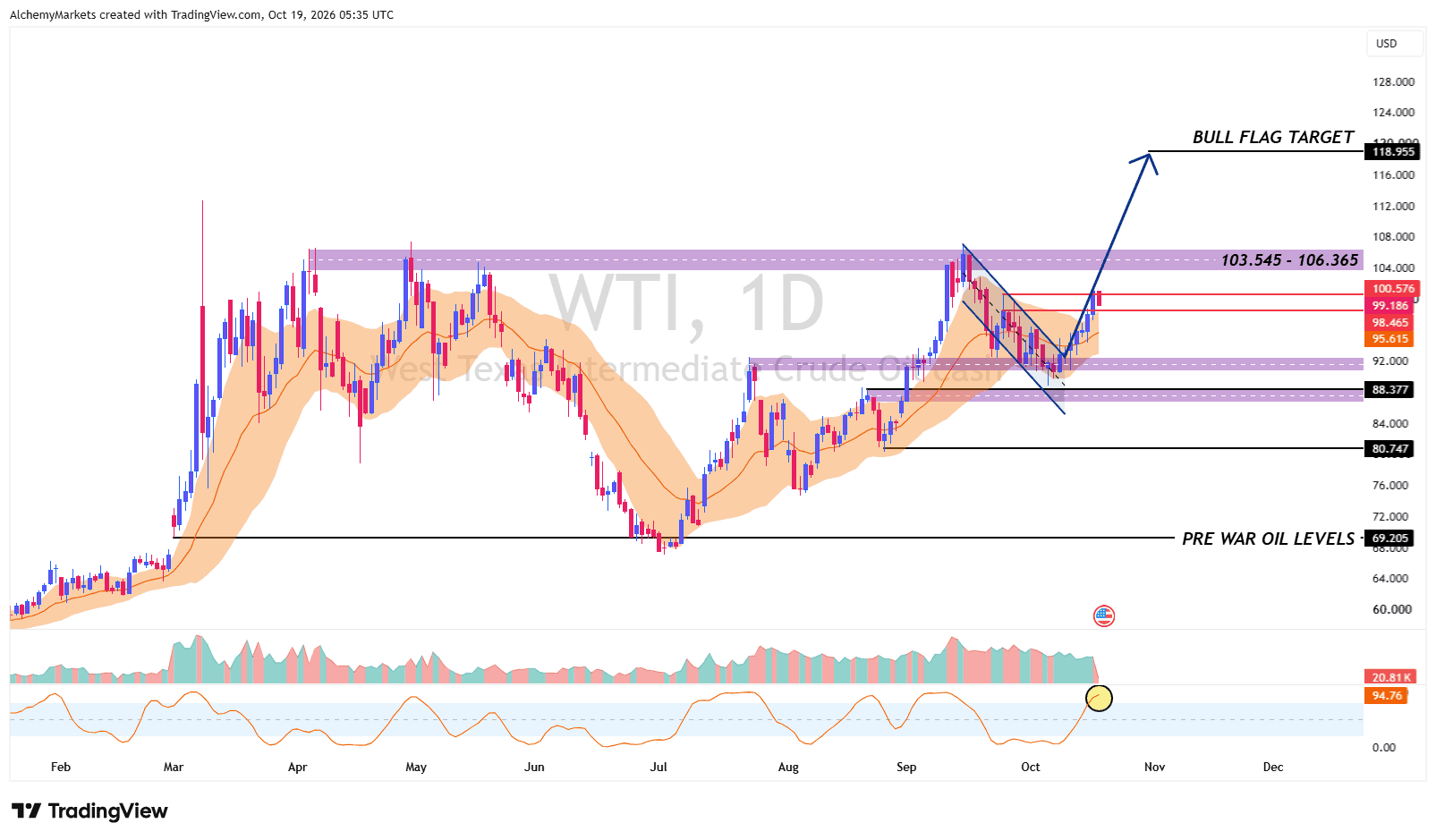
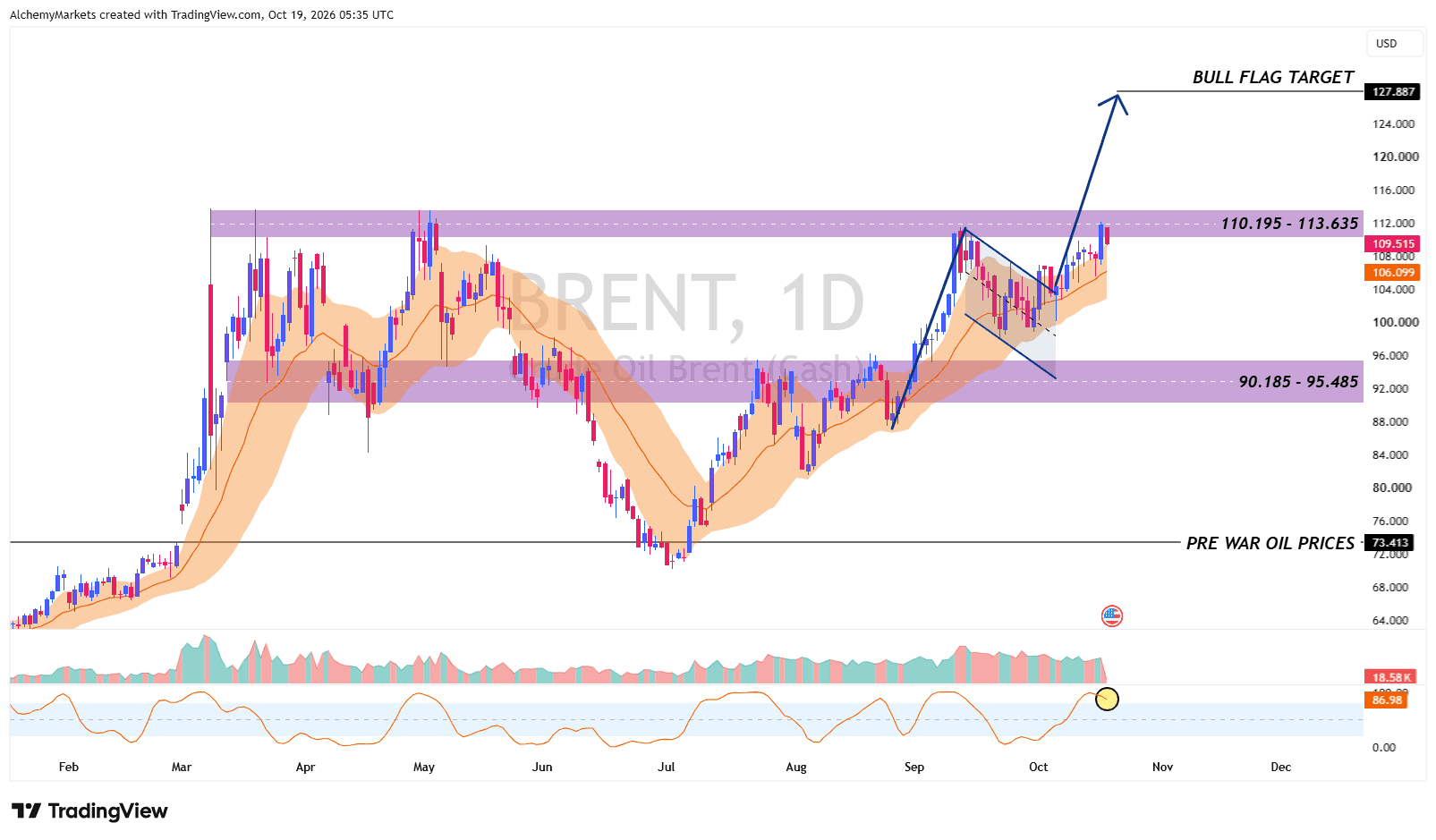
WTI slipped below $100 in early Monday trade, and Brent pulled back after approaching $110 last week.
But the key technical factor I’m looking at is the 20D-EMA (1sd) still holding its uptrend.
In the Middle East, the Houthis have threatened Saudi energy facilities and regional transport, while Egypt has pledged support to Riyadh.
There is also the possibility of further US-Israeli action involving Iran. A serious disruption to Gulf or Red Sea oil shipments could put upward pressure on prices again.
And even if crude keeps falling, diesel and other finished fuels may stay expensive. Refineries need crude to make them, while damaged facilities, export restrictions and costly shipping can keep supplies tight. Cheaper crude alone does not guarantee cheaper fuel.
Why I Still Expect Weakness After the Rebound
My hesitation comes from the part of the market that led the rally in the first place: technology and AI. Investors are increasingly asking whether the huge sums being spent on data centres, chips and power will produce enough earnings to justify them.
That is why the Dow holding up better than the Nasdaq is not an all-clear signal. It suggests investors are treating different parts of the market differently. A bounce in technology stocks would be more reassuring if their earnings outlook and financing conditions were also improving.
This week brings another chance to test that confidence through corporate results. Strong sales are good news, but investors will also be watching margins, cash flow and whether AI spending keeps rising faster than returns.
A Rebound First, Another Test
My base case remains a rebound first, then another period of weakness. I could be wrong: oil may stay below resistance, geopolitical tensions may ease and company results may give buyers a reason to return.
But another oil shock, disappointing earnings or renewed pressure from high borrowing costs could end the relief rally.
Bottom line: Extreme fear can help stocks bounce, and the Dow is showing more resilience than technology shares. For now, I would treat the pre-market recovery as a potential relief rally, not proof that the wider decline is finished.
FAQ
Does Extreme Fear mean the market has bottomed?
No. It tells us investors are frightened, which can set up a rebound. It cannot tell us when the selling is over.
Why is oil falling despite the war risks?
The prospect of more Russian fuel is easing supply worries for now, even as the Middle East remains exposed to fresh disruptions.
What would make the rebound more convincing?
Broader participation, especially from technology shares, together with easing oil pressure and stronger evidence that AI spending is paying off.