Skriven av:


- Opening Bell
- oktober 17, 2026
- 8 min läsning
Markets are Complacent: Is Wall Street Ignoring the Warning Signs?
Earlier on Friday, around 12PM Singapore time, I was looking at the Dow Jones and noticed it was doing considerably better than the S&P 500 and Nasdaq. With DJI sitting at +1.9%, SP500 −1.8%, and NDX at −2% on a two-week timeframe.
Now that another day has passed, that number has changed considerably: DJI at +0.67%, SPX at −1.95%, and NDX at −5.49%.
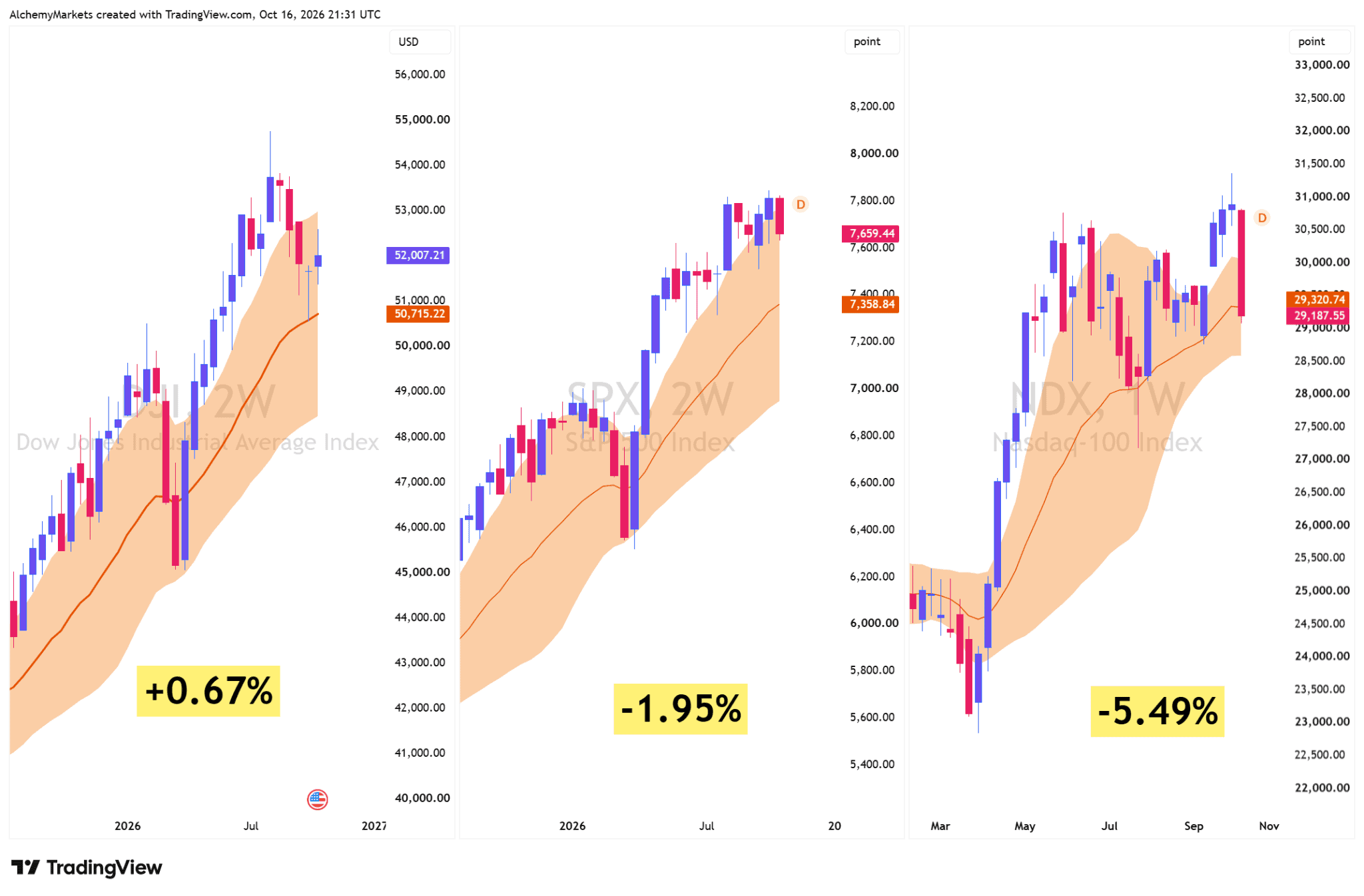
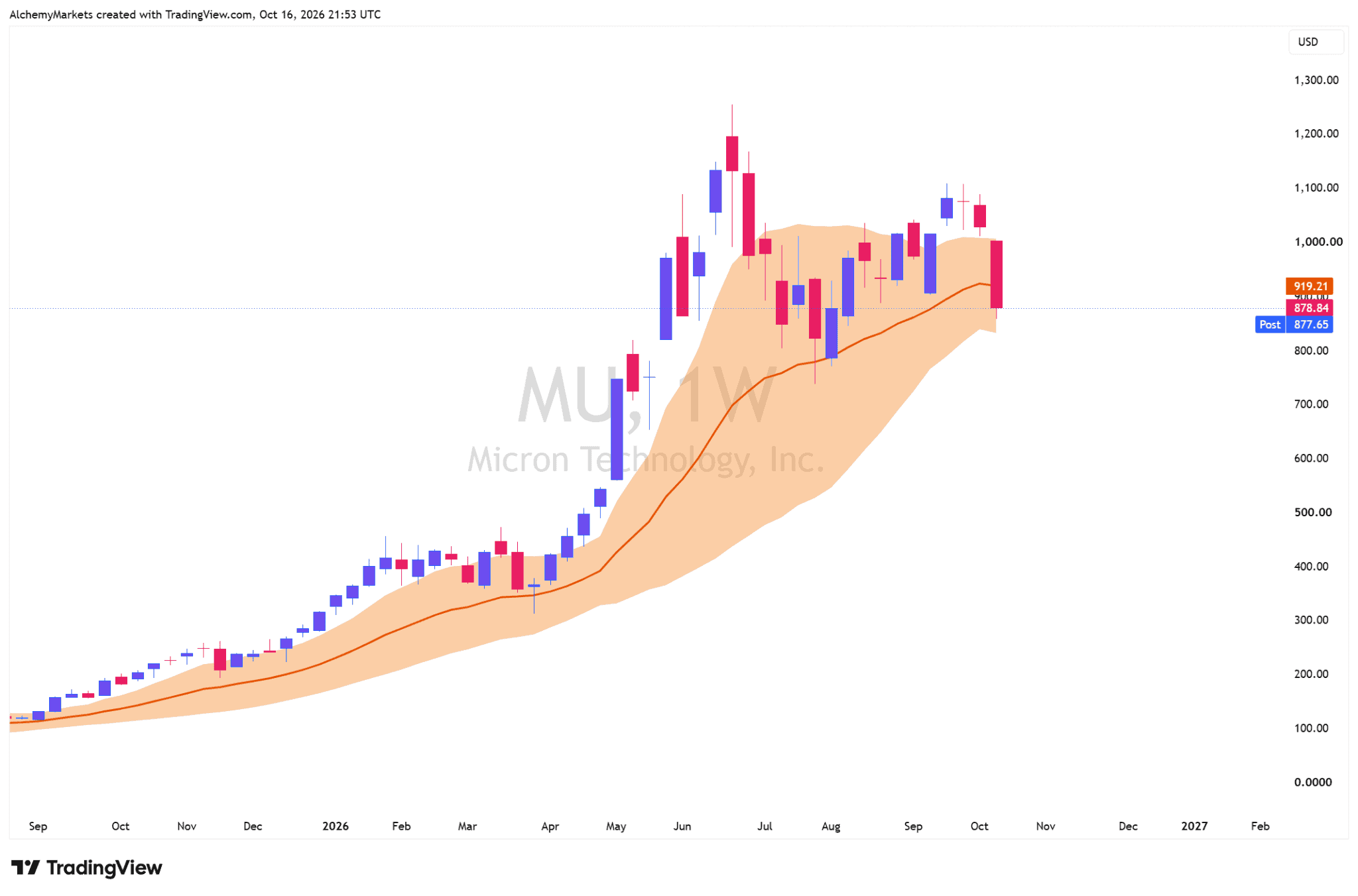
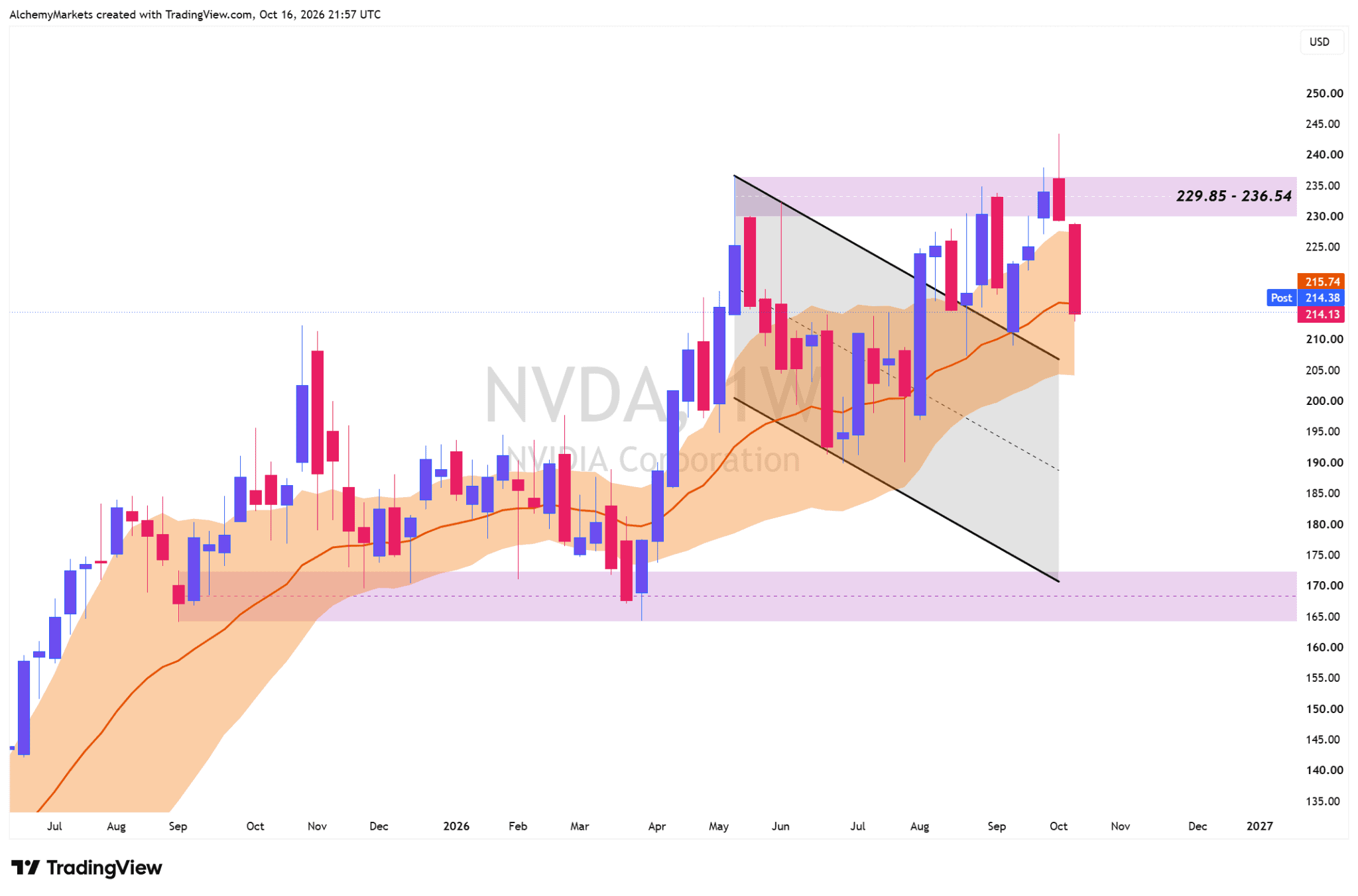
It’s clear that the tech market is dragging down the markets, with semiconductors taking the brunt of the damage. TSM has been moving lower despite strong earnings, Micron ain’t doing so hot, and Nvidia is just rejecting off the highs.
The Chips Are Not Holding Up
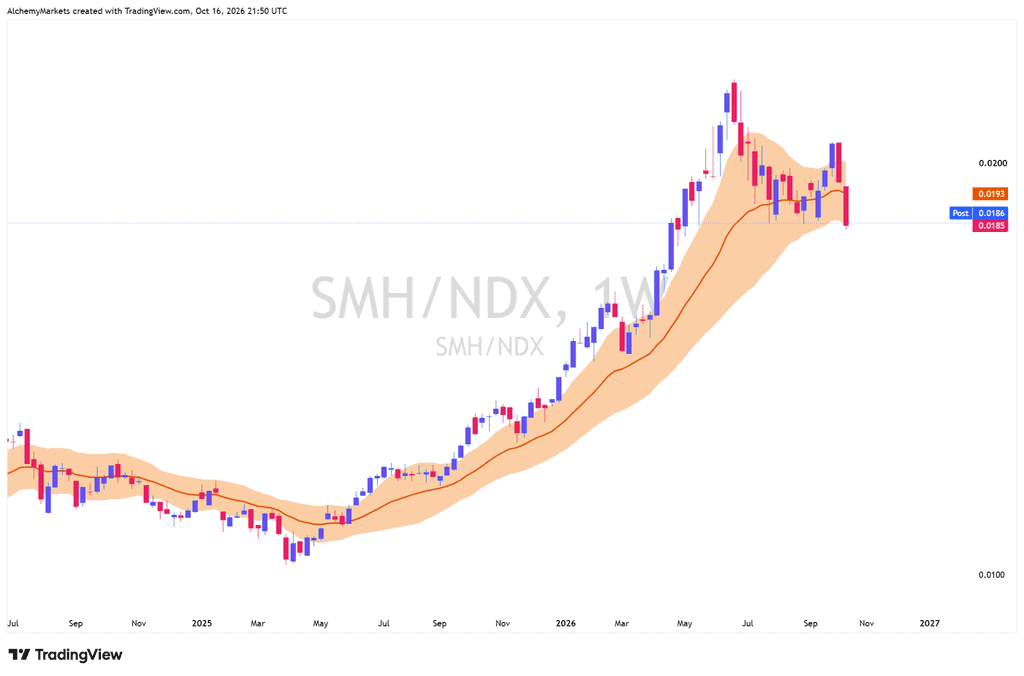
This is the Semiconductors index versus the Nasdaq, and it’s clear to me that SMH is the foot in the swamp dragging the markets down.
And even though TSM posted great earnings, the world’s chip factory is still taking a nose dive this week. Its third-quarter net profit rose 68.7% from a year ago. Good business, ugly price action.

This weakness could also be explained by what is happening to other major names in the chip trade. Micron and Nvidia are hardly giving investors much comfort.
SMH relative to NDX is one of the cleaner calls. The weekly ratio has pushed into its 20-week EMA bollinger band. If it loses that structure and fails to reclaim it, I would take that as a warning that semiconductor leadership is weakening beyond just a few bad sessions.
Nvidia is also worth watching near the marked 229.85–236.54 resistance zone. Its weekly candle has pulled back from that area towards the EMA band. Another failed rebound there would not be a pretty sight.
So Where Are Investors Hiding?
So ironically, it’s the stocks that are less directly tied to the AI hardware trade that are holding up better.
Apple, for example, is holding its uptrend well. It has AI exposure, of course, but it also has a massive installed base, its services business and consumer-device sales. Investors are not valuing the whole company on how many AI data centres get built next year.

Netflix is another interesting watch. Its shares are attempting to stabilise after a long decline, and the latest weekly candle is roughly flat compared with some of the damage elsewhere in growth stocks. Its next earnings come on Tuesday, 20 October. It’d be interesting to watch what happens there.

For me, that looks more like rotation away from the AI hardware trade than a market-wide vote of confidence. The Dow is holding up. The stocks that carried the biggest expectations are not.
And with those expectations already coming under pressure, the last thing the market needs is another inflation problem.
Oil Is Back at the Centre of the Problem
Much of this can be attributed to rising oil prices towards $110, despite the markets’ reluctance to price in further inflation risks earlier on Thursday with rising September CPI. Gasoline rose 9.1% in the month.
September’s headline CPI climbed 0.6% month-on-month and 3.7% year-on-year. Core CPI rose 0.3% on the month. Gasoline alone accounted for more than half of the monthly headline increase.
And this leaves the Fed in a rather awkward spot. Higher fuel prices squeeze households and corporate margins, while high borrowing costs make the AI build-out more expensive. Yet investors initially seemed almost happy to shrug off the inflation print.
Are We Frogs in a Boiling Pot?
So is the market just frogs sitting in a boiling pot, slowly awaiting a cooking process?
Taking a look at the Wall Street Cheat Sheet, SMH and Nasdaq look like they’re in the complacency stage right now.
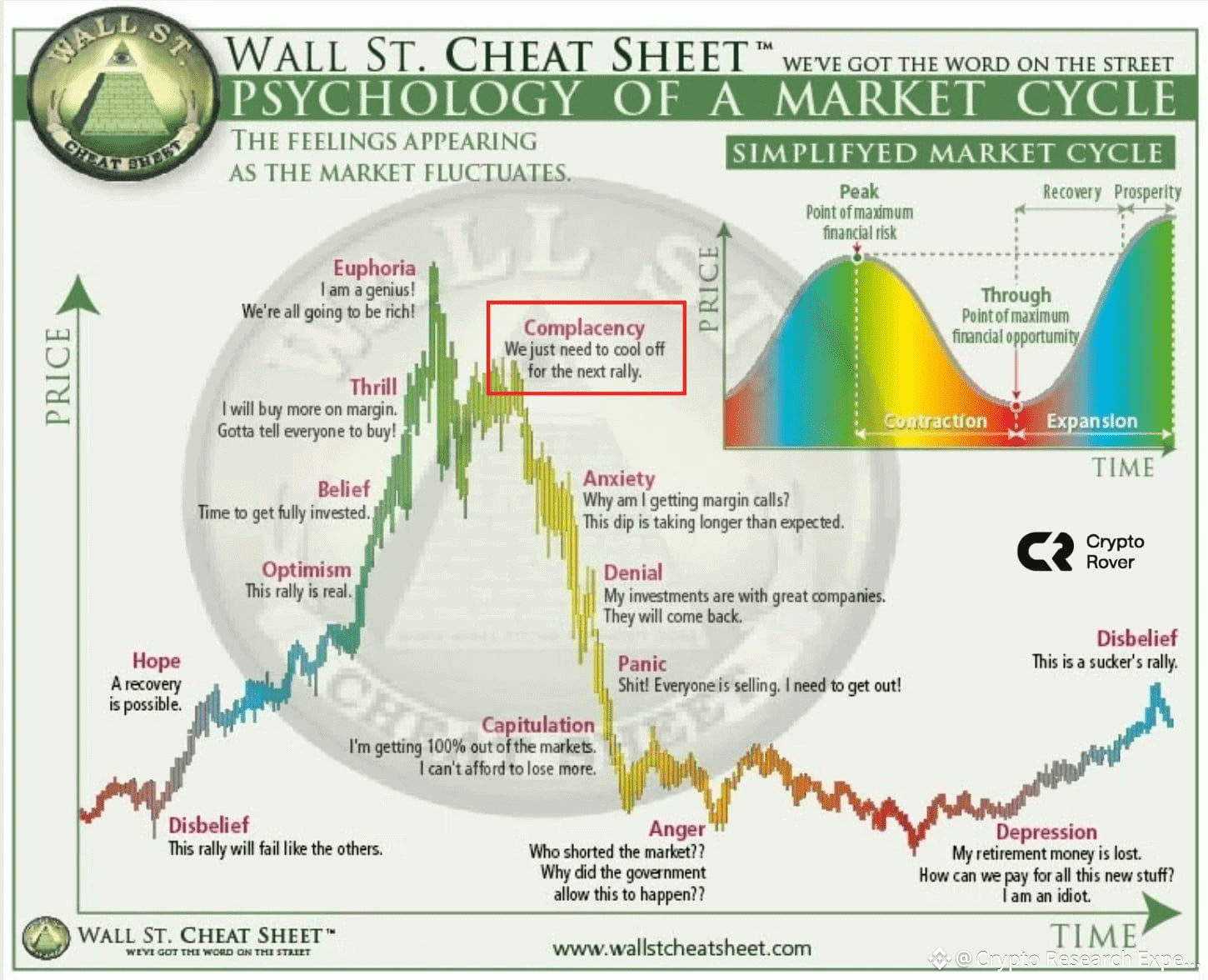
And with how non-reactive the markets appeared to September CPI on Thursday and early Friday, then suddenly snapping back to reality before the weekly close, the behaviour certainly does ring alarm bells.
The VIX rose above 22 intraday on Friday. That is quite a change from the calm we saw earlier. It puts the next rebound under a microscope: can technology regain its footing, or does another bounce simply get sold?
And Even CXMT Is Getting Hit
Heck, even CXMT, which could become a serious competitor in memory-chip manufacturing, is moving lower drastically.
And yes, it’s not in the Nasdaq. But China’s progress in memory manufacturing is worth following. The company is offering a cheaper challenge in conventional DRAM, and that could squeeze margins for established suppliers.
High-bandwidth memory for advanced AI chips is a different and much harder market, but the cost competition is real.
The AI bottleneck currently is not just how far we can advance. It’s how cheap things can get for AI platforms. If the market starts questioning those profits, even companies bringing down the cost of computing can get caught in the selling. And the weakness doesn’t appear to stop at the chips themselves.

Are the Picks and Shovels of AI Holding Up?
Even AI picks and shovels, like ETN (power distribution), VRT (data-centre cooling), PWR (electrical grids), and the GRID ETF are taking a hit. And that much is understood as AI itself is taking a dive.

But alas, a falling share price is not the same thing as customers cancelling orders.
And the latest company reports are not showing that kind of collapse just yet. Eaton’s second-quarter electrical orders and backlog were still growing. Vertiv raised its full-year guidance, and Quanta reported a $53.4 billion backlog. The equipment demand is there. What is changing is how much investors are willing to pay for it.
That is the risk I would watch next. If orders and backlogs begin rolling over as share prices are breaking their weekly bands, the sell-off would start looking a lot more serious.
And Yet, Treasuries Found Buyers
Here’s the part that gets interesting. Treasury bonds are finding buyers despite the hot CPI print and higher oil. Ordinarily, hotter inflation would make bonds uncomfortable. This time, the selling in technology and AI financing appears to be pulling investors towards government debt instead.
Look at the four Treasury yields together. The 2-year is around 4.72%, the 5-year around 4.88%, the 10-year around 5.08%, and the 30-year around 5.43% on the chart. They have all pulled back sharply from the highs, but that still leaves borrowing costs at uncomfortable levels.
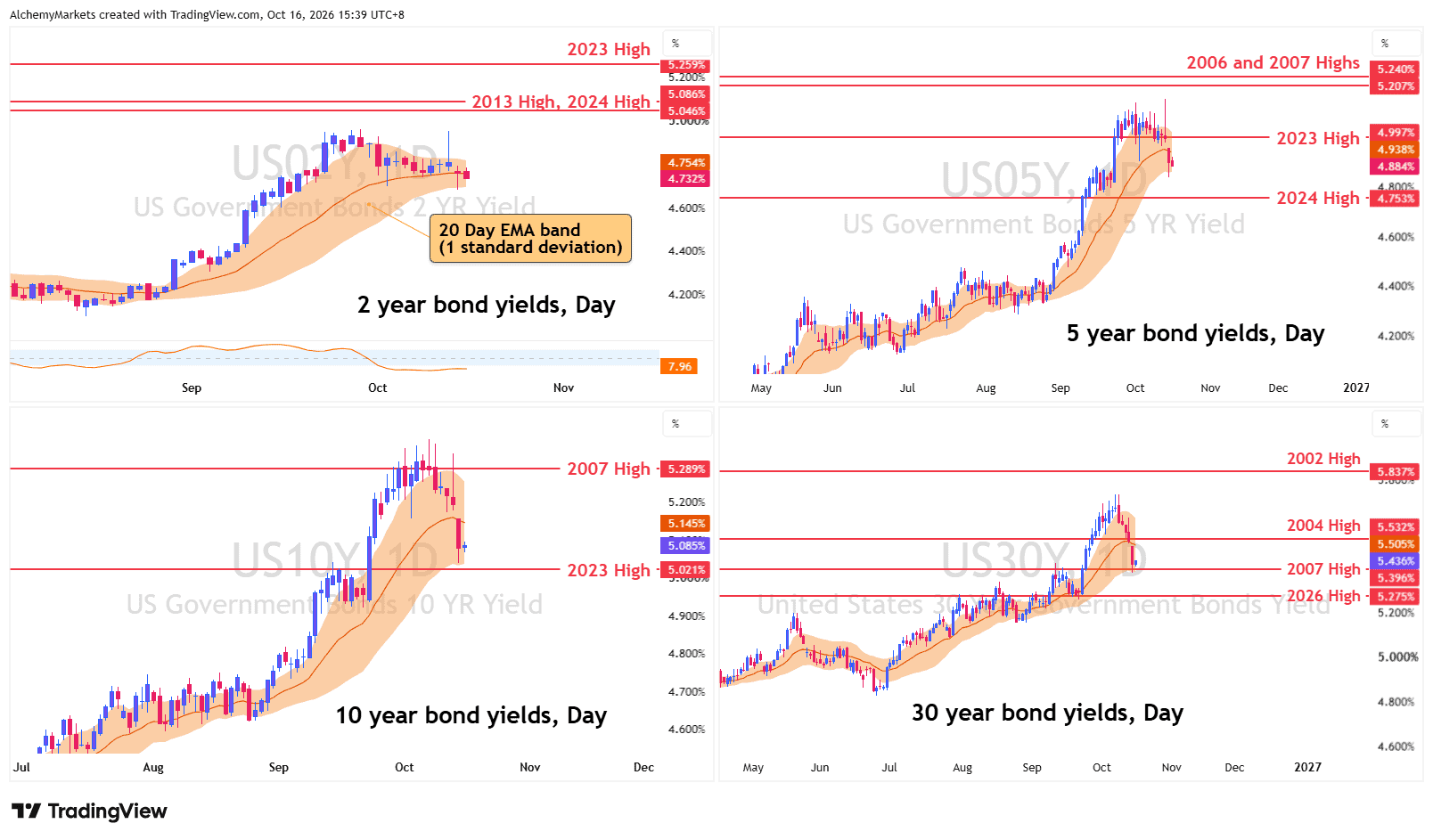
What I find interesting is where the longer yields have landed. The 10-year is testing the area around the 2023 high, while the 30-year is near the old 2007 high. So this isn’t just a Fed story. The market is testing major bond levels at the same time that AI stocks are weakening.
TLT tells a similar story from the other side. Bond prices have bounced, with TLT near $80.05 on the weekly chart. But the longer-term EMA bands are still pointing down. For me, $82.42 is the first overhead test. If the bounce fails, $78.89 and then $76.69 are the areas to watch.

What About the Fed?
Rate expectations have been frogging around too. The market briefly flirted with roughly 50/50 odds of a hike earlier in the week. By Friday afternoon, the 28 October hold was back as the base case.
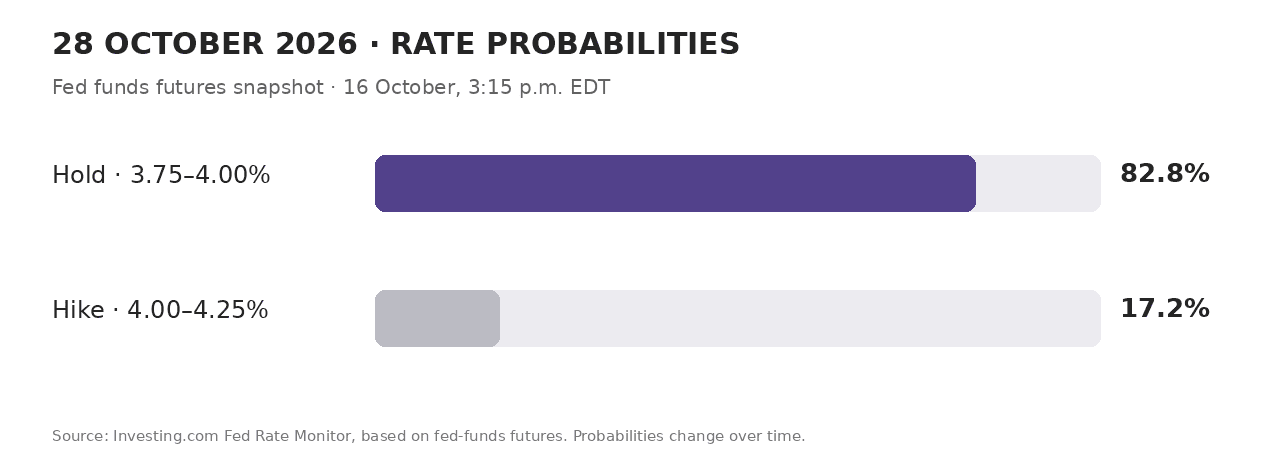
The FedWatch snapshot below puts the chance of a hold at 3.75–4.00% at 82.8%, versus 17.2% for a quarter-point hike. Only a day earlier, the hold was at 72.3%. So despite the hot CPI print, rate-hike expectations have fallen back rather than kept climbing.
That is why I’m watching US02Y, the dollar and TLT together. If bonds keep finding buyers while AI shares struggle, that tells us something about where investors are moving their money, regardless of what the next Fed headline says.
Bottom Line: What Would Change My Mind?
For now, I’m respecting the relative strength of the Dow, but I’m much less comfortable with what the Nasdaq and semiconductor charts are showing. When the chips and the picks and shovels of AI start falling together, the market is telling us to pay attention.
My base case is that Wall Street is getting too comfortable with the idea that every AI dip will be bought. The next few sessions should tell us whether that complacency is starting to break.
I want to see SMH regain its weekly band, Nvidia retake resistance, and the AI infrastructure names hold their structure. Until then, the warning stays on the chart.
The Alternative Case
The AI companies are not suddenly reporting a collapse in demand, and the equipment suppliers’ last reported order books remain strong. If semiconductor prices reclaim their bands and lower yields make financing less painful, we could simply be watching a sharp rotation rather than the end of the AI story.