Skriven av:

- Opening Bell
- mars 31, 2026
- 3 min läsning
Oil Surges on Geopolitical Risk — Can Prices Break Higher or Stall?
Oil is pulling back slightly this Tuesday morning, but the broader picture remains firmly bullish. Brent is holding around $107 a barrel after a massive March rally, up roughly 60% on the month. That kind of move is rare — and it’s being driven almost entirely by geopolitical risk.
What’s Moving the Market
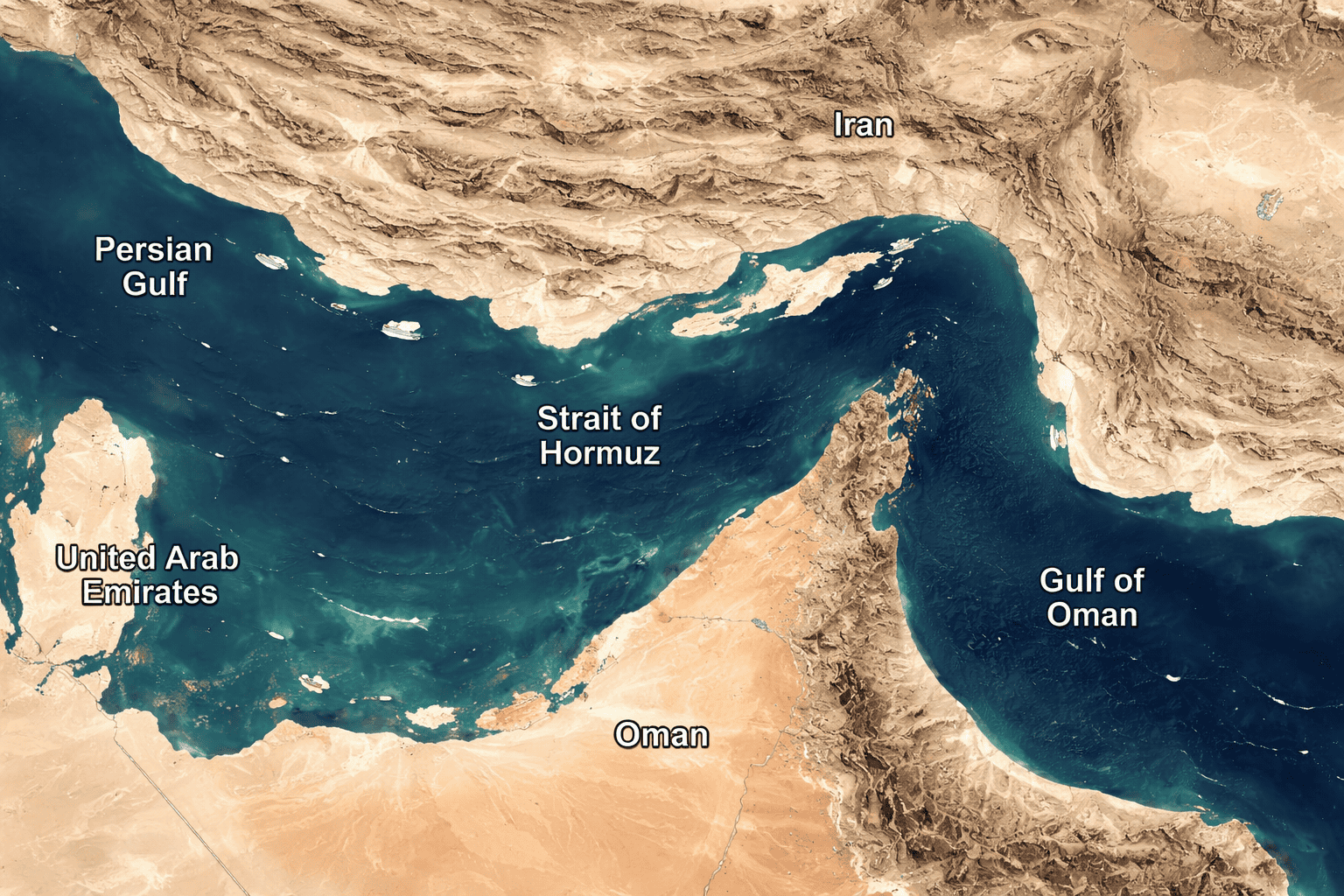
Overnight, reports suggested President Donald Trump may be open to ending the military campaign in Iran — even if the Strait of Hormuz remains partially restricted. That’s a subtle but important shift: it signals potential de-escalation, but not normalisation.
Meanwhile, the risk backdrop is still elevated:
- Iran tightening control over Hormuz
- Continued tanker attacks in the Persian Gulf
- Houthi threats to the Bab el-Mandeb Strait
- Rising freight and insurance costs
So even with some cooling rhetoric, the market is still pricing in disruption risk.
Technical Setup: Channel Meets Reversal Signal
From a technical perspective, oil is still trading within a clean ascending channel — a structure that has guided this entire rally.
However, we now have an added layer to watch:
Inverse Head & Shoulders on H1 (Short-Term Signal)
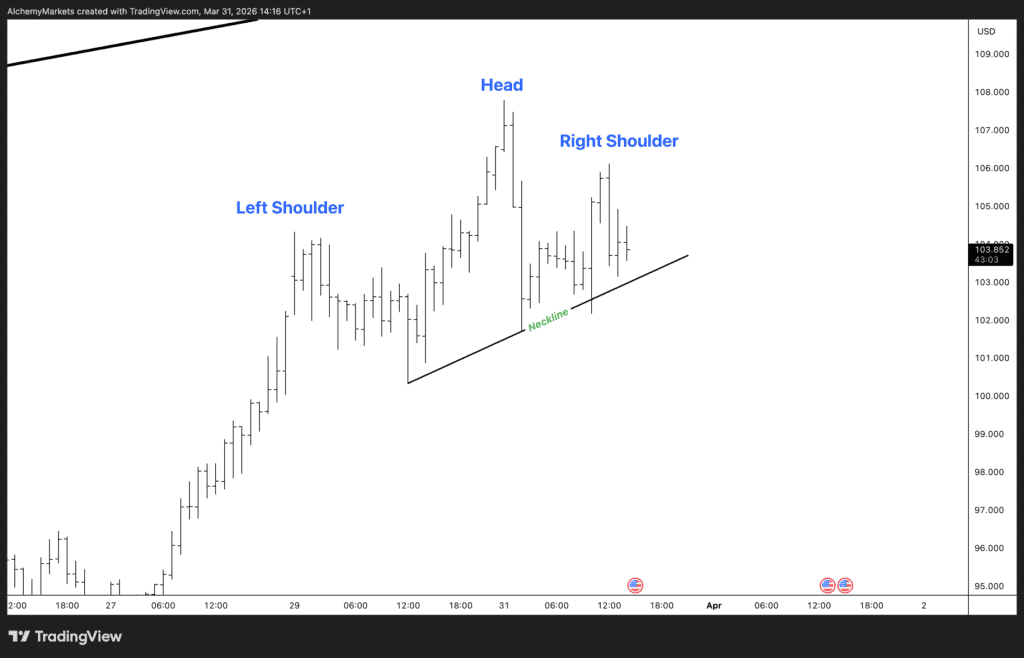
On the 1-hour chart, price has formed a potential inverse head and shoulders pattern:
- Left shoulder: initial pullback and bounce
- Head: deeper dip with strong recovery
- Right shoulder: higher low forming
- Neckline: upward-sloping support now being tested
This is typically a reversal pattern, especially within an uptrend.
If confirmed:
- A hold above the neckline could trigger a move back toward recent highs (~$106–$108)
- A clean break higher would align with a channel breakout attempt
However:
- Failure to hold the neckline invalidates the pattern
- That would increase the probability of a channel rejection and deeper pullback
Key Technical Scenarios
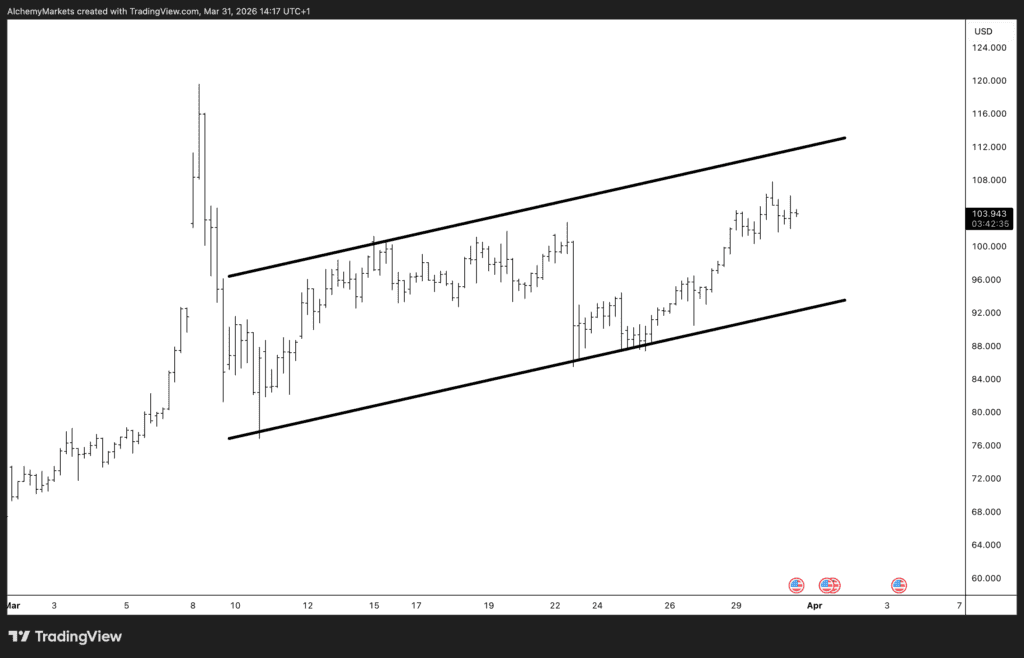
1. Bullish Case (Pattern + Channel Break Align)
- Inverse H&S holds and breaks higher
- Price pushes through channel resistance
- Momentum expands toward $115+
2. Bearish Case (Pattern Fails + Channel Rejects)
- Neckline breaks down
- Price rejects upper channel boundary
- Rotation back toward $95–$100 zone
- Possible test of lower channel
Given how extended price is, the market is at a decision point right now.
Our Thesis: What Could Relieve Oil Prices
The rally is being driven by risk premium, not structural shortage — and that’s key.
So what brings prices down?
1. De-escalation Without Disruption
- Conflict cools
- Hormuz reopens fully
- Shipping normalizes
– Risk premium fades quickly
2. Stable Access Through Hormuz
- No toll system
- No selective restrictions
- Consistent tanker flows
– Reduces uncertainty
3. No Further Conflict Expansion
- Houthis step back
- No new actors join
- No strikes on energy infrastructure
– Market shifts from fear to fundamentals
4. Demand Pressure at High Prices
- $100+ oil hits consumers
- Gasoline above $4 dampens demand
- Economic slowdown risk builds
– Natural downside pressure
Bottom Line
Oil remains in a strong uptrend — but we’re now seeing early signs of exhaustion at the top of structure.
- The ascending channel is being tested
- The inverse head and shoulders offers a short-term bullish setup
- But failure here could trigger a meaningful pullback
In simple terms:
- Breakout + pattern confirmation → continuation higher
- Rejection + pattern failure → move lower within the channel
This is a high-stakes technical moment, sitting right on top of a fundamentally fragile backdrop.