Written by:

- Opening Bell
- June 15, 2026
- 5 min read
US-Iran Peace Deal Completed? MOU to Be Signed by Friday
Yesterday was Donald J. Trump’s 80th birthday, and he may have received the kind of birthday gift a president in his position would have wanted.
First off, there was the first-ever major sports event hosted at the White House, the UFC Freedom 250, turning the day into a national spectacle and lifting national spirits.
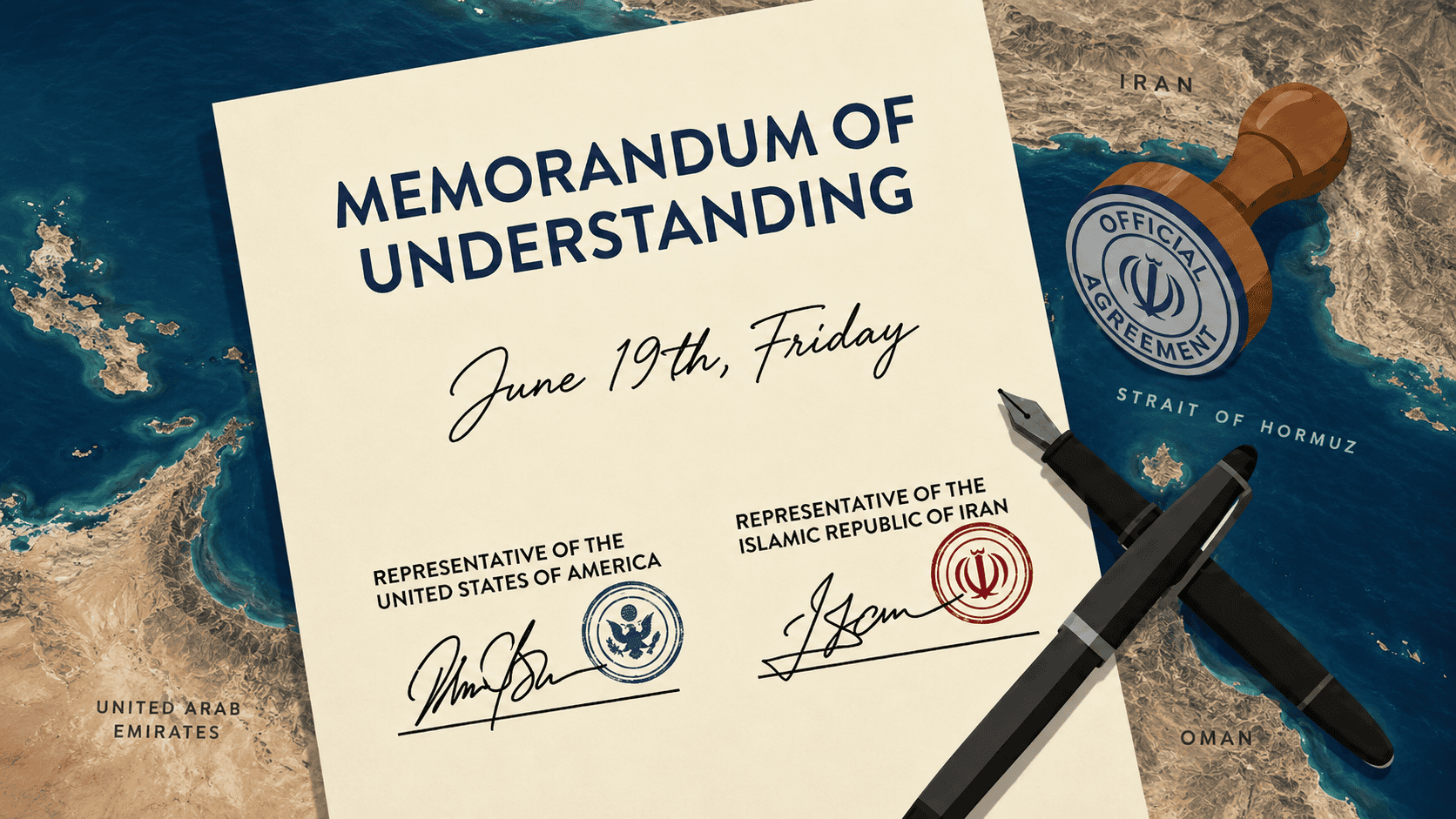
But away from the show, the bigger market story came from Pakistan’s Prime Minister, who said a US-Iran peace agreement had been reached, with a formal signing expected by Friday.
The market now has three questions to answer:
- NY open: Has the peace deal already been priced in after the S&P 500 CFD gapped around 0.60% higher?
- Warsh: Will Kevin Warsh validate lower rate-hike pressure on Wednesday, or push back with inflation caution?
- MoU signing: Will Friday’s signing confirm the framework, or will unresolved details slow the move?
Rate Hike Pressure Has Eased Since This Announcement
The real market story is rate-hike pressure coming off.
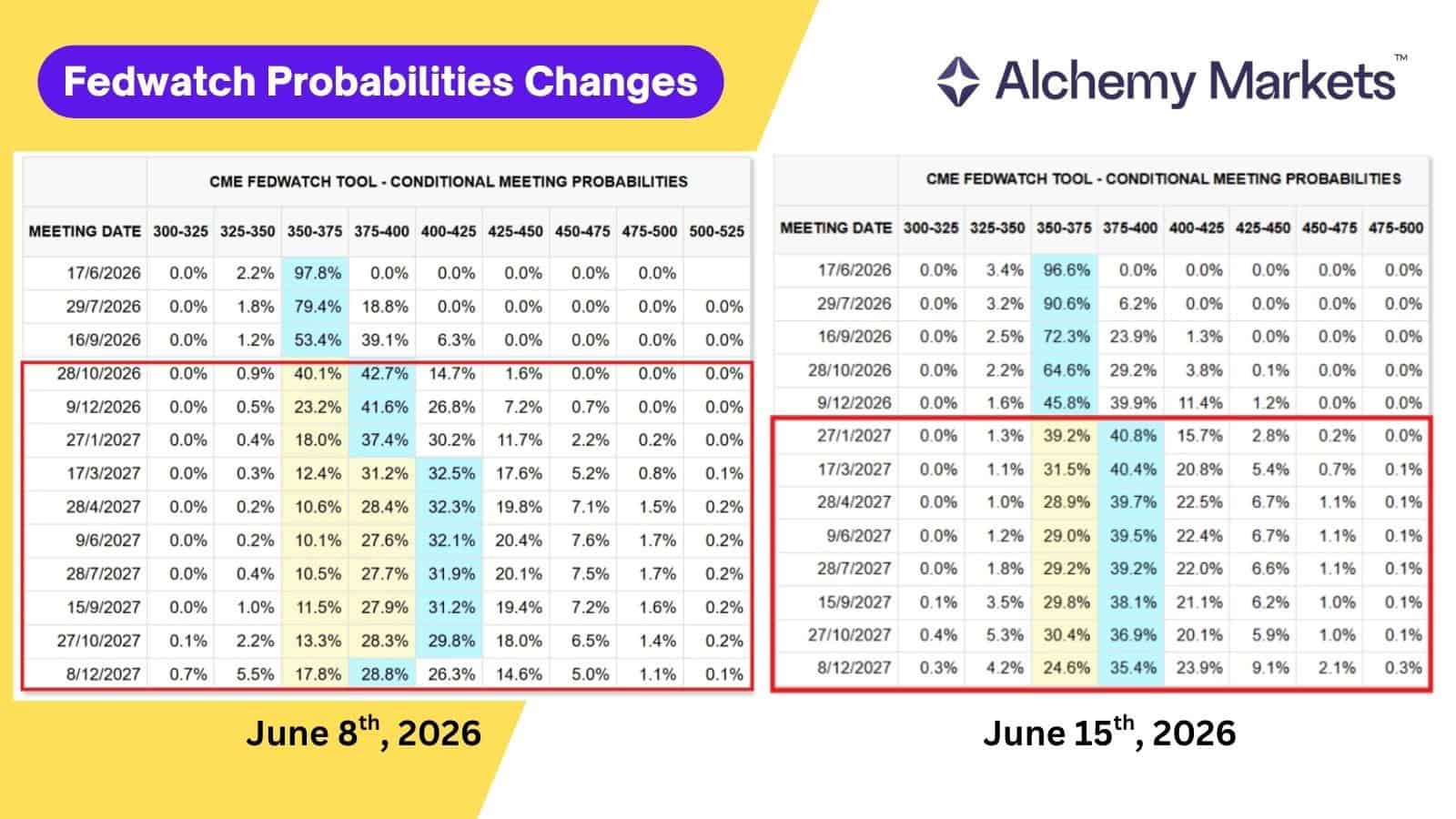
A week ago on June 8th, FedWatch pricing showed rate hikes becoming the dominant expectation around October. The latest FedWatch table now pushes that dominant hike expectation into next year.
That does not mean hikes are gone. But, it does show that markets are no longer pricing the same risks around higher interest rates.
Lower oil reduces the immediate inflation shock. If the Strait of Hormuz reopens and crude stays lower, the Fed has less pressure to lean into another hike quickly. That gives equities room to breathe, especially if traders believe the inflation impulse from oil has cooled.
Still, this isn’t a dovish pivot. Inflation is still above target, and the Fed cannot treat one peace headline as a full inflation reset. The markets have simply moved from “the Fed may need to hike soon” to “the Fed may still need to hike later.”
This perhaps translates to a sentiment of cautiously risk-on.
Oil Bias: Peace Relief Is Priced, But Support Is Still Holding
Oil has already reacted to the peace framework.
USOIL has dropped back toward pre-war levels as traders price a lower chance of a prolonged Hormuz disruption. That supports the delayed-hike story because lower oil reduces inflation pressure.
The risk is that the peace deal may already be priced in.
USOIL is now testing the 77.00–81.80 support and resistance zone, near the 200-day Exponential Moving Average. Our recent Elliott Wave analysis on crude oil also highlighted the 79.00–82.25 region as an area where crude could move into before looking for a low.
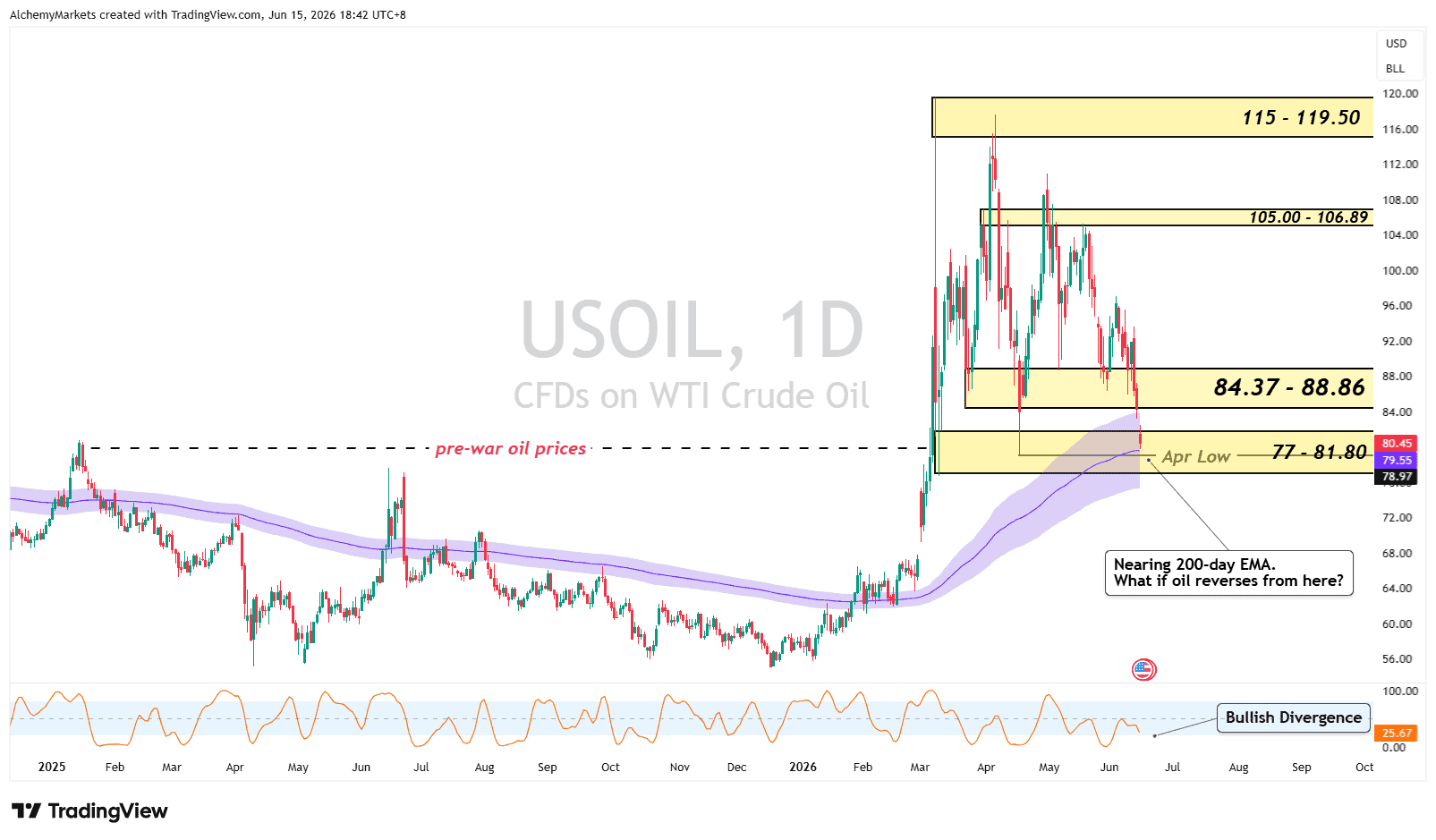
Oil can still move lower toward 77.00 if Friday’s signing is completed and Hormuz reopening becomes more credible.
But if USOIL holds this zone, the market may start treating the peace headline as priced. A reclaim of 84.37–88.86 would bring back the risk that lower oil was only a short-term relief move.
There is also a technical divergence risk. Price has moved lower, but momentum is not falling as cleanly. Sellers may need a clear break below support to keep control.
NY Open Bias: Gap Higher, But Extension Still Needs Proof
The S&P 500 CFD has already gapped around 0.60% higher before the New York cash session.
That puts pressure on the open.
If cash equities open higher and extend, the market is still repricing the lower-oil and delayed-hike story.
If cash equities open higher and fade, traders may decide the peace deal was already priced during the overnight move.
The first few hours of the US session should show whether this is a real extension or just a gap reaction.
US500 Bias: Risk-On, But Still Dependent On Oil And Rates
US500 is reacting to lower oil, softer inflation pressure, and delayed rate-hike expectations. The move remains constructive if oil keeps falling and FedWatch continues to push hike pressure into next year.
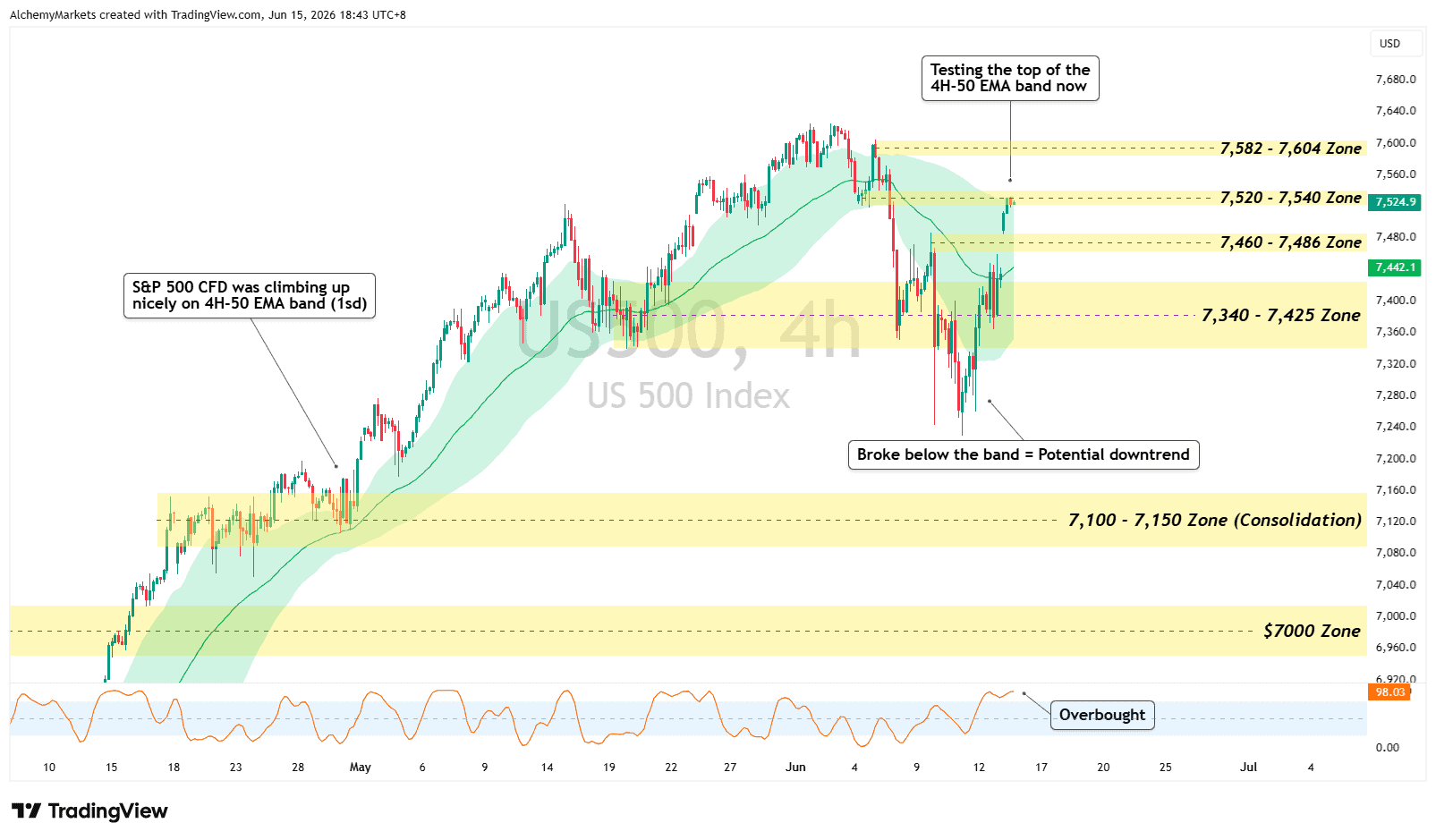
If US500 clears resistance while oil breaks below support, the risk-on case improves.
If US500 fades while oil holds the 77.00–81.80 zone, the move looks more like headline relief than a confirmed reset.
Oil and rates are still leading the equity reaction.
Warsh’s Dilemma: Less Urgent Hikes, But No Easy Cut Signal
Kevin Warsh speaks on Wednesday, and his tone now becomes part of the trade.
Lower oil gives him a reason to sound less aggressive about hikes. If energy pressure cools, the Fed can wait longer before tightening again.
But Warsh cannot easily talk about cuts.
Inflation is still above target. The Fed will not want markets to assume that one drop in oil solves the broader inflation problem. A new Fed chair also has to protect credibility early.
A balanced Warsh would support the relief trade.
That means acknowledging lower energy risk without giving markets a direct cut signal.
A hawkish Warsh would weaken the move.
That means stressing sticky inflation, keeping hike risk alive, and pushing back against the idea that lower oil is enough to change the Fed path.
MoU Signing: Framework is Yet to Be Confirmed
Friday is the second major test for the markets, after Warsh’s speech on Wednesday.
The reported agreement is a memorandum of understanding,or MoU, rather than a completed peace treaty. A signing would confirm the framework, but implementation still has to follow through.
The MOU focuses on halting direct conflict, reopening the Strait of Hormuz, and moving the more difficult negotiations into the next 60 days. This is more so of a symbolic agreement and temporary truce, rather than a done deal for peace.
The nuclear issue is not fully resolved upfront. Sanctions relief, uranium terms, maritime security, Israel, Hezbollah, shipping insurance, and actual oil flows still sit ahead.
The reported 60-day window for broader nuclear and sanctions negotiations keeps the deal conditional.
If Friday’s signing happens and oil breaks below support, the delayed-hike story strengthens.
If the signing is delayed, or if oil holds support and rebounds, markets may start treating the initial peace reaction as too stretched.