Written by:

- Chart of the Day
- October 28, 2026
- 4 min read
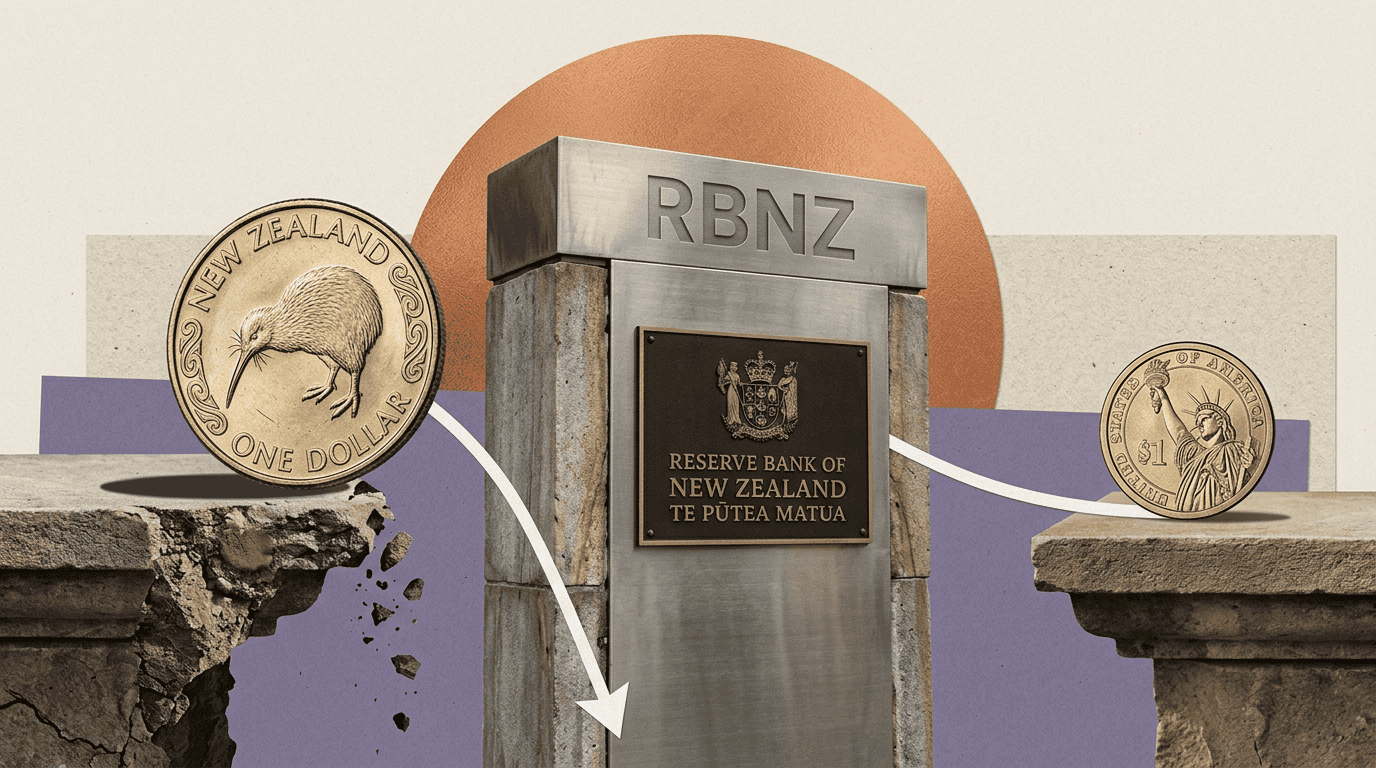
RBNZ Held When Markets Expected a Hike; NZD/USD Tumbles
The RBNZ held its rates today, shocking markets with their decision as, in their own words, inflation “was above their target range.
By the time this announcement came out, a rate hike was already 90% priced in, creating vast panic in the markets.
So currently, the OCR (official cash rate) remains at 2.75% instead of the 3.00% expectation, causing NZDUSD to slump -1.50% in a single day.
Weekly Chart: Kiwi is Sitting on Support
On the weekly timeframe, NZD/USD is inside a substantial 0.551–0.566 support area. The weekly stochastic RSI is deeply oversold, near 14, suggesting conditions are becoming stretched after the latest decline.
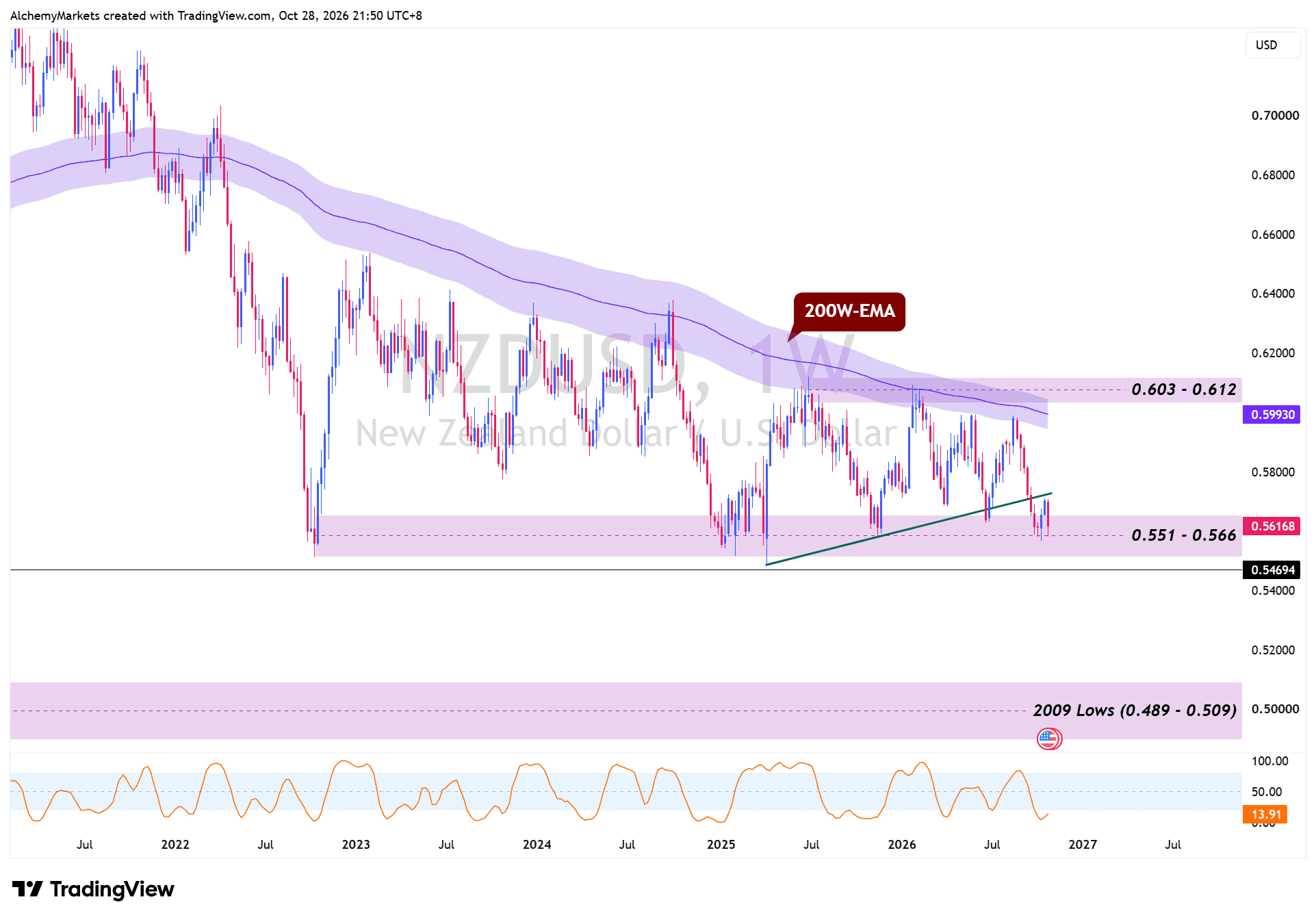
That makes the zone worth watching for a long setup, but it does not make a reversal automatic. Price is still below the former rising trendline, with resistance near 0.572.
Above that sits the 200-week EMA around 0.5993, followed by a wider supply area around 0.603–0.612.
A breakdown through the current support zone would shift attention to the historical 2009 lows at 0.489–0.509.
Four Hour Chart: The 20-EMA Rejection Risk
This is where the trade becomes more complicated. The 4H chart shows NZD/USD trading under a declining 20-period EMA and its one-standard-deviation band.
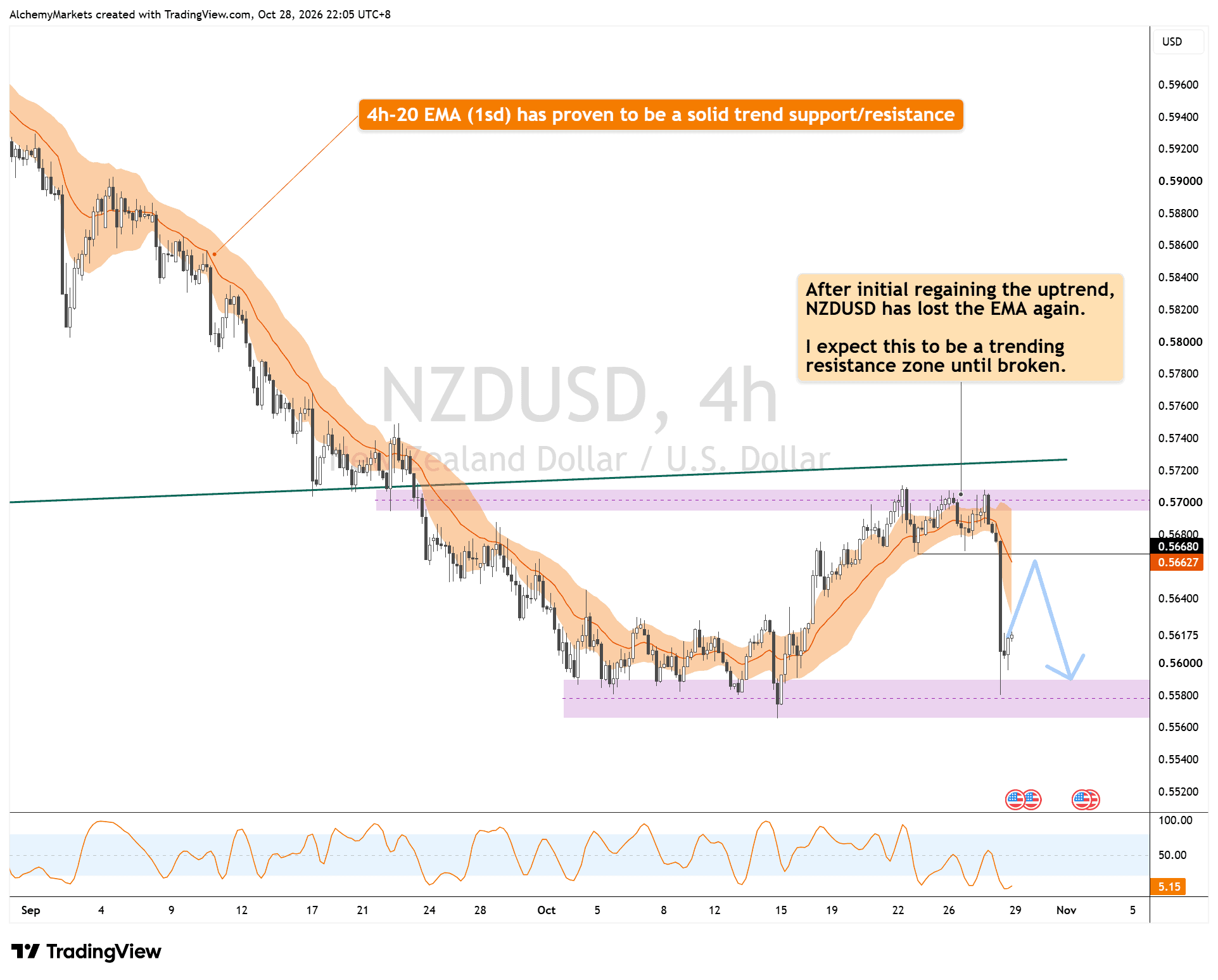
That band has repeatedly acted as dynamic resistance, and the latest break has put sellers back in control of the immediate trend.
My base case is for a relief bounce or sideways consolidation first. If price returns to the 0.56627 EMA area without reclaiming it, I would watch for another rejection towards 0.558.
The four-hour stochastic RSI is also deeply oversold, near 5, which makes chasing the first leg lower less attractive.
Conversely, a sustained break and hold above the EMA band would weaken that short-term bearish view, opening room for a move towards 0.572. The key is not simply touching resistance, but demonstrating that the market can hold above it.
Why the RBNZ held when a hike was expected
Inflation remains above target. September CPI came in at 3.7%, exceeding the RBNZ’s 1–3% target band, and the bank expects it to reach 4.4% in the December quarter.
So why did policymakers leave rates unchanged?
| 2.75% OCR held | 4–3 Vote to hold | 3.7% Annual CPI |
Much of the near-term inflation pressure comes from global fuel and shipping disruptions. Higher interest rates can restrain domestic demand, but they cannot repair those supply problems.
So far, the indirect inflation effects of higher fuel prices have also been smaller than expected, while wage growth and medium-term inflation expectations remain relatively contained.
That matters because New Zealand’s recovery is uneven. Export activity has improved, but household consumption and investment remain weak.
After two recent rate increases, four policymakers wanted more time to assess the damage that further tightening might do – making this vote a 4-3 decision.
The other three saw a different risk: inflation spreading through the economy. 56% of the CPI basket by weight rose more than 3% over the year, and core inflation is close to the top of the target band.
Their concern was that waiting could force more aggressive hikes later… so, this actually brings December into view for a potentially bullish NZD.
The takeaway:
The RBNZ paused to protect a fragile recovery, not because it thinks inflation is beaten. Further tightening remains possible, with the next decision scheduled for 9 December.
Why the rate hold sent NZD/USD lower
Markets had largely priced in a 25-basis-point hike to 3.00%. The hold therefore removed an expected source of support for the Kiwi almost instantly.
Traders were not necessarily reacting to a sudden collapse in the economy; they were reacting to the gap between what they expected and what the RBNZ delivered.
NZD/USD fell as much as 1.7% in the initial reaction. Yet a 4–3 vote and the prospect of further tightening in December complicate the bearish story.
The decision was dovish relative to market pricing, but it was not a commitment to keep rates unchanged.
The Fed is the next test
Attention now shifts to the US dollar. The Federal Reserve’s decision is scheduled for 2:00 PM ET on 28 October, followed by its press conference at 2:30 PM ET.
Hawkish guidance could deepen the NZD/USD sell-off; a softer message could give the Kiwi room to stabilise.
The RBNZ may only have delayed a hike. The more immediate question is whether support can absorb the sell-off before the Fed decides the next move in the dollar.