Written by:


- Opening Bell
- April 2, 2026
- 3 min read
Consumer Stocks Are Not Buying the Relief Rally
Yesterday’s market move looked reassuring at first. Stocks rose, oil fell, and investors briefly acted as if the worst of the Iran shock might be behind them.
That mood had support from a few places. Trump told Reuters the U.S. could be out of Iran “pretty quickly,” ADP jobs data came in better than expected, and investors were still leaning on a resilient earnings backdrop. In short, the market had reasons to buy the bounce.
Iran later rejected Trump’s ceasefire claim as “false and baseless.” Then, in his night speech, Trump said the U.S. would keep hitting Iran “extremely hard” for another two to three weeks without giving markets a clear end point.
By today’s open, oil had surged again as traders repriced the risk of a longer conflict and more disruption to supply.
Quick timeline
- Wednesday morning: Trump tells Reuters the U.S. could leave Iran “pretty quickly.”
- Later Wednesday: markets rally on softer war expectations, helped by better ADP jobs data and steady earnings expectations.
- Wednesday midday: Iran rejects the ceasefire idea.
- Wednesday night: Trump promises harder attacks for another two to three weeks.
- Thursday: Brent jumps about 6.8% and the relief mood fades.
Technical Views: Amidst the Volatility
Currently, XLY (consumer discretionary etf) matters the most for a true tell of market sentiment.
If this were a genuine relief rally, consumer stocks should have pushed higher more cleanly. Instead, XLY is still struggling around the 4H 50 EMA band. Today, it even gapped down.
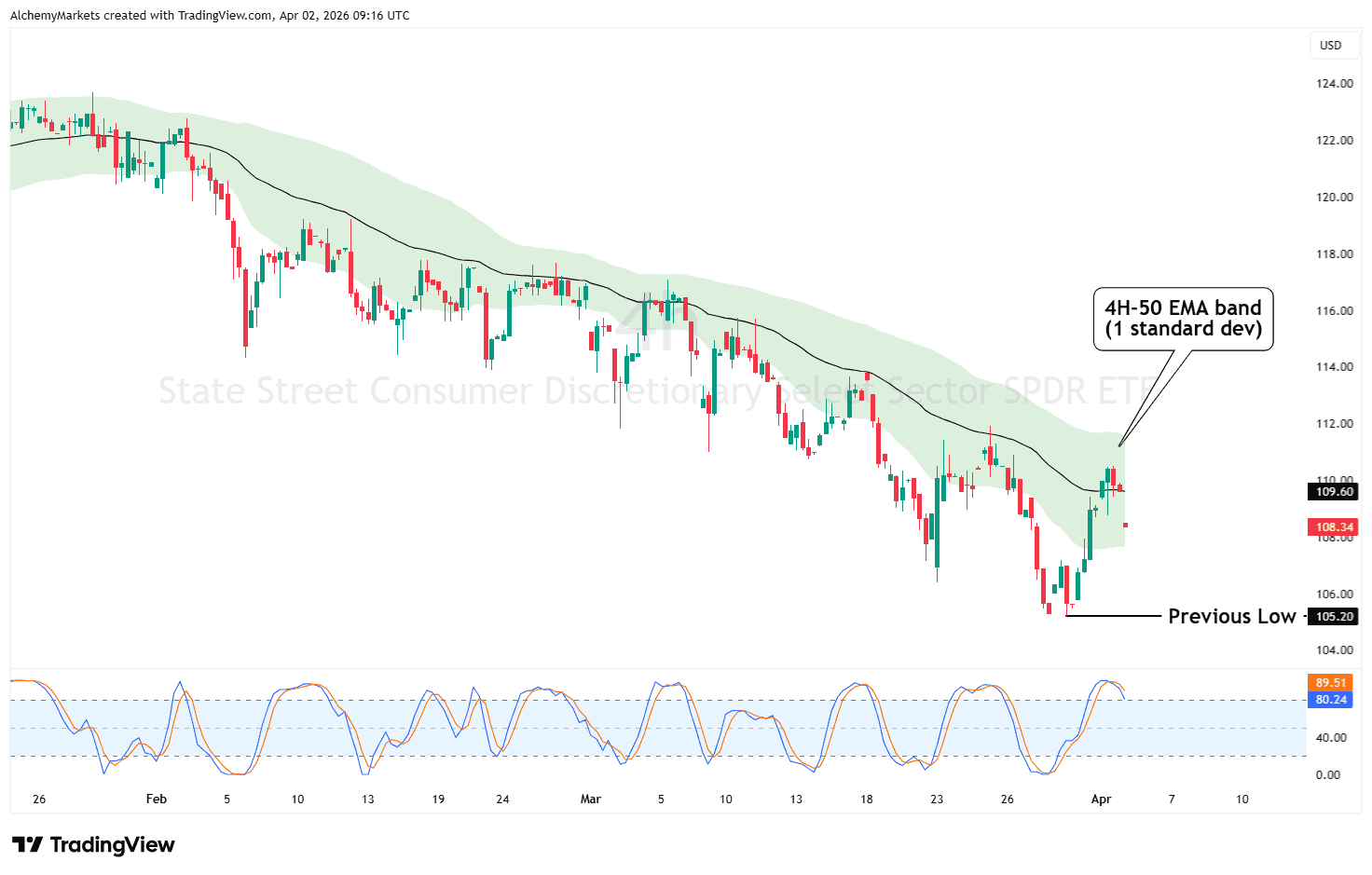
The rally was merely relief without breaking market structure, and the macro backdrop supports this behaviour. Reuters said February retail sales rose 0.6%, but also warned that gasoline prices above $4 a gallon could start to weigh on spending in the second quarter – ultimately, markets are more worried about forward projections rather than past victories.
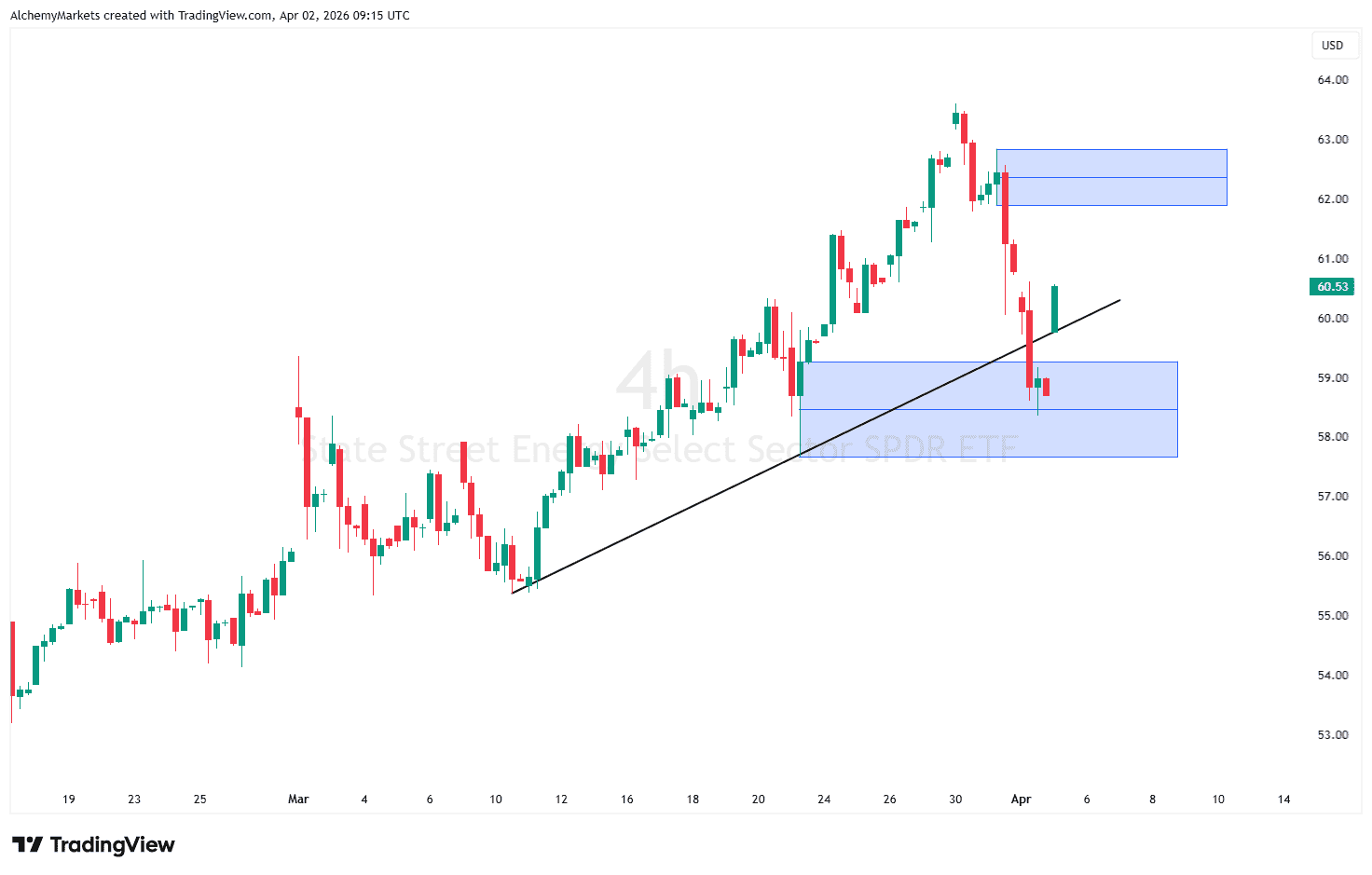
XLE explains the move underneath. Energy only weakened while oil was falling. Once Trump’s tougher message hit, that move reversed quickly. The 4H chart shows exactly that: a sharp drop from the highs, then a fast test of support and a violent gap up as the oil story changed again.
Gold adds the cross-asset clue. It did not behave like a clean safe-haven winner. Instead, gold fell 2.8% as the dollar, Treasury yields and oil all moved higher. That suggests the market is thinking more about inflation pressure and tighter conditions than a simple fear trade.
Gold is technically now back under its 1H-50 EMA band, and potentially could remain suppressed as it has in Mid March. The key level to watch now is $4,667, which is the 50 Exponential Moving Average and the point where Gold has broken a larger trendline.
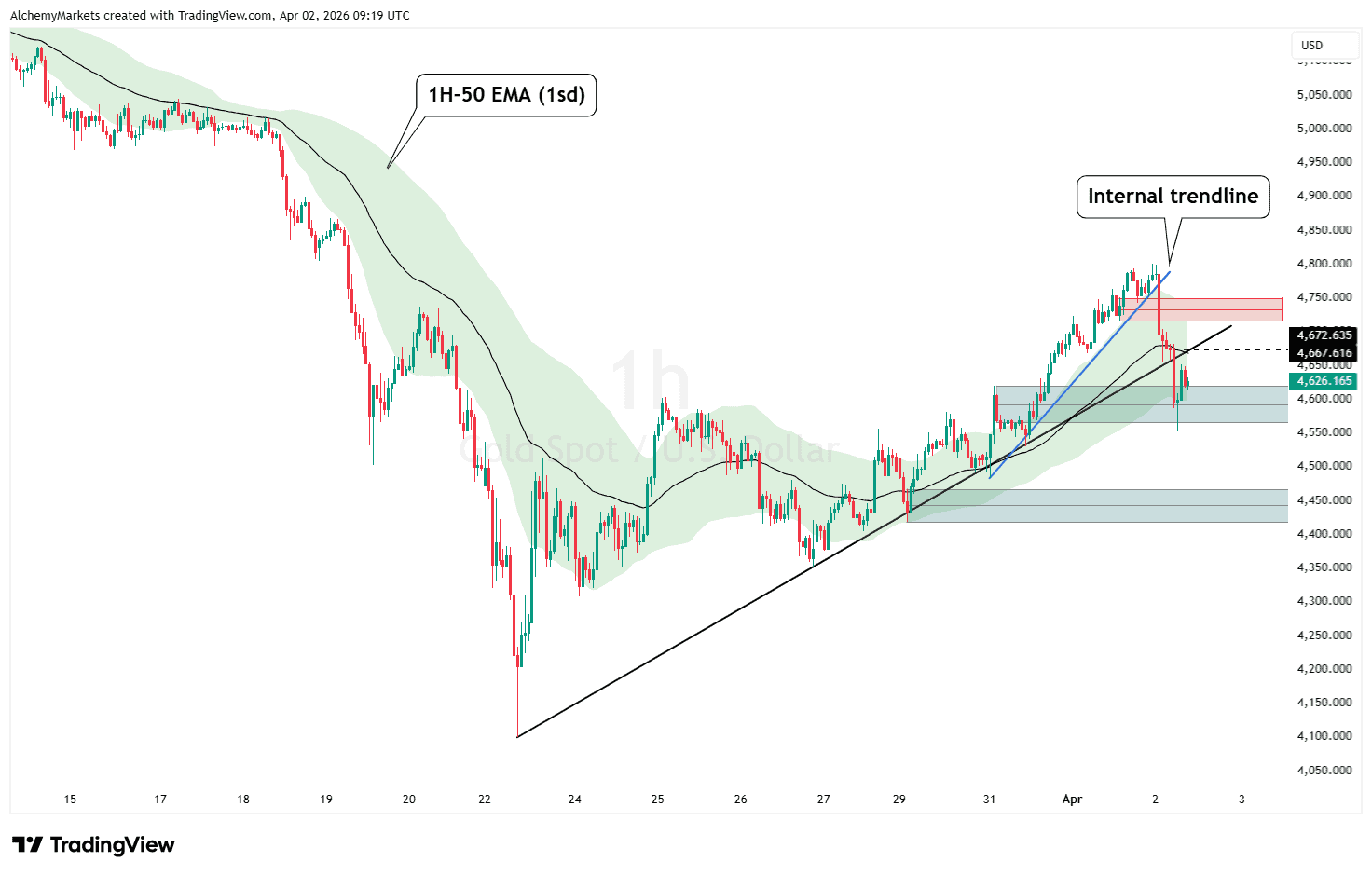
Should gold manage to reclaim the trendline, a potential rejection zone could be around $4,700 to $4,750, where a supply zone lies.
Bottom Line
The takeaway is simple: the index bounced, but the more important parts of the market did not fully confirm it. Until consumer stocks start participating more clearly, this still looks like a relief rally that the market does not fully trust.
For now, the markets are actually behaving just as expected: Sensitive to headlines, and then coming to its senses after media and/or officials backtrack on statements.
Amidst the volatility, the volatility is the constant. Trade smart, and be alert to headlines.