Written by:

- Opening Bell
- March 24, 2026
- 3 min read
Markets Call Bluff on Trump’s “Very Productive Talks” with Iran
Markets rallied briefly on Monday after headlines suggested tensions between the US and Iran were easing.
Trump said there had been “very good and productive conversations” with Iran and announced a five-day delay on strikes targeting energy infrastructure. Oil dropped and equities moved higher almost immediately.
The move didn’t hold because those claims were later contradicted. Iran denied that any talks had taken place. At the same time, strikes on Iran continued, including attacks on power-related infrastructure. That sits in direct conflict with the idea of easing tensions. The five-day delay reads less like a step toward resolution and more like a temporary pause while underlying risks remain in place.
Without a clear sign that a resolution was close, the earlier move had no foundation.
What the market reacted to
The reaction was headline-driven.
- “Talks progressing” → Oil drops → Equities rally
- “Talks denied” → Oil stabilises → Equities fade
There was no time for positioning to build. The move was based on claims that were quickly contradicted.
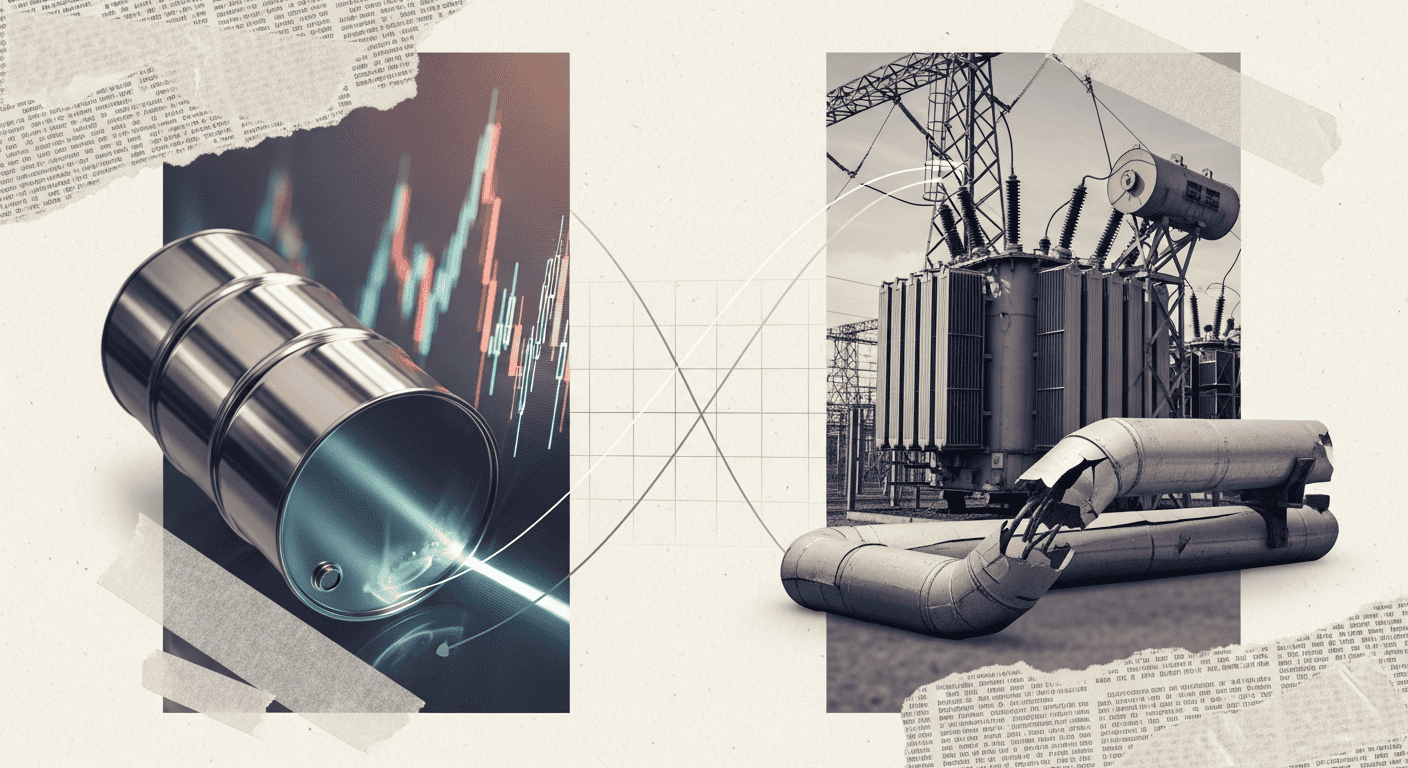
Oil is still driving everything
Oil moved first, equities followed.
Lower oil reduces pressure on inflation and supports risk assets. That’s the link.
But the drop came from a headline and a short-term delay, not from any change in supply conditions. Energy infrastructure is still being targeted. That keeps supply risk in play.
As long as that remains the case, oil can reprice quickly.
Geopolitics is still active
There’s no resolution here.
- Iran denied talks
- Strikes are ongoing
- Energy infrastructure remains a target
- The timeline is limited to five days
That doesn’t signal de-escalation. It signals a situation that hasn’t stabilised.
Markets tried to price a calmer outcome, but the follow-up doesn’t support it. That’s why the rally faded.
SPX failed where it needed to hold
The S&P 500 pushed into the 200-day moving average around 6,600–6,650 and failed. That level needed to hold for a recovery to take shape. For now, it remains capped below it.
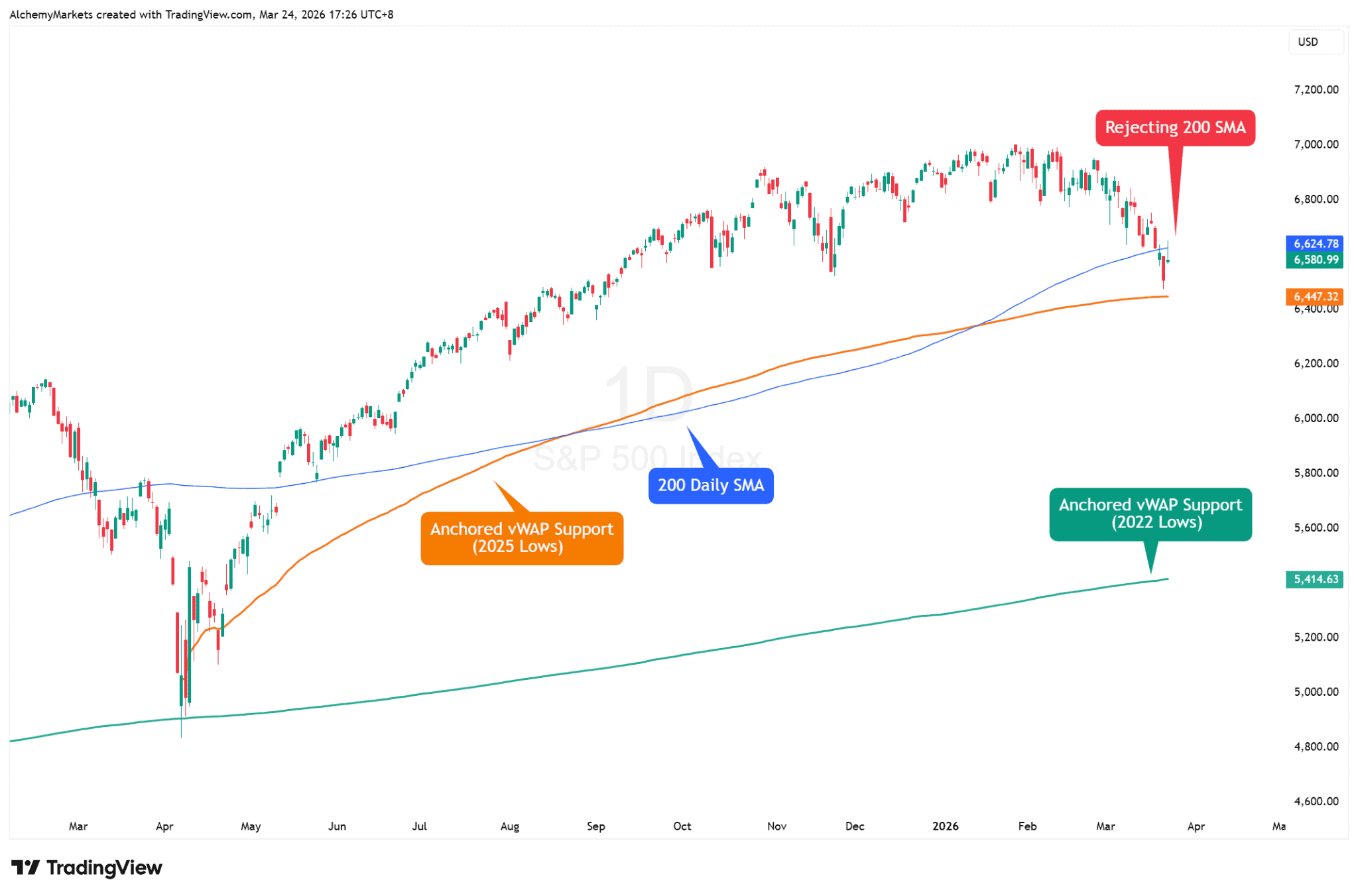
Below that, anchored VWAP from the 2025 lows near 6,400–6,450 is holding. Despite ongoing tensions, it would not be unusual for the SPX to stabilise or stage a short-term bounce here after a sharp decline.
That’s because:
- positioning becomes stretched after fast moves
- short-term sellers take profit
- institutional flows often defend VWAP levels
This kind of bounce does not imply strength. It simply reflects a pause, and potential for a dead-cat bounce rally, before continuation to the downside.
Nasdaq confirms the same behaviour
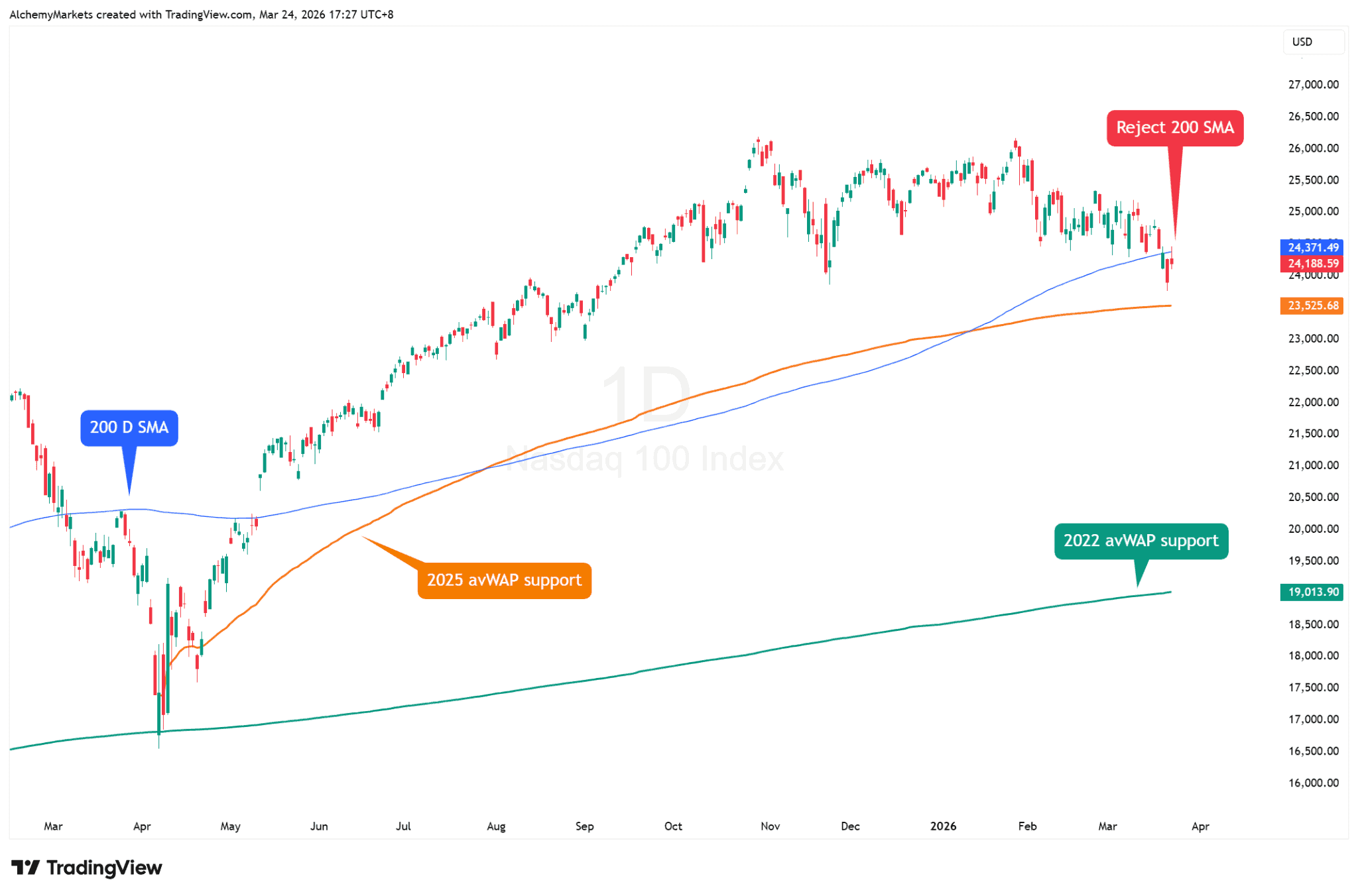
The Nasdaq 100 shows the same structure. Rejection of the 200-Daily SMA at $24,371, with anchored vWAP support (based on 2025 lows) coming in at $23,525.
What to watch next
If oil moves higher, risk is being priced back in. That likely pressures equities, especially if the five-day window passes without progress.
If price breaks above the 200-day moving average, buyers are stepping in despite the noise.
If anchored VWAP breaks, support is gone and the bounce likely unwinds.
Final take
Monday’s move came from a shift in headlines, not a shift in conditions.
The delay in military action did not align with developments that followed, leaving the market without a consistent narrative to hold onto.
For now, the market is waiting for a clear break on either side, likely driven by the next geopolitical catalyst.