Skriven av:


- Opening Bell
- oktober 5, 2026
- 4 min läsning
Japanese Fund Dumps French Bonds as Oil Faces a Supply Tug-of-War
Markets are dealing with two separate tug-of-wars right now. Oil supply is recovering through the Persian Gulf just as Saudi Arabia’s alternative export route comes under attack again, while European bond markets are dealing with renewed fiscal stress in France.
Neither story automatically tells us where markets go next. The news gives us the pressure points; price still has to confirm which side is winning.
Oil Supply Is Recovering But the System Is Still Fragile
The bearish argument for oil has become much stronger. Persian Gulf crude exports recovered above 14 million barrels per day last week, roughly 80% of pre-war levels according to Vortexa data shown by Bloomberg.
One important detail: the chart includes crude exported through the Strait of Hormuz and alternative bypass routes.
So the takeaway is not that Hormuz has fully returned to normal, but that producers have become much better at getting barrels into the market despite the disruption.
The G7 is adding another bearish force by coordinating the release of up to 100 million barrels of diesel, crude and other reserves through the IEA. A large part of the initial release is focused on diesel, where shortages remain much more severe than crude itself.
In simple terms, governments are actively trying to put more supply into the market at the same time Gulf exports are recovering.
Saudi Arabia’s Oil Bypass Is Being Tested Again
The problem is that Saudi Arabia’s East-West pipeline has reportedly been attacked again, this time near Khurais. This pipeline matters because it allows Saudi crude to travel west towards the Red Sea without needing to pass through Hormuz.
This risk is not purely theoretical. Satellite imagery from the earlier September attacks clearly showed fire damage and blackened areas around East-West pipeline pumping facilities, while new night imagery around Khurais has shown a sizeable smoke plume following the latest strike.
That creates the current oil tug-of-war: more crude is reaching the market, but the infrastructure being used to keep those barrels moving remains vulnerable.
For crude oil, I would currently give the recovering exports and reserve releases slightly more weight.
They are already putting physical barrels into the market, whereas another sustained East-West disruption remains the upside risk that could change that balance quickly.
Price Has Not Confirmed an Oil Breakout Yet
WTI is sitting around an important 90–92 support area on my 4-hour chart. Price has repeatedly failed to reclaim the 50 EMA band, which tells us sellers are still defending the short-term bearish trend.
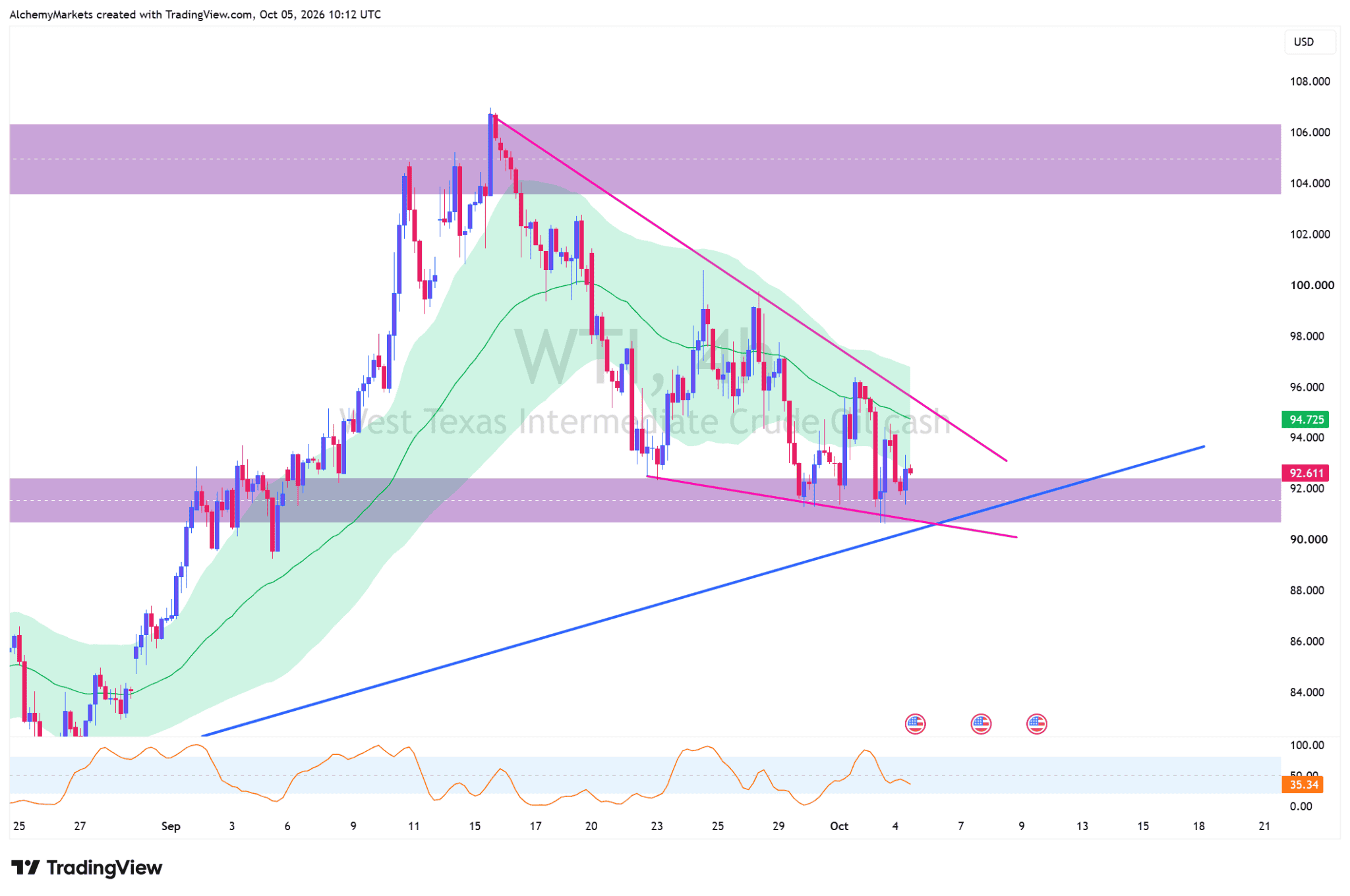
However, support is also refusing to break. That leaves oil compressed between resistance above and a larger rising trendline underneath, creating something close to a bullish falling-wedge structure.
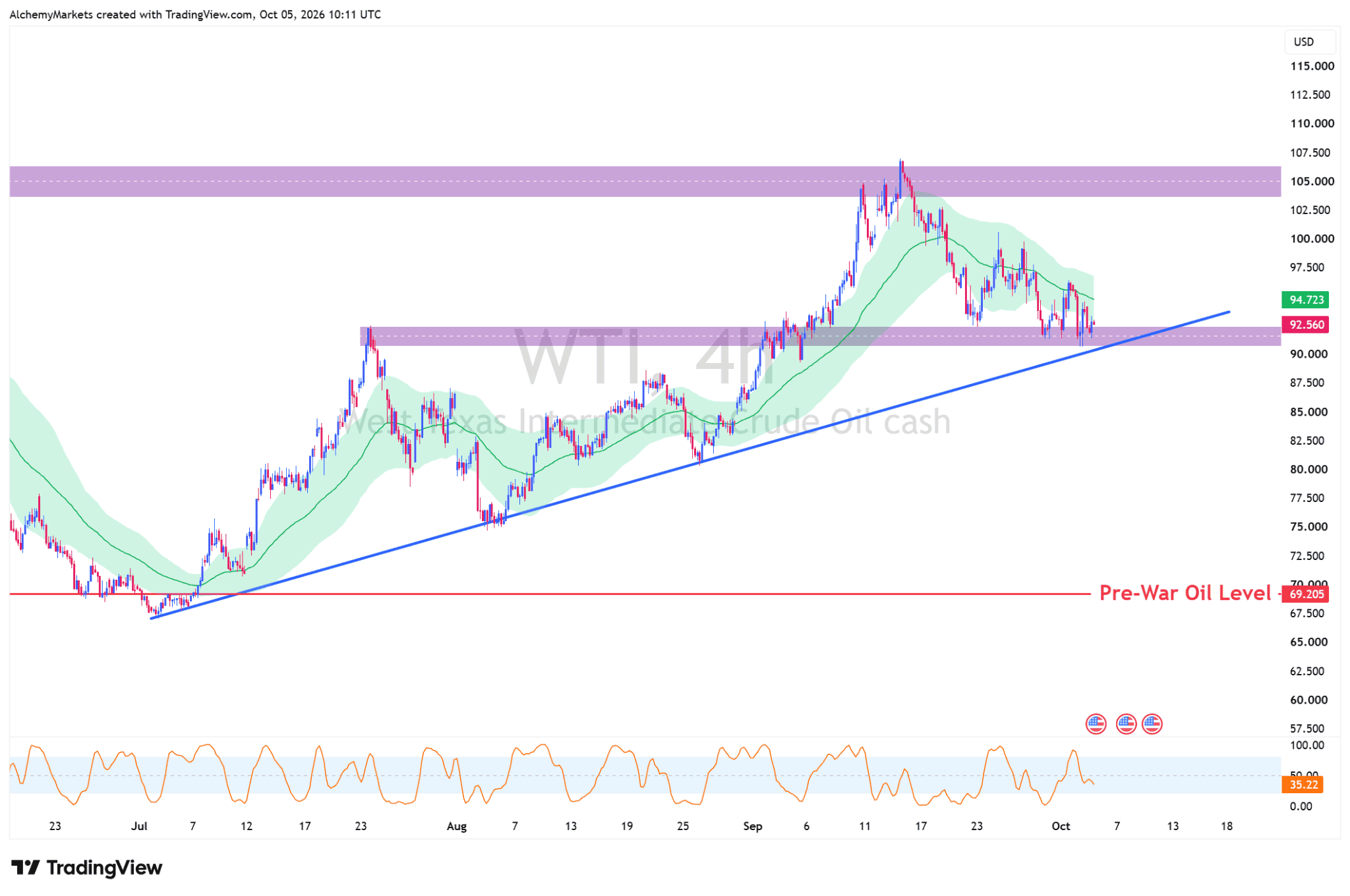
A clean loss of the 90 area would shift attention towards roughly 88 first, followed by the larger 80–82 support region.
On the other hand, a sustained move back above the 50 EMA band would be the first sign that geopolitical risk is beginning to overpower the additional supply.
Diesel is currently more interesting. My crack-spread chart is showing improving momentum and price is attempting to push above its 50-EMA band (4H timeframe, set to 1 standard deviation with Bollinger Bands).
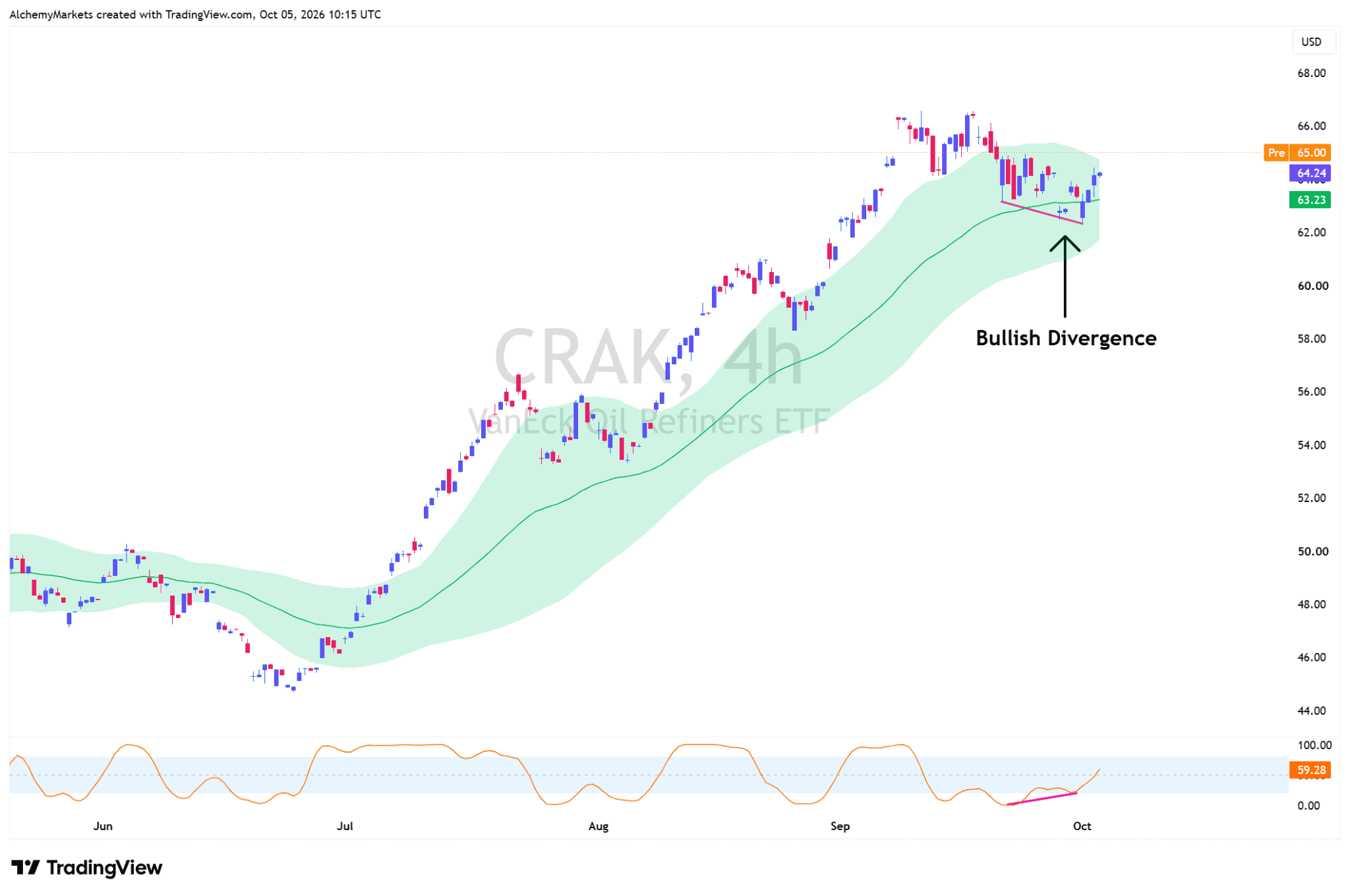
If diesel holds above the breakout area, that would tell us the emergency releases are helping crude availability without fully fixing the refining and logistics problem.
France Adds a Separate Risk to European Markets
There is also pressure coming from the bond market. Sumitomo Mitsui DS Asset Management sold its entire French government bond position and moved most of the proceeds into German Bunds, with some going into short-term Japanese government bonds.
The important part is the direction of money: away from French fiscal risk and towards safer German and Japanese debt.
One can clearly observe the German 10Y bonds moving lower while the French 10Y bonds remain high; contributing to why the euro has weakened.
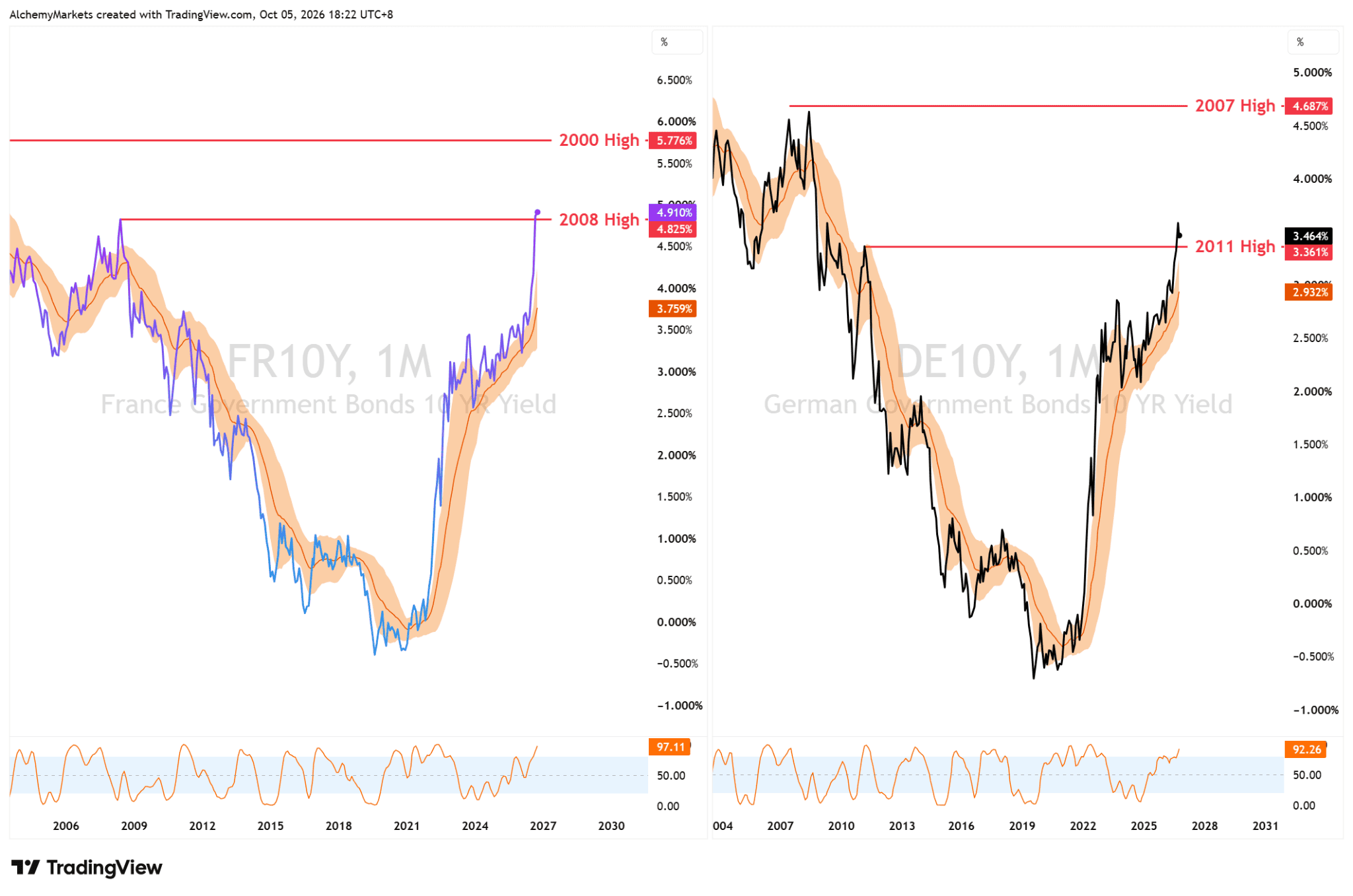
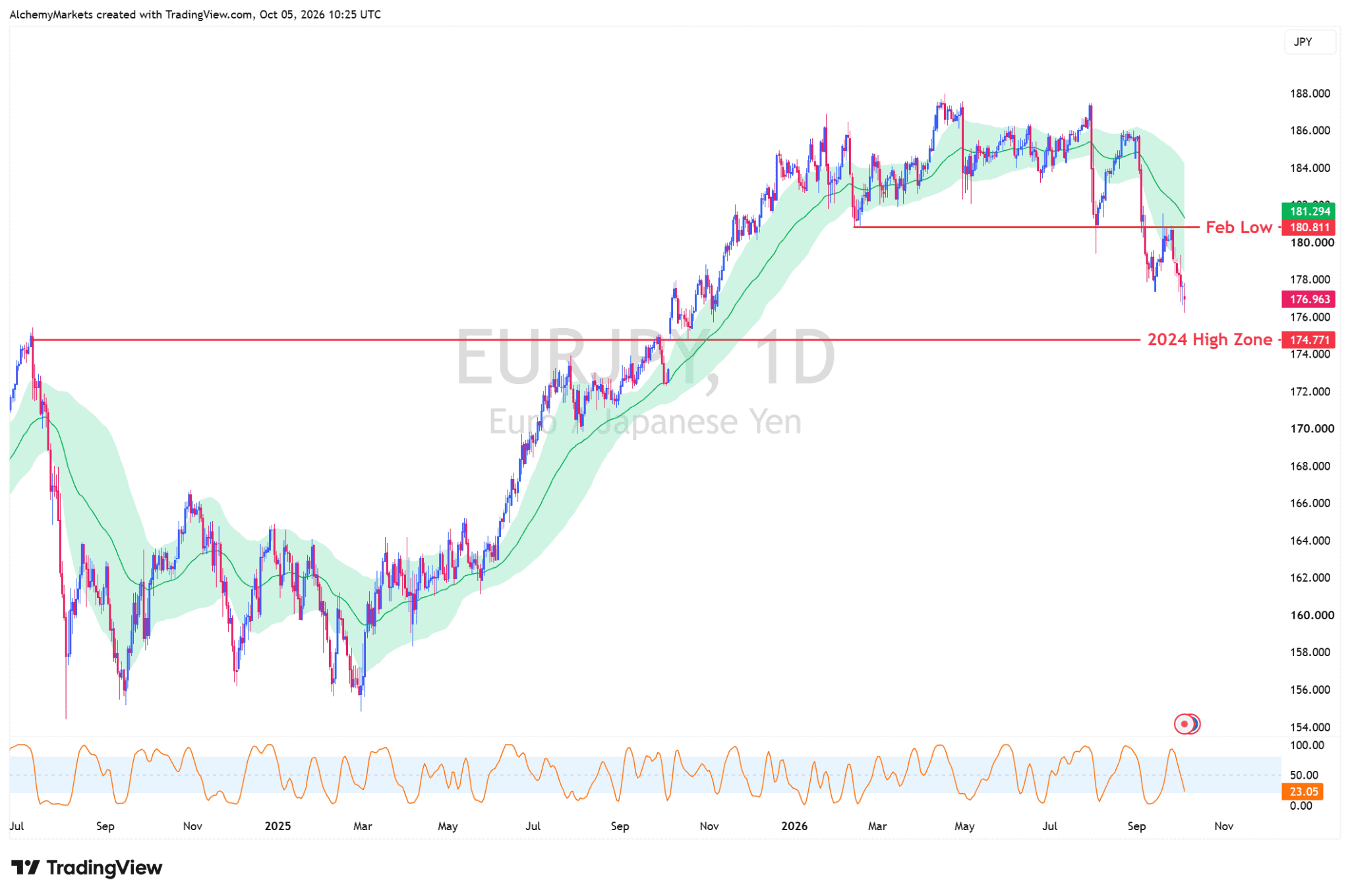
That gives EURJPY a particularly clean expression of the story. The euro is dealing with French fiscal stress while the yen is benefiting from safer-haven flows, and EURJPY remains suppressed by its daily 50 EMA band.
What Matters From Here?
Oil: Neutral to slightly bearish while WTI remains below its 50 EMA band, but with significant upside event risk if Saudi infrastructure disruptions persist.
Diesel: Comparatively bullish, because the refining and logistics squeeze is proving harder to fix than crude availability itself.
Europe: French bonds and the euro currently carry the clearest downside trajectory. The Japan sale matters most as confirmation that international investors are becoming more selective about French sovereign risk, rather than as evidence of a coordinated Japanese withdrawal from Europe.
Ultimately, price remains the final filter. More oil flowing through the system should pressure crude lower; if WTI refuses to break support despite that extra supply, that itself becomes information worth paying attention to.