Skriven av:

- Chart of the Day
- augusti 19, 2026
- 4 min läsning
Treasury Doubles Buybacks as 30-Year Yields Test 5.3%
The U.S. Treasury just gave equity bulls something they badly needed: lower long-term yields. The question is whether that relief can become a genuine change in market structure.
After the 30-year Treasury yield reached about 5.34% on Tuesday, its highest level since 2007, Washington announced that long-end liquidity-support buybacks would at least double from $2 billion to $4 billion per operation for 10- to 30-year nominal securities. The larger operations are scheduled from September 9 through November 4.
The reaction was immediate. The 30-year yield fell by almost 10 basis points towards 5.19%, while equities initially moved higher.
- The bullish part: Treasury is providing extra demand in the exact area of the bond market that has been hurting equity valuations.
- The less bullish part: it is doing so because the long end had become uncomfortable enough to matter.
Why Lower 30-year Yields Help Stocks
Bond prices and yields move in opposite directions.
Treasury buybacks give holders of older long-dated securities another source of demand and can improve market liquidity, raising bond prices, (and as they move in opposite directions) yields ease.
This is important because Treasury yields feed into mortgage rates, corporate borrowing costs and the discount rate investors use to value future profits.
So when long-term yields fall, borrowing costs ease, making it cheaper for companies to finance growth and more supportive for equity valuations.
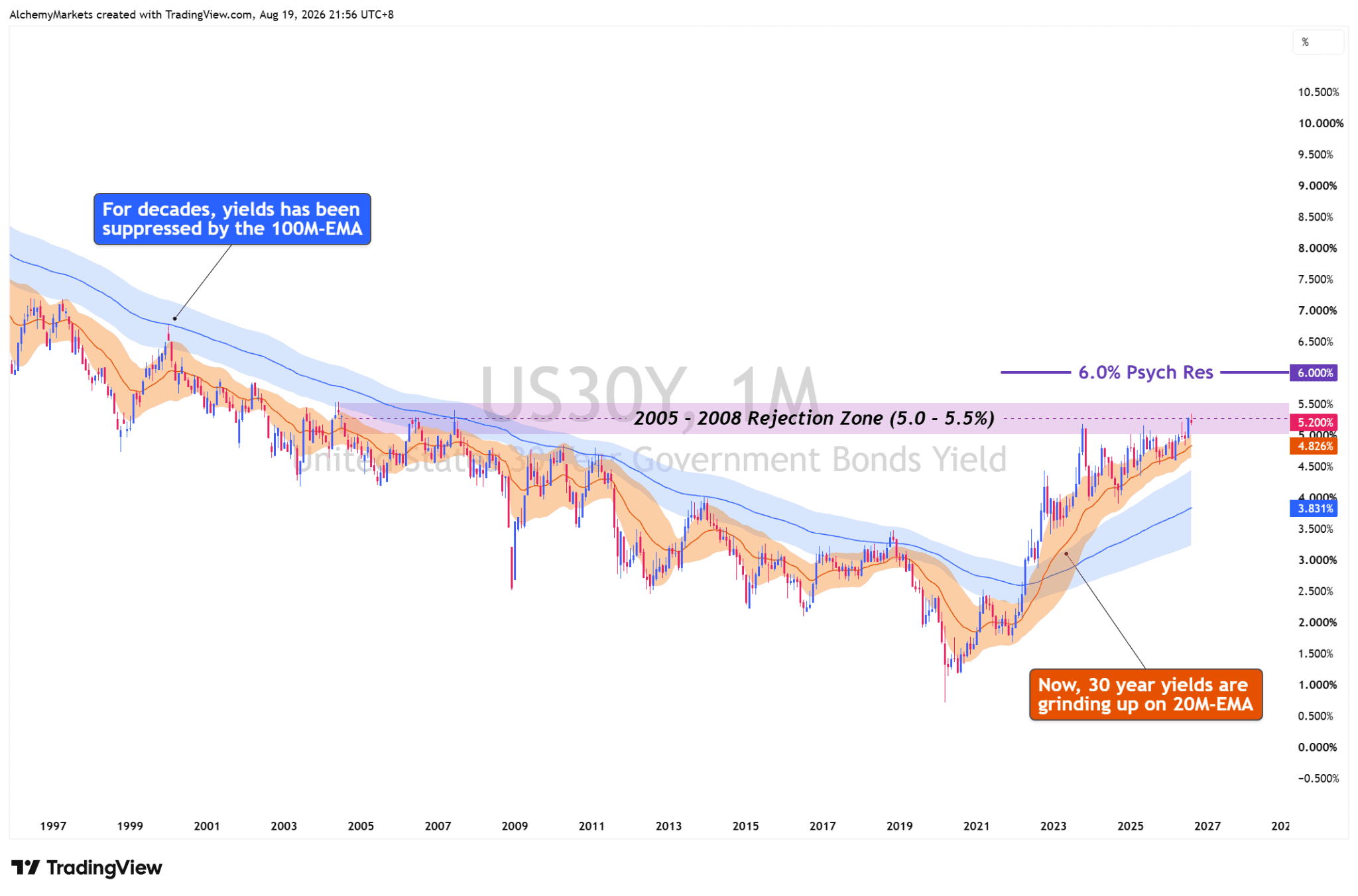
| US30Y monthly. The 30-year yield had pushed into the old 5.0% to 5.5% rejection area seen before the global financial crisis. The chart makes clear why 5.3% was becoming an uncomfortable level. |
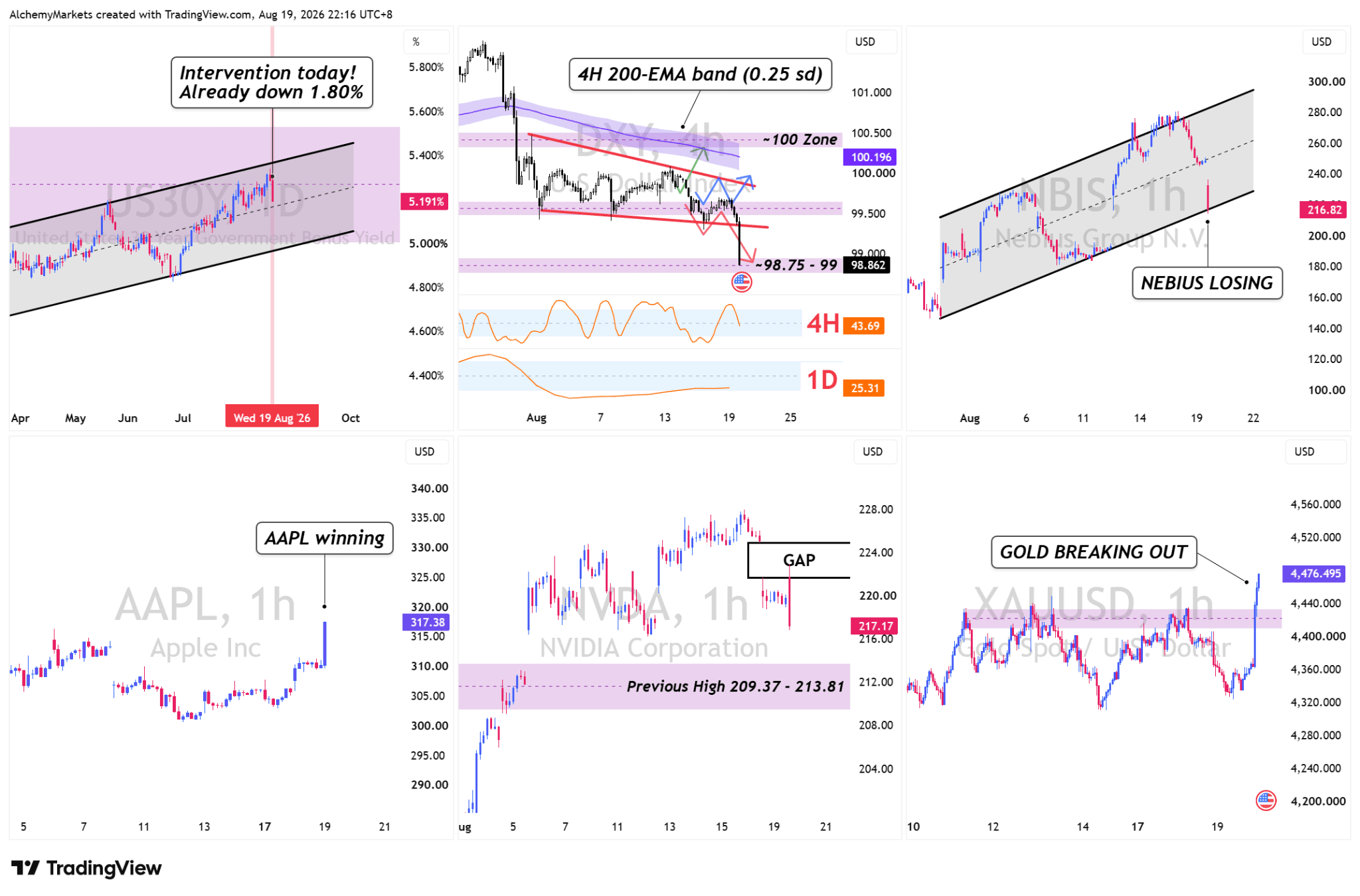
That is the main reason why some assets saw a tailwind today, such as Apple and Tesla.
Another big winner is Gold, which historically loves low yield conditions:
Still, the announcement should be treated as temporary liquidity relief, not a new easing regime.
And, as you can see from the chart above, the tailwind isn’t universal. Nvidia and Nebius are instead gapping down aggressively.
That’s why it’s important to not paint this event with a rose-colored brush; the market is not treating the announcement as a broad all-clear.
Ultimately, each asset’s technical structure will still be king in terms of telling you how much of the rate relief it can actually benefit from.
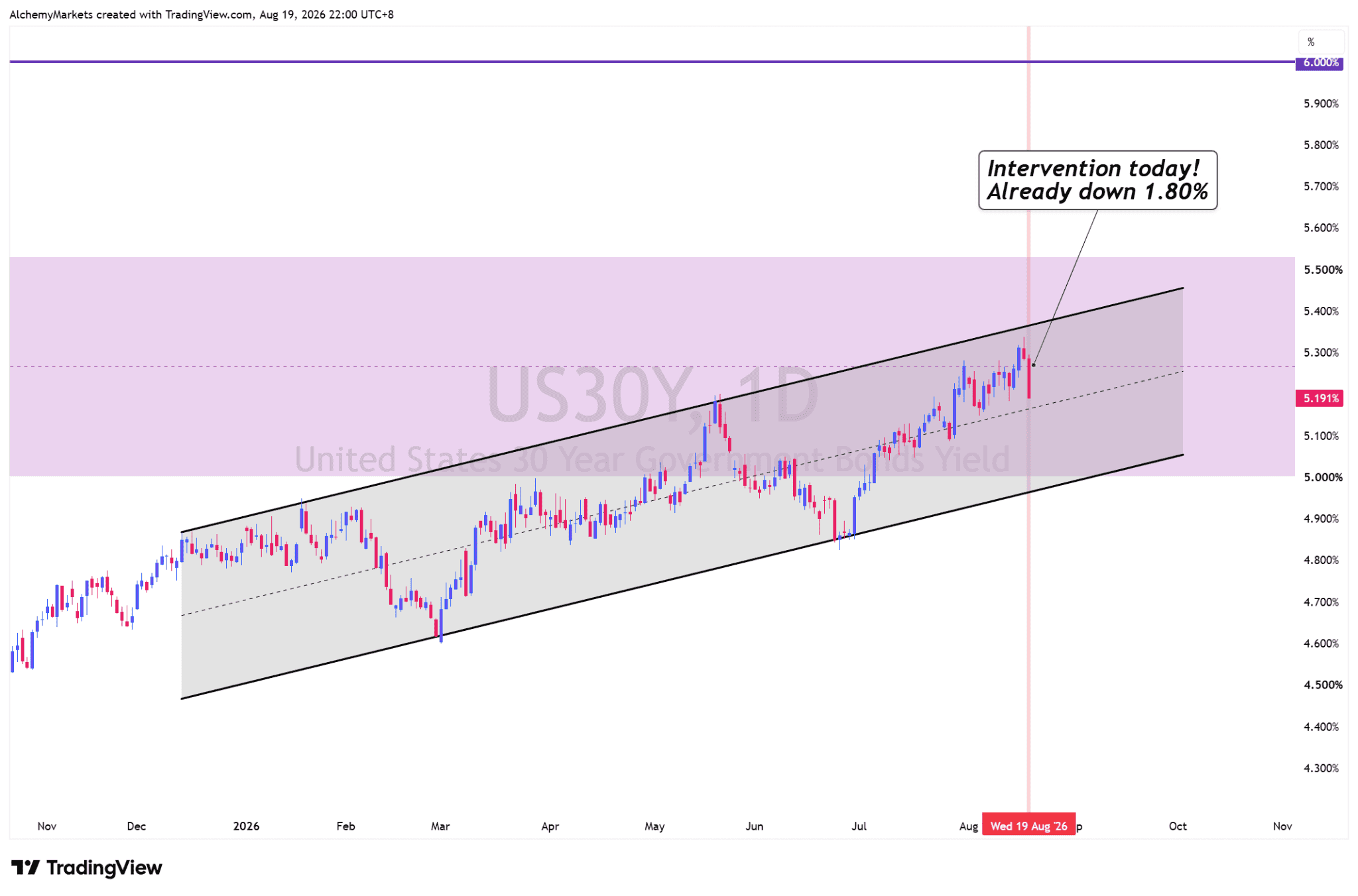
| US30Y daily. The announcement produced an immediate yield reversal. The important test now is whether the move develops into a sustained break lower or merely becomes a one-day interruption inside the rising channel. |
So is it time to buy the dip?
The setup is better than it was yesterday, but the S&P 500 chart argues against treating the move as an automatic green light. On the longer-term logarithmic structure, SPX has touched the upper edge of the rising channel.
We have been watching this idea since last week, and yesterday, S&P has gapped down aggressively.
Now, this does not mean an 18% correction to the 100-week EMA is immediate, but it does add more weight to the idea we may just have topped out.
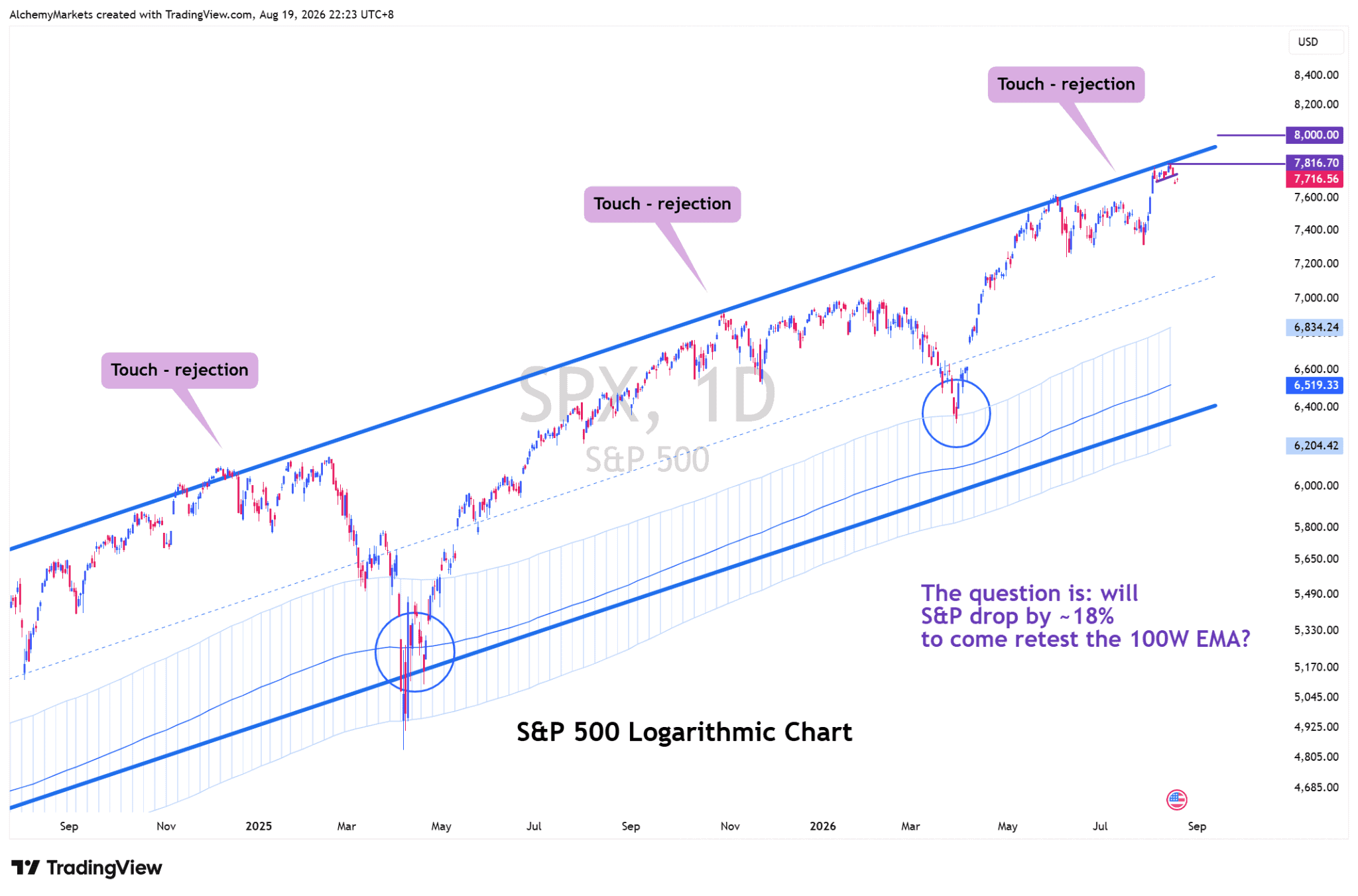
| SPX logarithmic structure. The upper channel remains the main structural resistance. The 100-week EMA should be treated as a deep-reset scenario, not an immediate target. |
Zooming in, you’ll see that SPX has broken out of a symmetrical triangle pattern with a target of 7,956.
This is the alternative scenario.
Recent candles are showing bullish momentum slowing, while SPX has also broken beneath a smaller rising trendline.
That leaves room for a near-term pullback. But if today’s Treasury intervention provides enough of a tailwind, a reclaim of that trendline would show that buyers remain resilient even with the index sitting close to all-time highs.
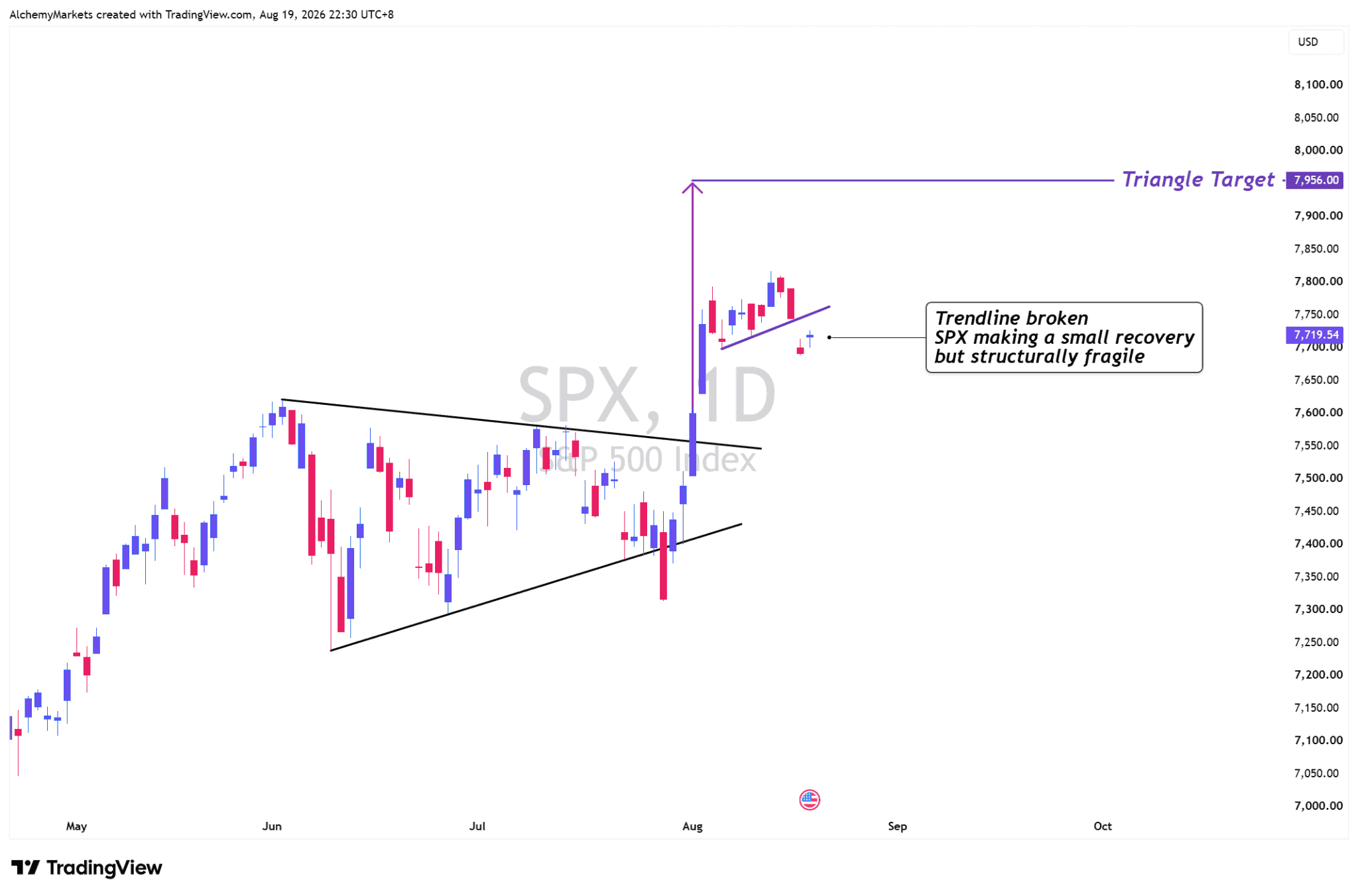
| SPX daily. The larger breakout is still alive, but the local recovery remains fragile. This is the chart that decides whether today’s bond relief turns into actual equity follow-through. |
Bottom Line
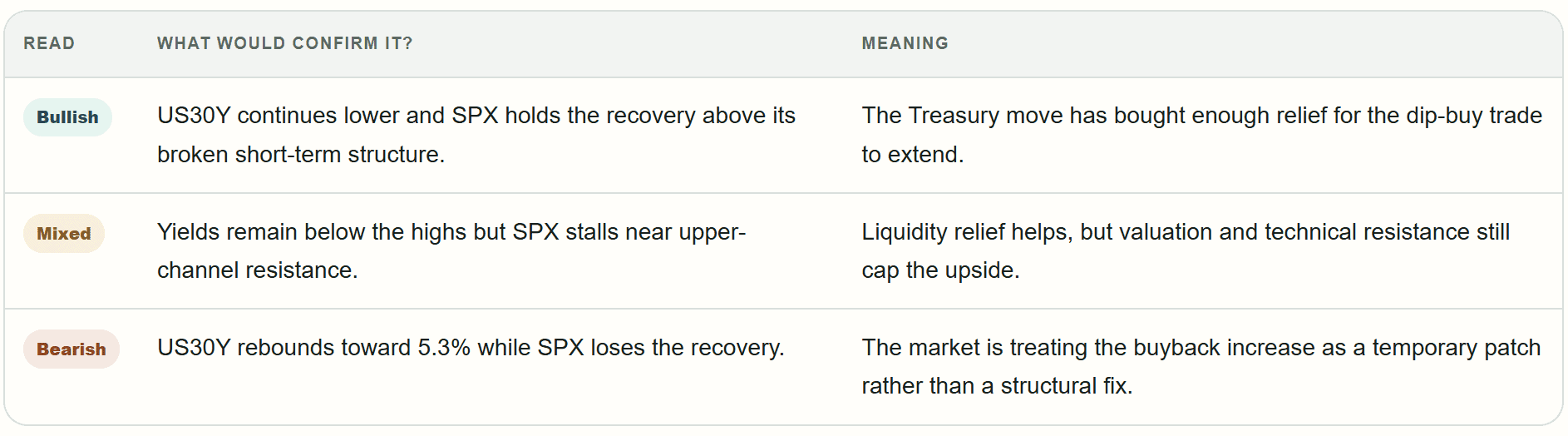
For now, the most likely read is mildly bullish but selective.
Washington has reduced one of the market’s biggest immediate pressures, so a relief rally has room to run.
But with SPX already near longer-term resistance, this is better treated as a conditional dip-buy than the start of a confirmed new leg higher.