Scritto da:


- Opening Bell
- Aprile 29, 2026
- 2 min di lettura
UAE Exit Shakes OPEC—but Prices May Stay Rangebound
The United Arab Emirates is set to leave OPEC from May 1, marking one of the most significant shifts in the oil market in recent years. As OPEC’s third-largest producer, the UAE’s departure weakens the group’s ability to control supply and influence global prices.
At its core, this move is about capacity. The UAE has long been frustrated by production quotas, which have kept output well below its potential. With capacity near 4.85 million barrels per day—and plans to reach 5 million by 2027—the country is now positioning itself to increase supply more freely.
Short-Term: Geopolitics Still Driving Prices
Despite the headline, the immediate impact on oil prices is limited. That’s because the market is currently dominated by disruptions in the Persian Gulf, particularly constrained flows through the Strait of Hormuz.
With supply routes still restricted, oil prices remain elevated, and forecasts have been revised higher in the near term. In other words, geopolitics—not OPEC policy—is still in the driver’s seat.
Medium-Term: A Bearish Supply Shift
Looking ahead, however, the story changes.
The UAE’s exit introduces a clear increase in future supply, while also signaling potential cracks within OPEC. Less coordination typically means more competition—and more oil hitting the market. This shift supports the idea of softer prices over time, even if current conditions remain tight.
What the Chart Is Telling Us
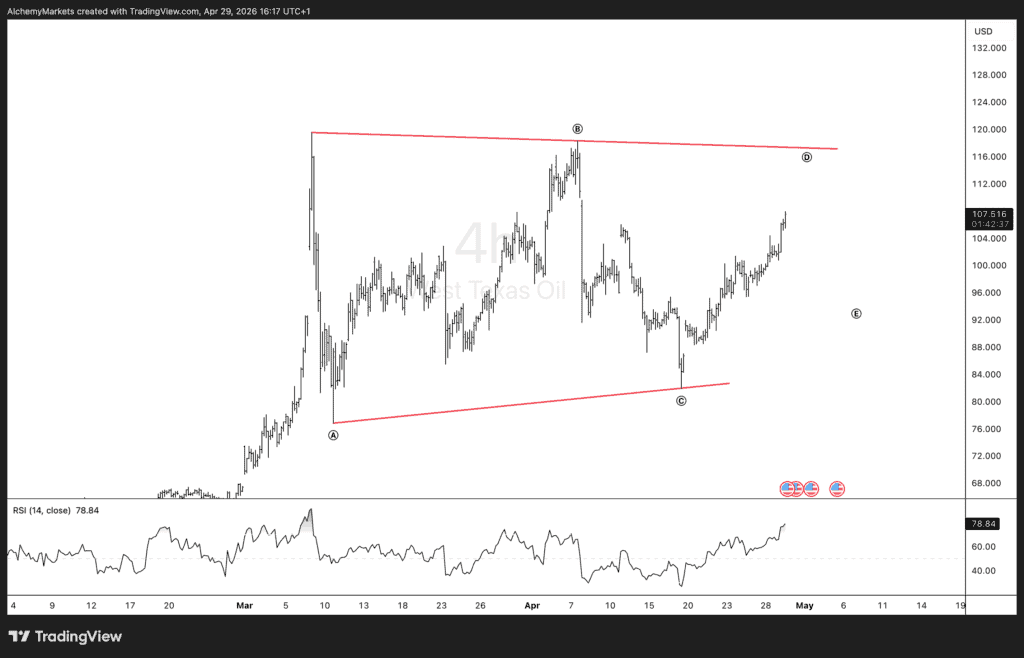
Looking at the 4-hour WTI crude chart:
- Price is coiling within an Elliott Wave triangle
- Resistance is gradually sloping lower
- Support is rising from recent lows
- RSI is nearing overbought territory
This suggests compression, not expansion.
– Despite bullish headlines and elevated prices, the market is not breaking out aggressively.
Final Take
While the UAE’s exit is structurally bearish for oil in the longer term, current geopolitical risks are keeping prices supported for now.
However, based on the chart, we’re unlikely to see a strong bullish breakout in the near term. Instead, oil appears to be consolidating, and we may continue to see price coil within this triangle until a clearer catalyst—either geopolitical or macro—forces a decisive move.