Written by:


- Weekly Outlook
- August 7, 2026
- 6 min read
Jobs Shock Raises Fed Cut Bets, But Credit Markets Hold the Key
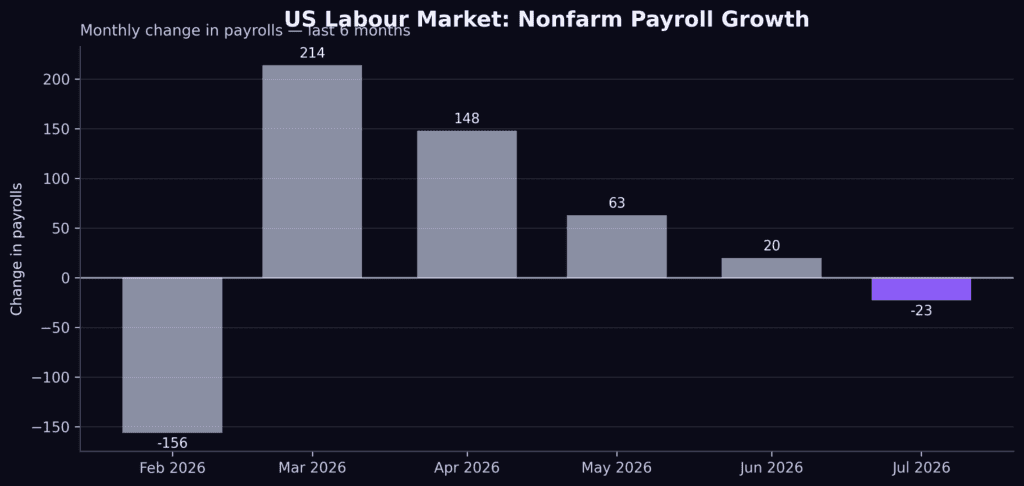
The US labour market delivered a significant surprise this week, with July non-farm payrolls showing a decline of 23,000 jobs. Instead of the steady employment growth investors had been expecting, the latest data showed that the labour market is losing momentum, adding to concerns that the US economy may be entering a softer phase.
The report also included revisions to previous months, reinforcing the message that hiring conditions have been weaker than initially reported. While one jobs report does not define the economy, the direction of travel is becoming increasingly important: employment is no longer providing the same level of support that investors became accustomed to during the post-pandemic expansion.
The immediate market reaction was clear. Softer employment data increased expectations that the Federal Reserve may have more room to cut interest rates, pushing Treasury yields and the US dollar lower. Lower yields are typically supportive for growth assets because they reduce borrowing costs and increase the attractiveness of future earnings.
However, the market now faces an important question:
Are lower yields reflecting a healthy Fed easing cycle, or are they signalling a deeper economic slowdown?
That distinction will depend on what happens in the credit markets.
Credit Markets: Early Warning Signs, But No Panic Yet
While equities have remained relatively resilient, corporate bonds are providing a more nuanced picture of investor confidence.
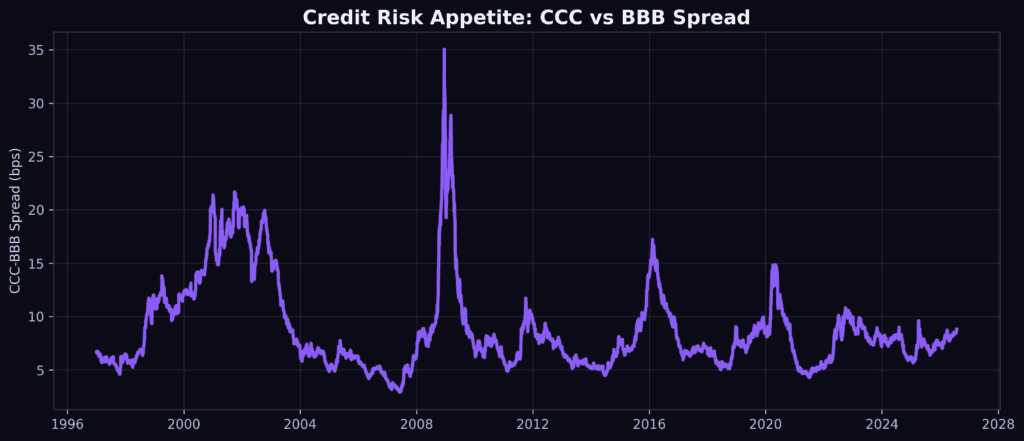
Credit spreads measure how much extra return investors demand to lend money to companies compared with safer US government bonds. When spreads tighten, investors are comfortable taking risk. When spreads widen, investors become more cautious about corporate balance sheets and future earnings.
Recently, the weaker end of the credit market has shown some signs of caution.
CCC-rated companies — the riskiest part of the corporate bond market — have seen spreads widen relative to higher-quality BBB-rated companies. In simple terms, investors are becoming more selective and demanding more compensation to lend to financially weaker businesses.
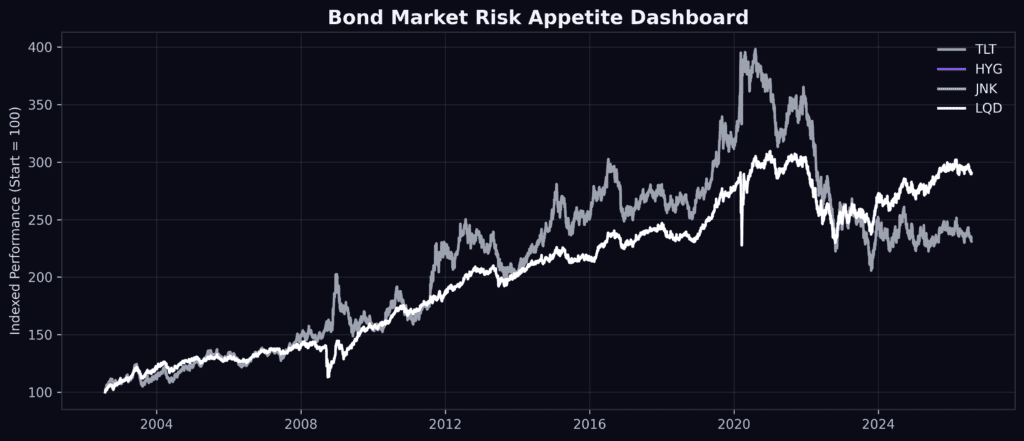
However, this has not yet developed into a broad credit problem. BBB credit remains relatively stable, while high-yield bond ETFs such as HYG and JNK have not shown a major breakdown.
This creates an interesting market backdrop:
The labour market is weakening, but credit markets are not yet confirming a major economic stress event.
For investors, this suggests the market is currently pricing a potential “soft landing” scenario:
- weaker employment → more Fed support
- lower yields → support for valuations
- contained credit stress → companies still able to access funding
The risk is that if CCC weakness spreads into higher-quality corporate bonds, markets may start viewing weaker jobs data differently — not as a reason for rate cuts, but as evidence of deteriorating earnings conditions.
What To Watch Next Week
United States
July CPI Inflation (Wednesday)
Inflation will be the next major test for the Federal Reserve narrative.
The previous inflation report was relatively benign, helped by falling gasoline prices and softer price pressures across several categories. Expectations are for another relatively contained reading, with headline inflation potentially around 0.1% month-on-month.
Core inflation is expected to be slightly firmer, but cooling housing costs, weaker wage growth and improving business cost pressures could help keep inflation contained.
The market reaction may depend less on the number itself and more on whether it changes expectations heading into the September FOMC meeting.
A softer inflation print would reinforce the argument for Fed easing.
A hotter-than-expected number could challenge the idea that rate cuts are coming quickly.
July Retail Sales (Friday)
Consumer spending remains critical because households drive the majority of US economic activity.
Retail sales will provide insight into whether consumers are still supporting growth despite a weakening labour market.
Auto sales were relatively flat, while lower gasoline prices may weigh on fuel-related spending. However, other categories may show modest improvement, helped by seasonal events and increased activity earlier in the month.
The key question:
Is the consumer slowing down, or simply normalising after years of strong spending?
United Kingdom
Q2 GDP (Thursday)
UK growth is expected to remain positive, but the headline figure may overstate the underlying momentum.
Recent monthly GDP data has shown some cooling, while business surveys have been less optimistic than the headline growth numbers suggest.
The key focus will be whether the economy is maintaining momentum into the second half of the year or whether earlier strength was temporary.
Technical Setup Of The Week: SpaceX Approaches Volume-Based Fair Value
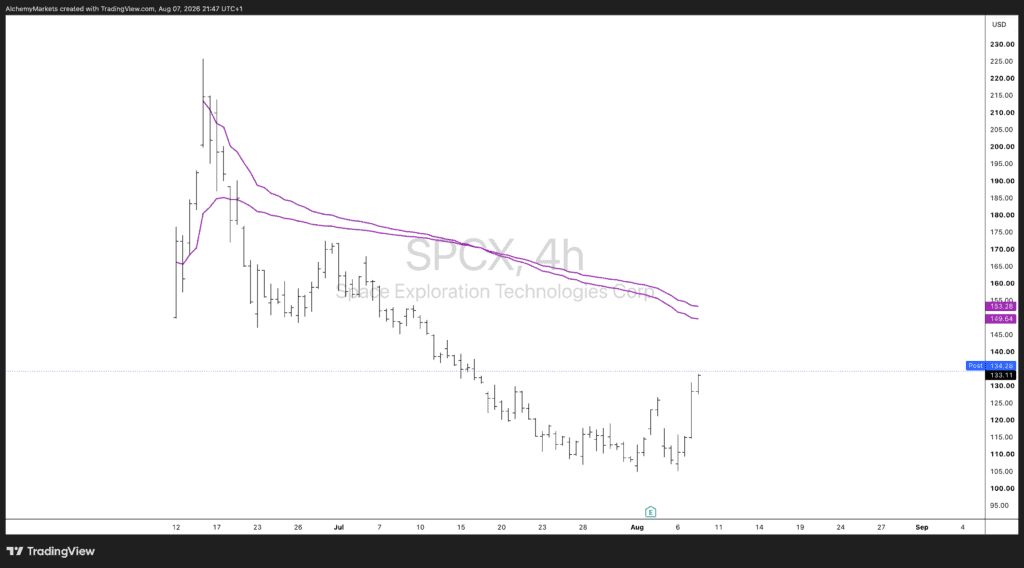
After this week’s earnings-driven move, SpaceX has continued to recover from its previous decline and is now approaching an dynamic resistance area.
Price is moving back towards the anchored VWAP, which represents the average price investors have paid since the chosen event, weighted by trading volume.
In simple terms, VWAP shows where the average market participant is positioned. When price trades below VWAP, many buyers from that period may be underwater. When price reclaims VWAP, those investors return to profitability, which can improve sentiment and encourage further demand.
SpaceX is now approaching this volume-weighted average price zone, suggesting the market is testing whether the post-earnings recovery has enough strength to continue.
A sustained move above VWAP would suggest buyers are regaining control and the market is accepting higher prices after earnings.
However, failure around this level would suggest investors are still using the rally as an opportunity to exit positions.
For now, the setup is simple:
Above VWAP: improving momentum and investor confidence.
Rejected at VWAP: earnings optimism may already be priced in.
The Week Ahead
The market enters next week balancing two opposing forces:
A weaker labour market is increasing expectations for Fed support, but investors will need confirmation from inflation, consumer spending and credit markets that the slowdown remains manageable.
The key theme remains:
Bad economic news can be good news for markets — but only while credit conditions remain healthy.
If inflation continues cooling and corporate credit remains stable, investors may continue to view weaker data as a reason for lower rates.
If credit begins to deteriorate, the market may start focusing less on Fed cuts and more on the risk to earnings.
The next few weeks will determine which narrative wins.