Written by:

- Weekly Outlook
- July 24, 2026
- 8 min read
Fed and BoE Decisions Take Centre Stage as the S&P 500 Consolidates
Markets head into a busy week with central-bank decisions in both the US and UK, alongside the first estimate of second-quarter US GDP. The key question is whether policymakers look through the inflationary impact of higher oil prices or begin preparing markets for tighter policy later this year.
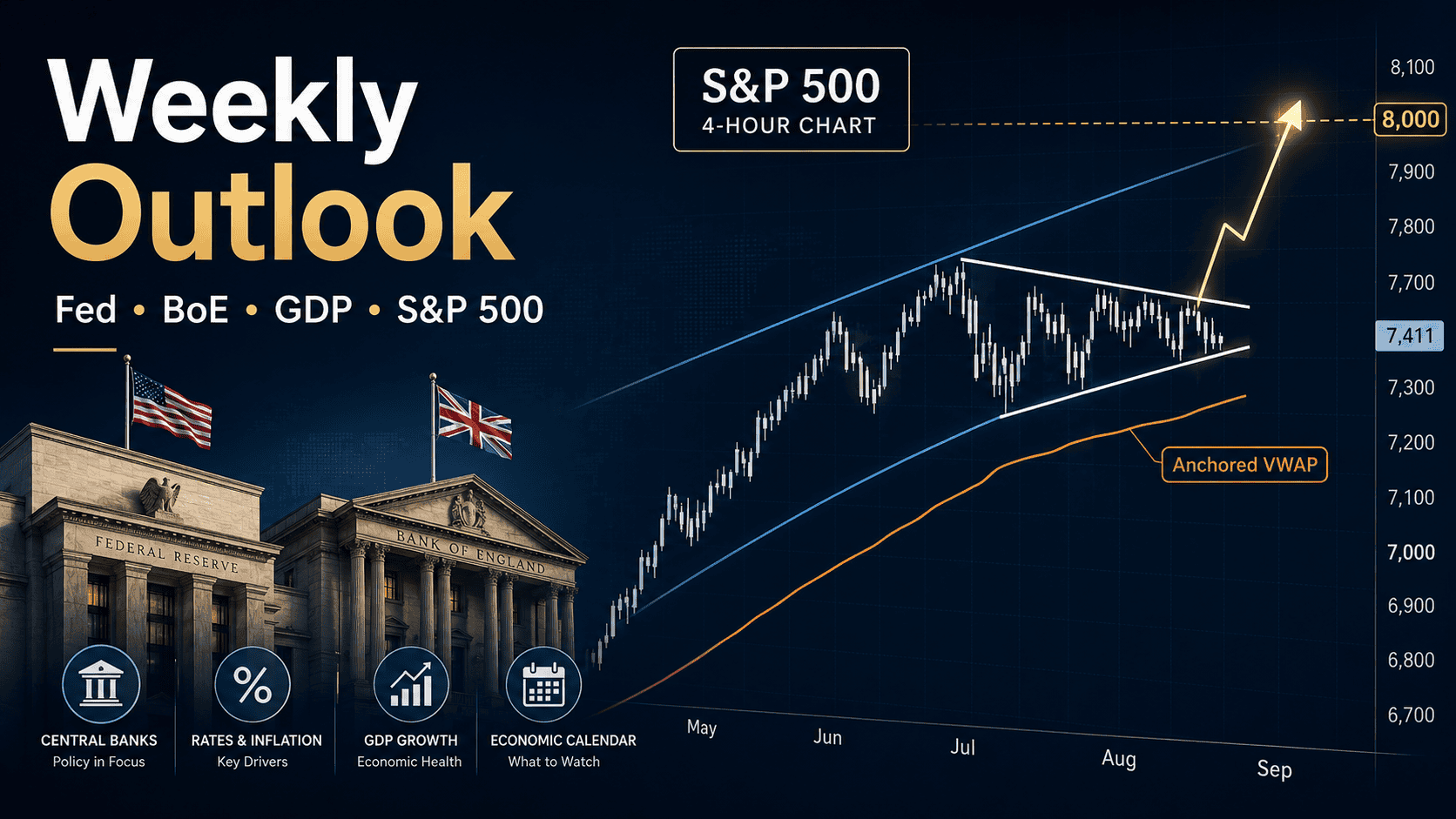
For equities, the broader S&P 500 trend remains constructive. The index is consolidating above an important anchored VWAP, and a confirmed breakout from the current triangle could bring the 8,000 area into focus.
Federal Reserve: No Change, but a Hawkish Edge
The Federal Reserve is widely expected to leave interest rates unchanged on Wednesday.
Higher oil prices have pushed market expectations towards another rate hike, but the Fed is also balancing this against softer economic data. June inflation came in significantly below expectations, while recent labour-market numbers have shown signs of cooling.
The committee was evenly divided at the June meeting over whether rates would need to rise again this year. This means the decision itself may be relatively straightforward, but the tone of the press conference could remain hawkish.
Chair Kevin Warsh has shown little interest in providing firm forward guidance, so the Fed may avoid directly validating expectations for a 25-basis-point hike in September. Instead, policymakers are likely to emphasise that future decisions will depend on incoming inflation data and developments in energy markets.
Underlying inflation pressures appear to be easing as housing costs cool and wage growth slows. However, a sustained rise in oil prices could complicate that picture. A meaningful de-escalation in the Middle East, followed by lower energy prices, would probably be needed before markets significantly reduce their expectations for further tightening.
US GDP: Growth Expected to Recover
Thursday’s second-quarter GDP report will be the main US data release of the week.
Consumer spending is expected to recover modestly, while investment in technology remains strong. However, elevated imports could continue to weigh on the headline growth number through a negative contribution from trade.
Our expectation is for annualised growth of around 2.5%, slightly above the 2.3% consensus forecast and stronger than the latest Atlanta Fed GDPNow estimate of 1.7%.
The release will also include the core PCE deflator, the Fed’s preferred measure of underlying inflation. This is expected to come in firmer than June’s flat month-on-month core CPI reading, potentially between 0.1% and 0.2%.
Differences in the way PCE measures healthcare, housing, airfares and portfolio-management fees could leave the indicator slightly hotter than CPI. A stronger-than-expected print would reinforce the market’s view that the Fed may still need to raise rates later in the year.
Bank of England: Pressure for a Hike May Be Building
The Bank of England is also expected to leave interest rates unchanged on Thursday.
The more important question is whether a growing number of Monetary Policy Committee members vote for a rate increase. Catherine Mann could potentially join Huw Pill and Megan Greene in supporting tighter policy, although the base case remains a 7–2 vote in favour of keeping rates on hold.
Higher energy prices remain an upside risk to inflation, but the Bank’s updated forecasts may still show inflation peaking comfortably below 4%.
Provided those projections remain contained, the BoE should have enough room to leave policy unchanged for the rest of the year. A more divided vote or a stronger warning about energy-driven inflation would nevertheless be interpreted as hawkish by markets and could offer some near-term support to sterling.
S&P 500: Is 8,000 Coming Into View?
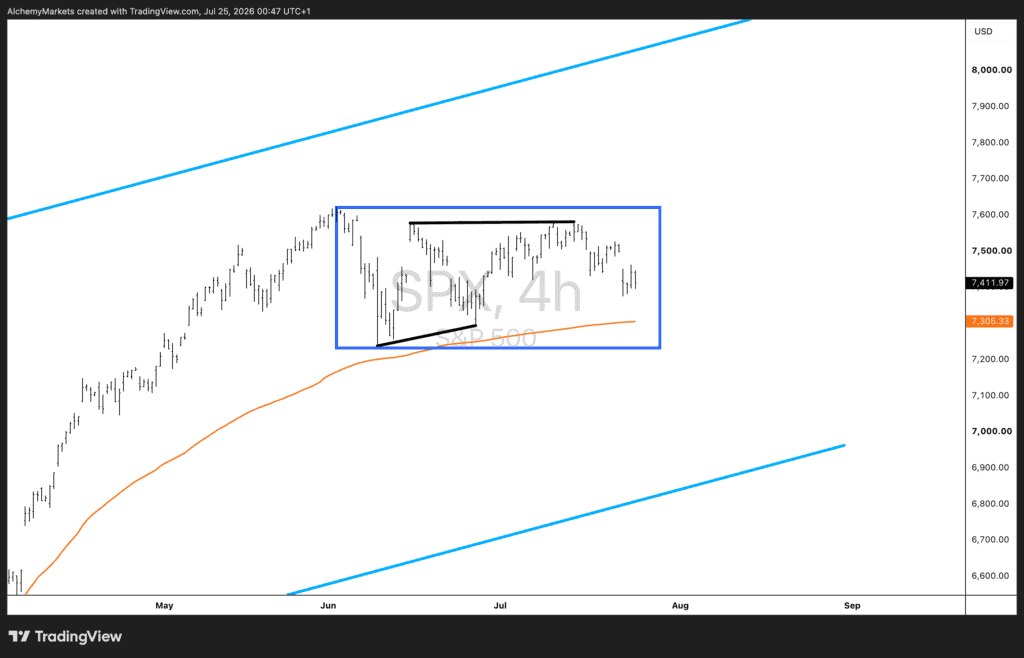
The S&P 500 remains inside a broad rising channel, but its near-term price action has shifted into consolidation.
On the four-hour chart, the index appears to be forming a triangle within a wider range between roughly 7,220 and 7,600. Price has repeatedly failed near the upper boundary, while buyers have continued to step in above the rising anchored VWAP, currently around 7,305.
This leaves the wider bullish structure intact, despite the recent pullback towards 7,400.
A confirmed breakout above the triangle and the 7,580–7,620 resistance zone would signal that the consolidation is resolving in favour of the broader uptrend. From there, the upper boundary of the rising channel suggests that the 8,000 region could come into view over the coming weeks.
The main condition is that the index remains above the anchored VWAP. A sustained move below it would weaken the bullish setup and raise the risk of a deeper retracement towards the lower end of the range.
For now, the market appears to be pausing rather than reversing. Central-bank guidance and the US GDP report could provide the catalyst needed for the next decisive move.