Written by:


- Opening Bell
- April 9, 2026
- 2 min read
Oil steadies as geopolitics clash with rising inventories
Oil is trying to find its footing again.
After suffering its sharpest daily drop since April 2020, crude rebounded on Thursday, with Brent climbing back above $97 per barrel. The bounce wasn’t driven by demand or fundamentals. It was geopolitics, plain and simple.
Tensions in the Middle East remain elevated. Hopes for a ceasefire have faded after Tehran signaled key terms had been breached. At the same time, military activity in the region has intensified, and the US has reiterated its presence around Iran. That keeps the Strait of Hormuz front and center, a critical chokepoint for global oil flows.
The situation has already had a real impact. Tanker traffic through the strait has effectively halted, raising immediate supply concerns. Even if access is restored, the knock-on effects such as disrupted output and refinery shutdowns won’t resolve overnight. That’s what’s keeping a floor under prices for now.
But the fundamental picture is less supportive.
US inventory data painted a mixed backdrop. Crude stocks rose for a seventh straight week, climbing by 3.1 million barrels and pushing total inventories to their highest level since June 2023. That’s a clear signal that supply is building. On the other hand, refined products told a different story. Gasoline and distillate inventories both declined more than expected, suggesting underlying demand isn’t collapsing.
So the market is stuck between two forces. Rising supply on paper, and real-world disruption risks.
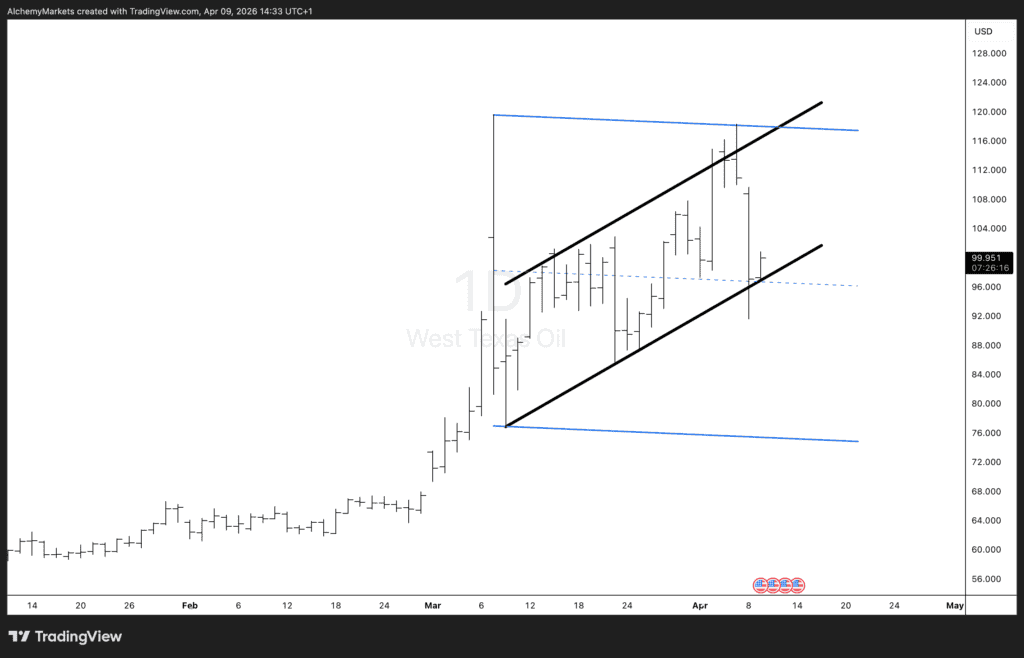
From a technical standpoint, price action reflects that tension. Oil has crept back inside a bear flag structure after the recent rebound. That keeps the broader downside bias intact, even as short-term momentum turns higher.
If geopolitical risk continues to dominate, we could see price push toward the upper boundary of that flag. But if sentiment flips and confidence returns around the Strait of Hormuz reopening, the technical picture becomes more important again.
In that scenario, oil could rotate lower and start tracking toward the base of the larger descending channel highlighted on the chart.
In short, the next move isn’t just about supply and demand. It’s about whether headlines or fundamentals take control.