Written by:

- Opening Bell
- April 28, 2026
- 2 min read
Oil Edging Higher as Middle East Risk Lingers
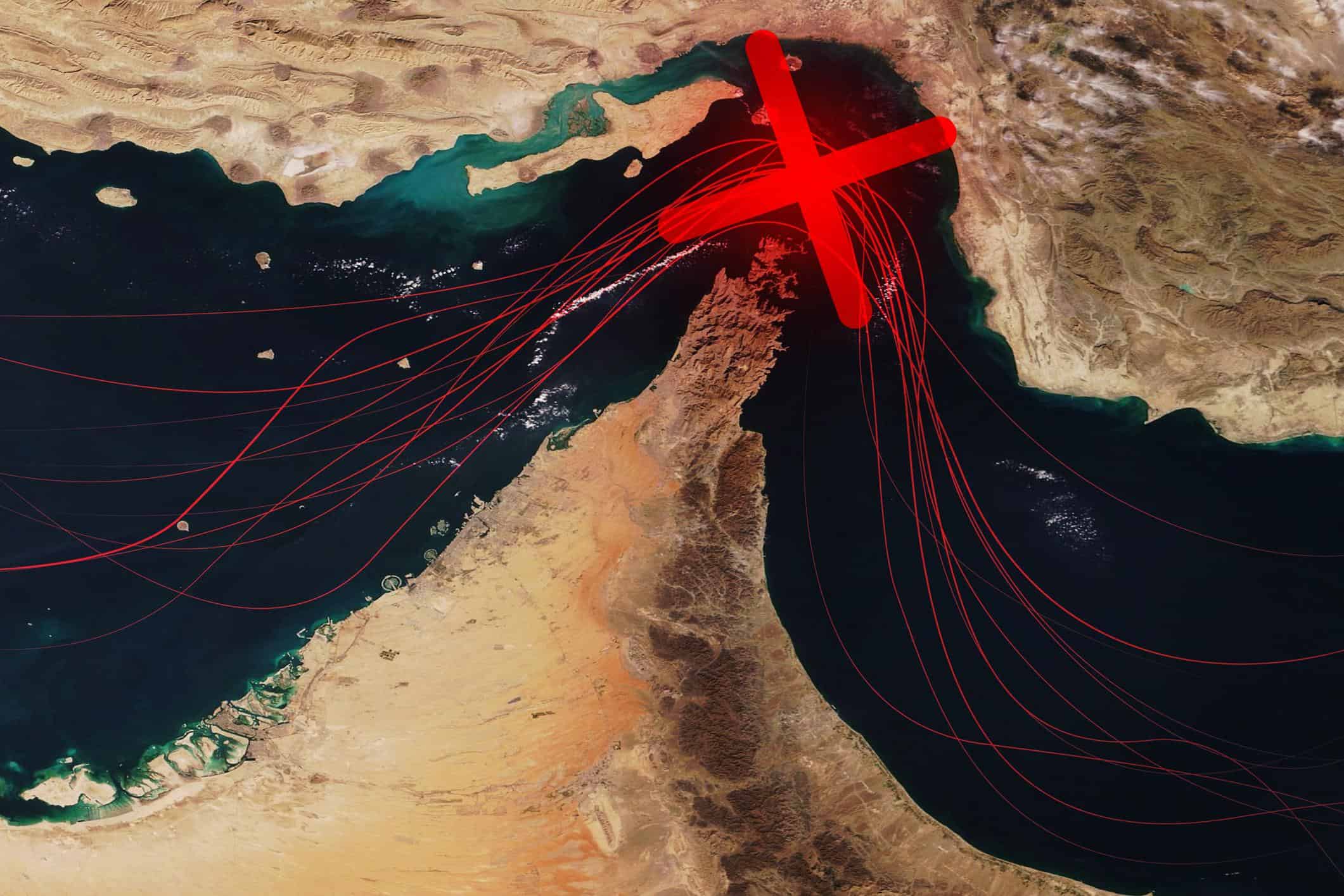
Markets already know the situation around the Strait of Hormuz.
What matters now is how much of that risk is actually priced into oil.
Brent crude has been quietly moving higher, not because of a sudden shock, but because of a growing concern that supply could be disrupted if tensions escalate. Around 20% of global oil flows through that narrow route, so even the possibility of disruption is enough to push prices up.
Right now, the market isn’t pricing a full shutdown.
It’s pricing a higher chance of something going wrong — and that’s enough to keep oil supported.
What the chart is telling us
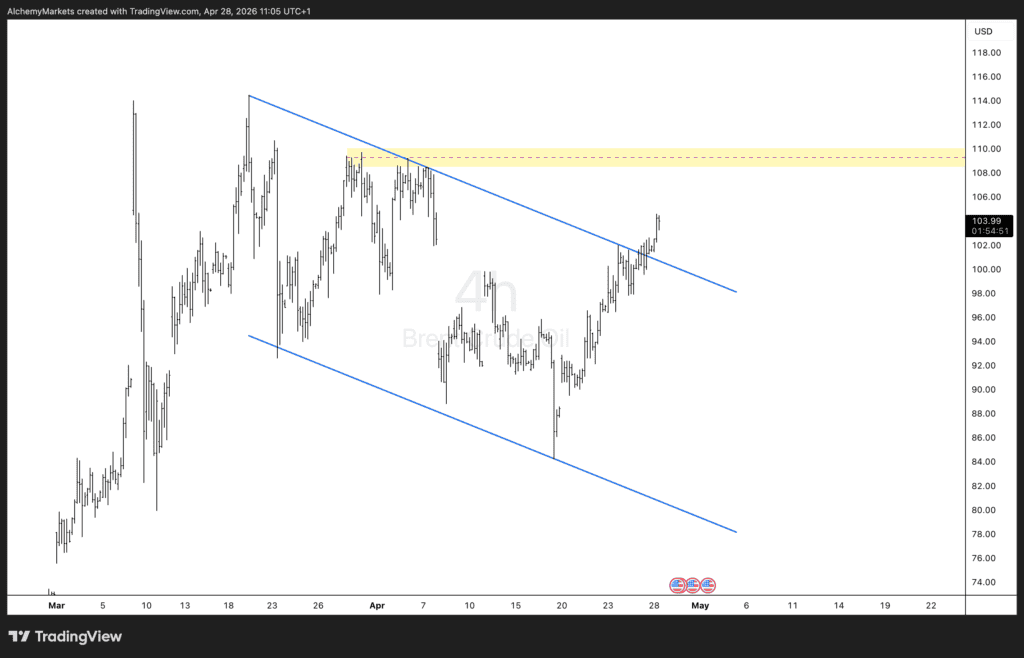
Looking at Brent, price has been recovering within a downward channel and is now pushing higher towards the $100 level.
- The market has been forming higher lows (buyers stepping in earlier each time)
- Price is approaching a key resistance zone around $108–110
- The $100 level is acting like a magnet, pulling price higher
This kind of price action usually means one thing:
Buyers are gradually gaining control, even without a major headline
Why oil is moving
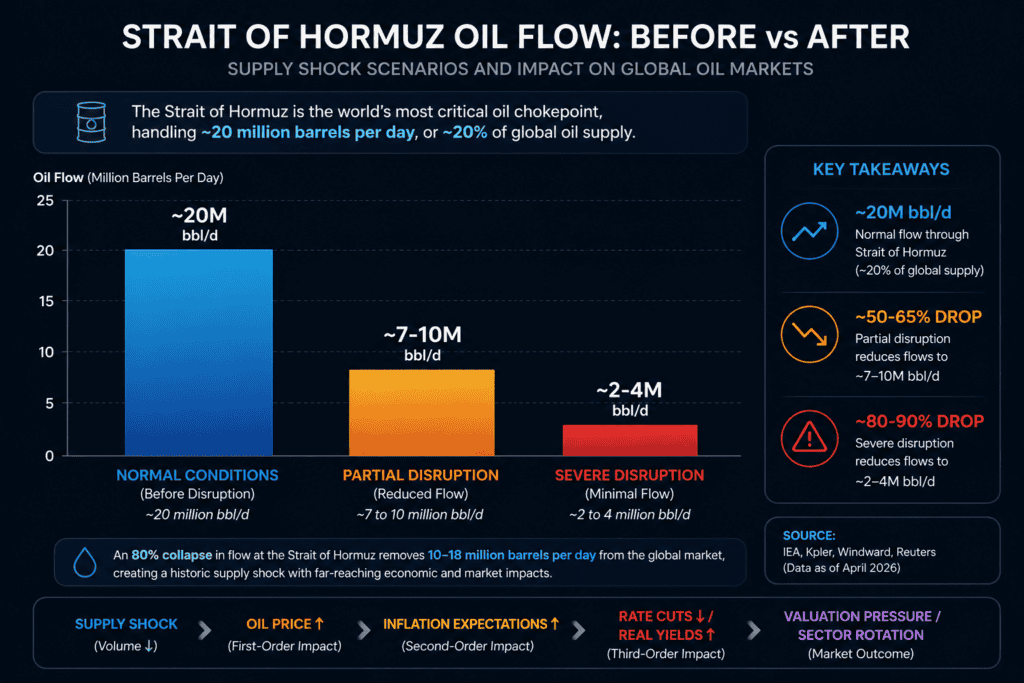
There are a few simple forces at play:
- Ongoing Middle East tensions → risk to supply
- Traders building in a “safety premium” into oil prices
- No major supply disruption yet → but concern is enough
So instead of a sharp spike, we’re seeing a steady climb.
What could move it next
Oil doesn’t need a full crisis to keep rising. It just needs:
- Any escalation in tensions
- Signs of tighter supply (inventories, shipping issues)
- Continued strength in price (which brings in more buyers)
If those continue, oil can keep drifting higher over the coming weeks.
Bottom line
Brent crude is slowly pushing towards $100 as the market builds in a higher level of geopolitical risk.
There’s no panic yet — just a steady repricing.
As long as tensions remain unresolved, oil is likely to stay supported, with any escalation acting as a potential trigger for the next move higher.