Written by:


- Chart of the Day
- July 23, 2026
- 2 min read
Are US 30-Year Yields About to Break Higher?
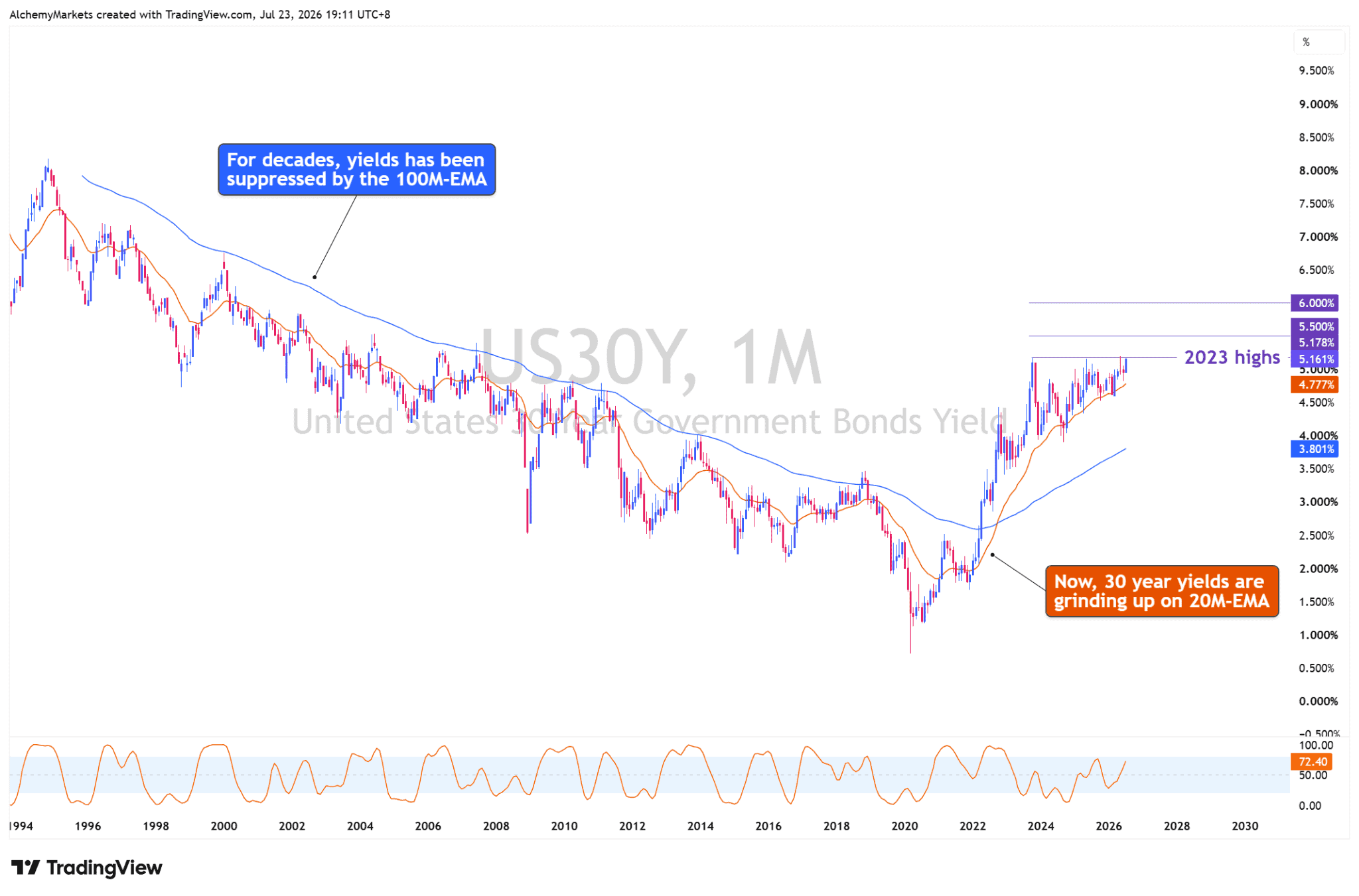
The US 30-year Treasury yield was recorded at 5.13% on 21 July, placing it just below the 2023 high around 5.16%. The level matters because the long-term structure has changed.
For much of the period between the mid-1990s and 2021, the 100-month EMA repeatedly capped major rises in yield. That pattern broke in 2022. Since then, the faster 20-month EMA has acted as support during pullbacks.
US30Y has now spent roughly two years consolidating beneath the 2023 high instead of falling back towards the old long-term average. Monthly momentum is rising near 72.4, but is not yet fully overbought.
What it means for markets
The 30-year yield is influenced by more than Federal Reserve policy. Inflation expectations, Treasury supply, fiscal borrowing, term premium and demand for long-duration debt all matter.
A breakout would keep mortgage rates and long-term corporate borrowing costs elevated. It could also pressure equity valuations, especially technology and other growth shares whose future earnings are more sensitive to the discount rate.
The dollar may benefit, although a long-end-led move is less clean than a rise in the US two-year yield. If investors are demanding more compensation for inflation or fiscal risk, bonds and equities can weaken together.
The levels
A monthly break above 5.16% would bring 5.50% into view, followed by the larger 6.00% area. Another rejection would keep the 2024-2026 range intact.
The first stronger sign that the higher-yield regime is weakening would be a sustained move back below the rising 20-month EMA. Until then, the 2023 high remains the main decision point.