Verfasst von:

- Opening Bell
- Oktober 2, 2026
- 5 Min. Lesezeit
29K Jobs Crush October Hike Odds, But Yields Still Hold
NFP just gave the Fed a reason to wait.
The September jobs report was soft almost everywhere that matters for the next Fed decision.
Nonfarm payrolls rose by just 29,000, well below the roughly 90,000 expected. Unemployment edged up to 4.2%, average hourly earnings slowed to 0.1% month-on-month, and July and August were revised down by a combined 60,000 jobs.

That is weak. It is not the same thing as a labour-market collapse, and the BLS described employment as little changed. But for the Fed, the direction is hard to ignore. Hiring is slowing, wage pressure is cooling, and the previous numbers were not as strong as first reported.
That gives the Fed very little reason to rush another hike in October.
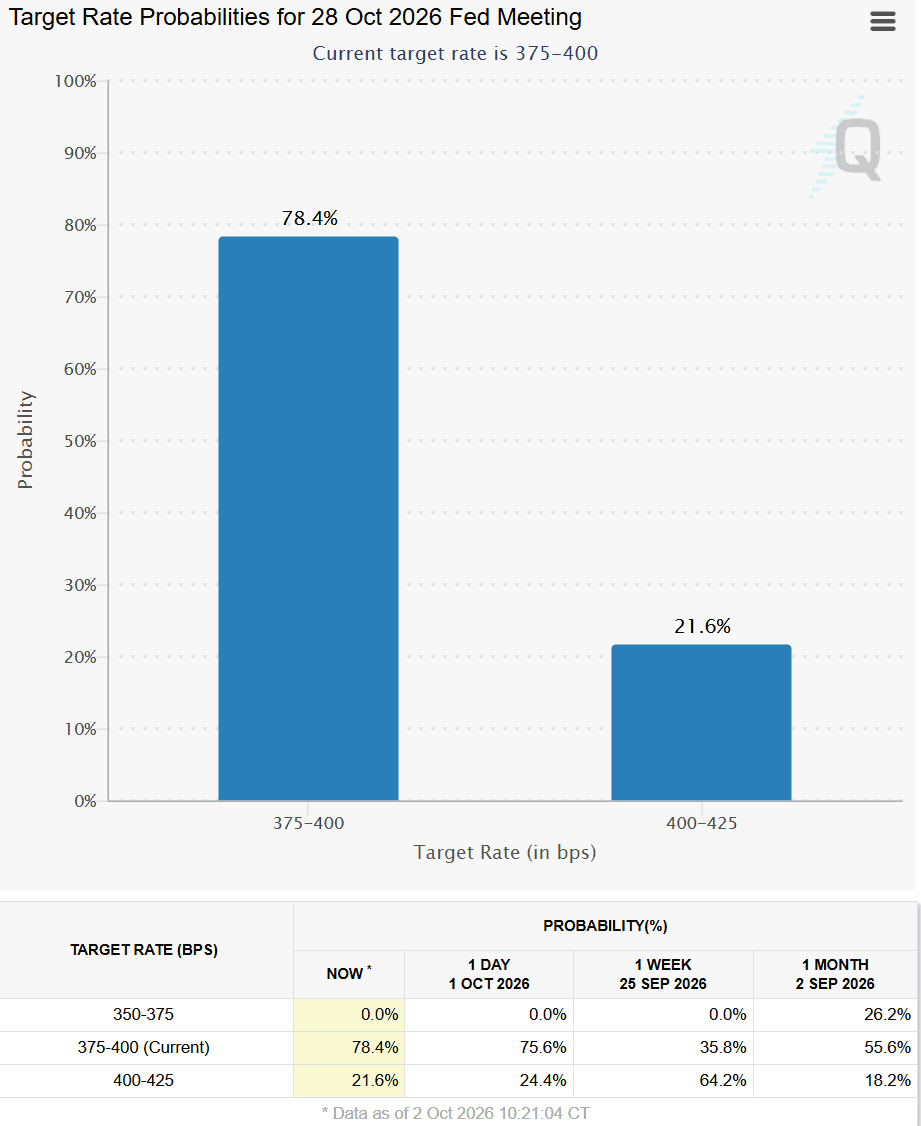
One week ago, markets were pricing a 64.2% chance of another 25 bp hike in October. That has now fallen to 21.6%.
October is the part of the path that changed most. December remains live if inflation firms again, especially if energy and refined-product prices start feeding back into the data.
Before NFP, the US Rate Regime was still restrictive and led by high yields. The 10Y real yield was around 2.93%, while the 10Y, 20Y and 30Y had all pushed to levels not seen in years.
Today’s jobs report pushes against that view, but… it does not overturn it yet. It needs to be confirmed by actual charts.
Bond Yields Fell, But They Have Not Broken
The first reaction made sense. The 2Y fell the most because it is the part of the curve most sensitive to the next few Fed meetings. The 5Y, 10Y and 30Y followed lower.
The daily charts are the problem.
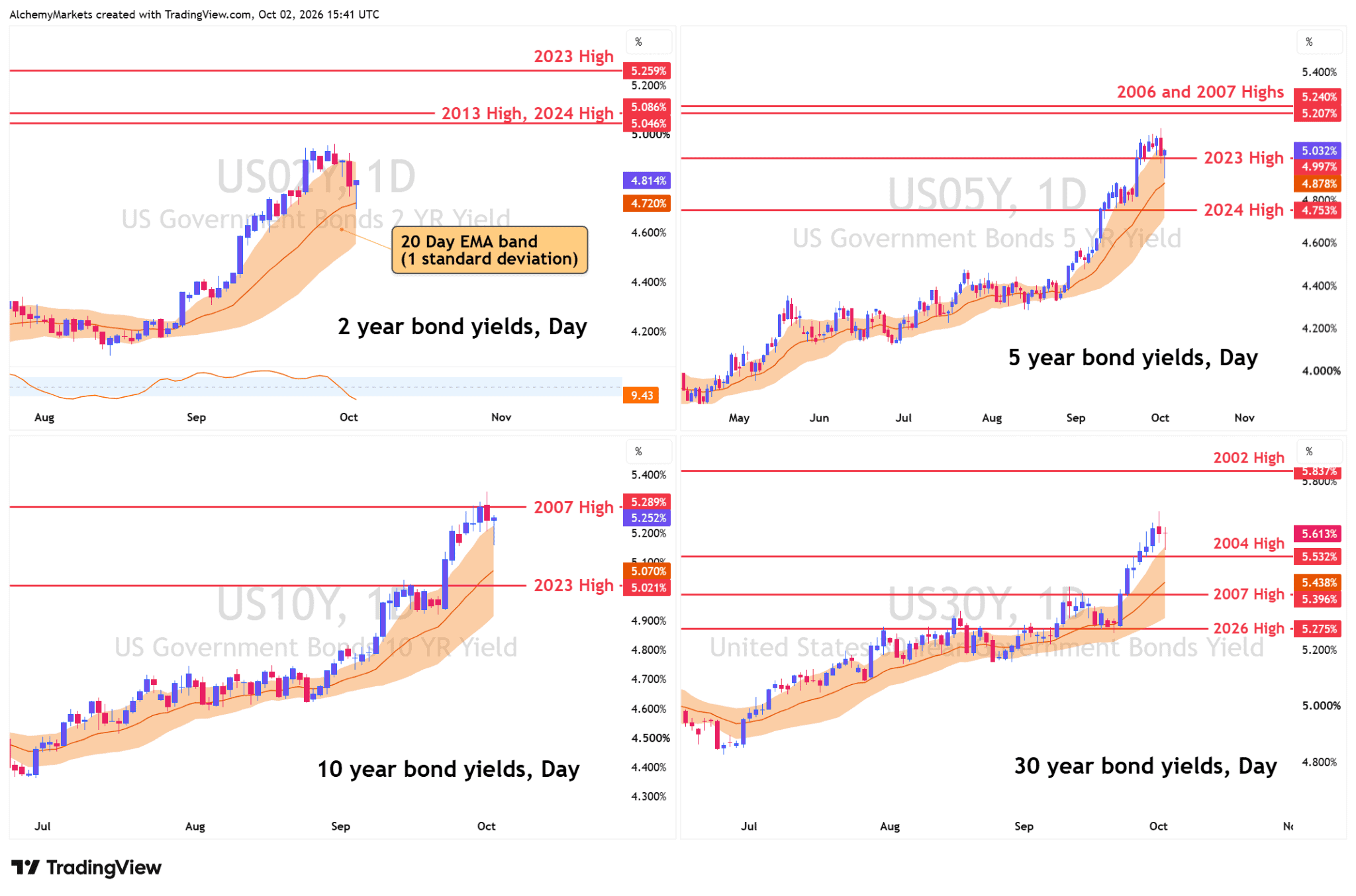
The 2Y has pulled back sharply, but it still has not completed the kind of break I would call a behaviour change. The 5Y, 10Y and 30Y are even clearer. They remain above the lower side of their daily trend bands (EMA-20 Bollinger Bands), which fits the broader Q4 bond setup we were already watching.
So the front end has reacted to NFP. The long end has not given us the same signal.
The Fed can control the overnight rate. It cannot force the long end lower. The 20Y and 30Y also price inflation risk, Treasury supply, real yields and term premium. If those yields keep holding after a 29K NFP print, the bond market is telling us the problem was never just the October meeting.
The rates story starts changing properly when the long end confirms the front end.
DXY Has a Cleaner Trigger
DXY reacted lower with NFP, but I still would not call the dollar bearish.
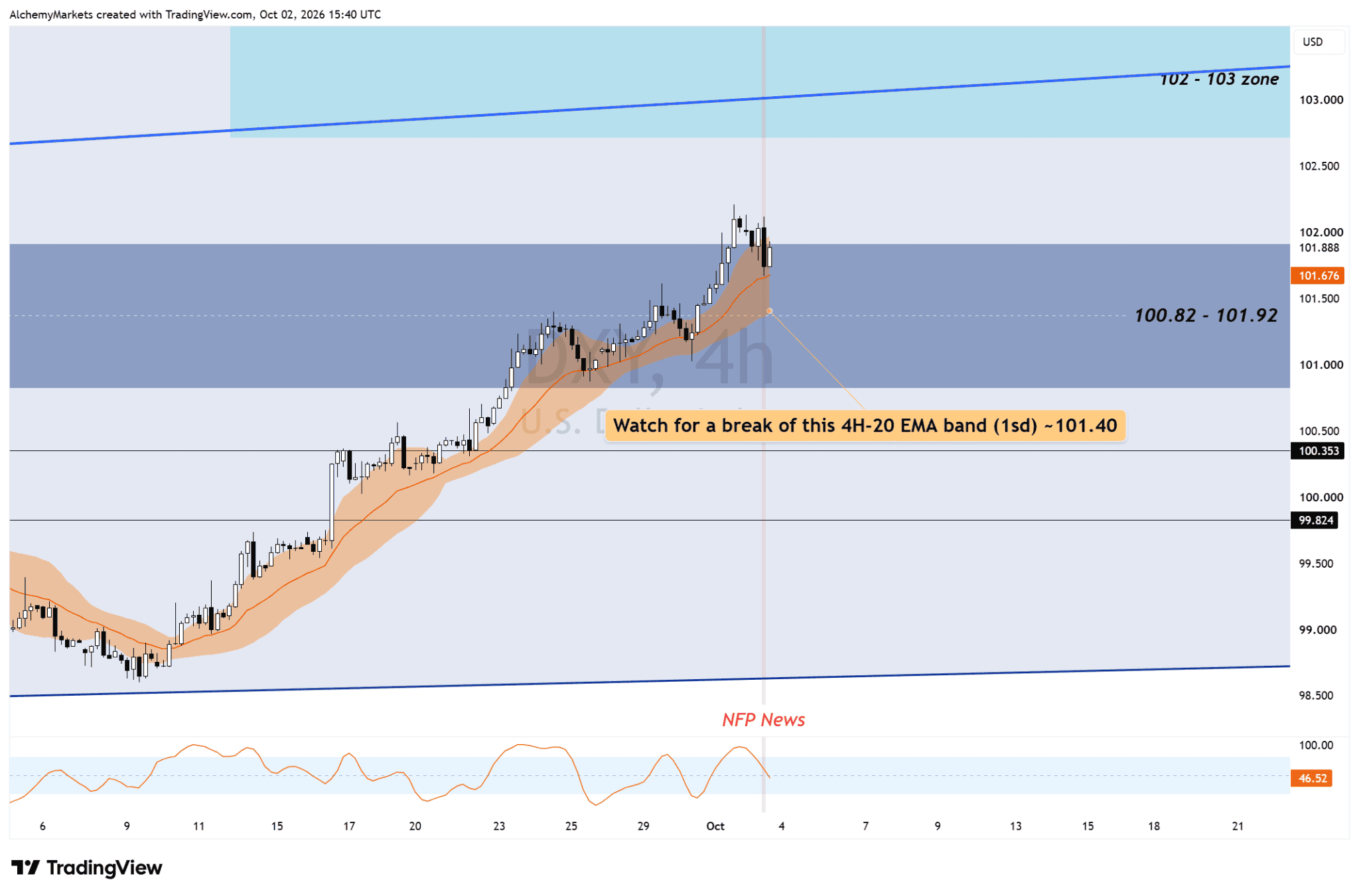
On the 4H chart, DXY is still respecting the same trend structure. I use the EMA as the trend anchor, with the envelope built around it using a tighter version of Bollinger Bands.
The first proper weakness signal is a break through the opposite side of that 4H band, around 101.40. If DXY then retests that area from below and fails, I would start treating the move as more than an NFP reaction.
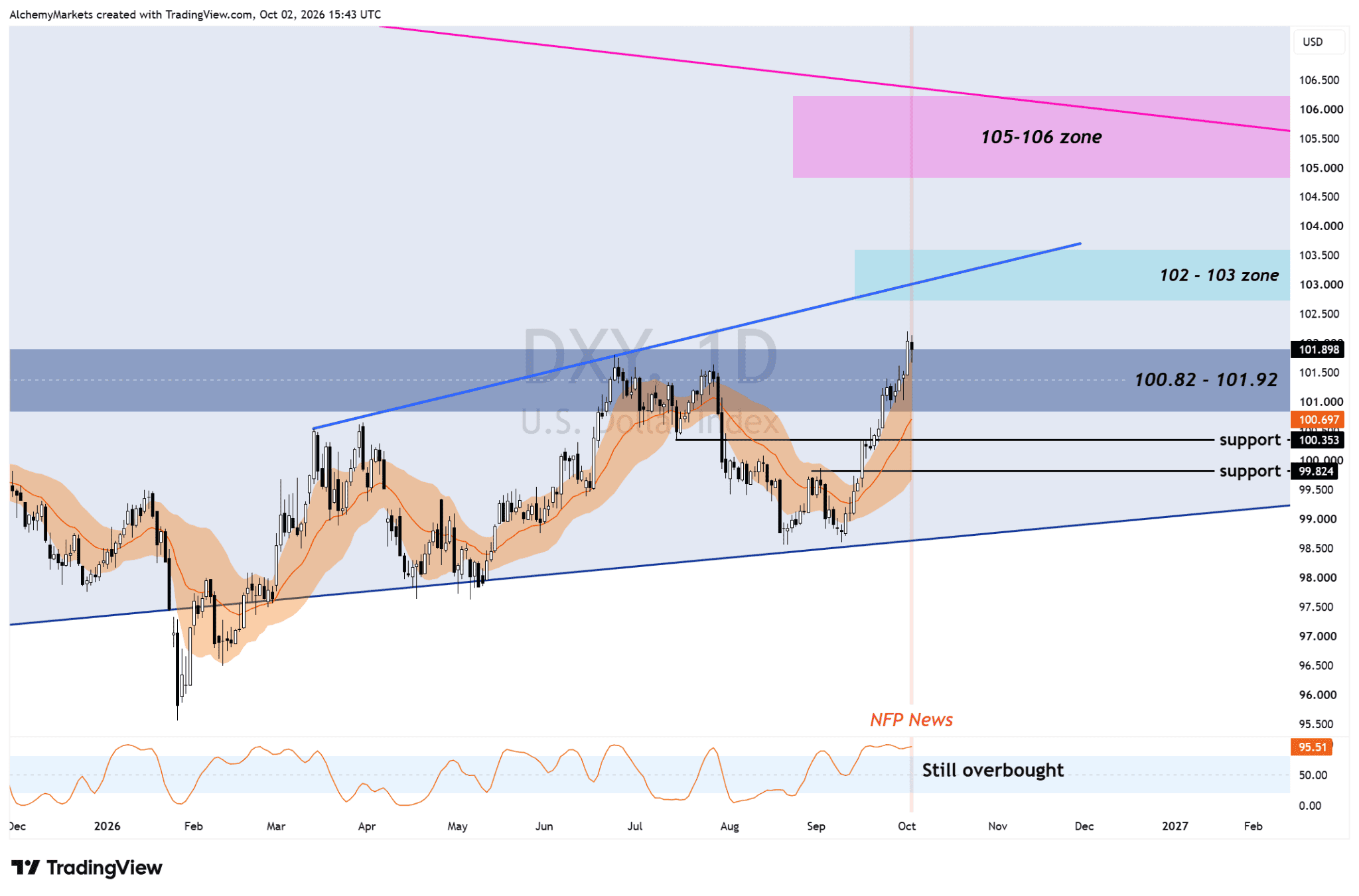
The daily chart adds another check. DXY is pushing into the 100.82 to 101.92 area while Stochastic RSI is still overbought.
Overbought signals alone do not force the price lower; instead, it just signals a higher likelihood that momentum has peaked.
Strong trends can stay overbought. What I want to see is a red daily close here, and a 4H band break. That would give the weak-NFP story much better technical confirmation.
If DXY absorbs the jobs miss and pushes through this zone instead, 102 to 103 comes back into view.
Gold Still Does Not Confirm the Dovish Story
Gold is the contradiction to this supposedly dovish story.
A weak jobs report, lower front-end yields and lower Fed hike odds should normally help gold.
But alas, gold is still below its daily 20 EMA band.
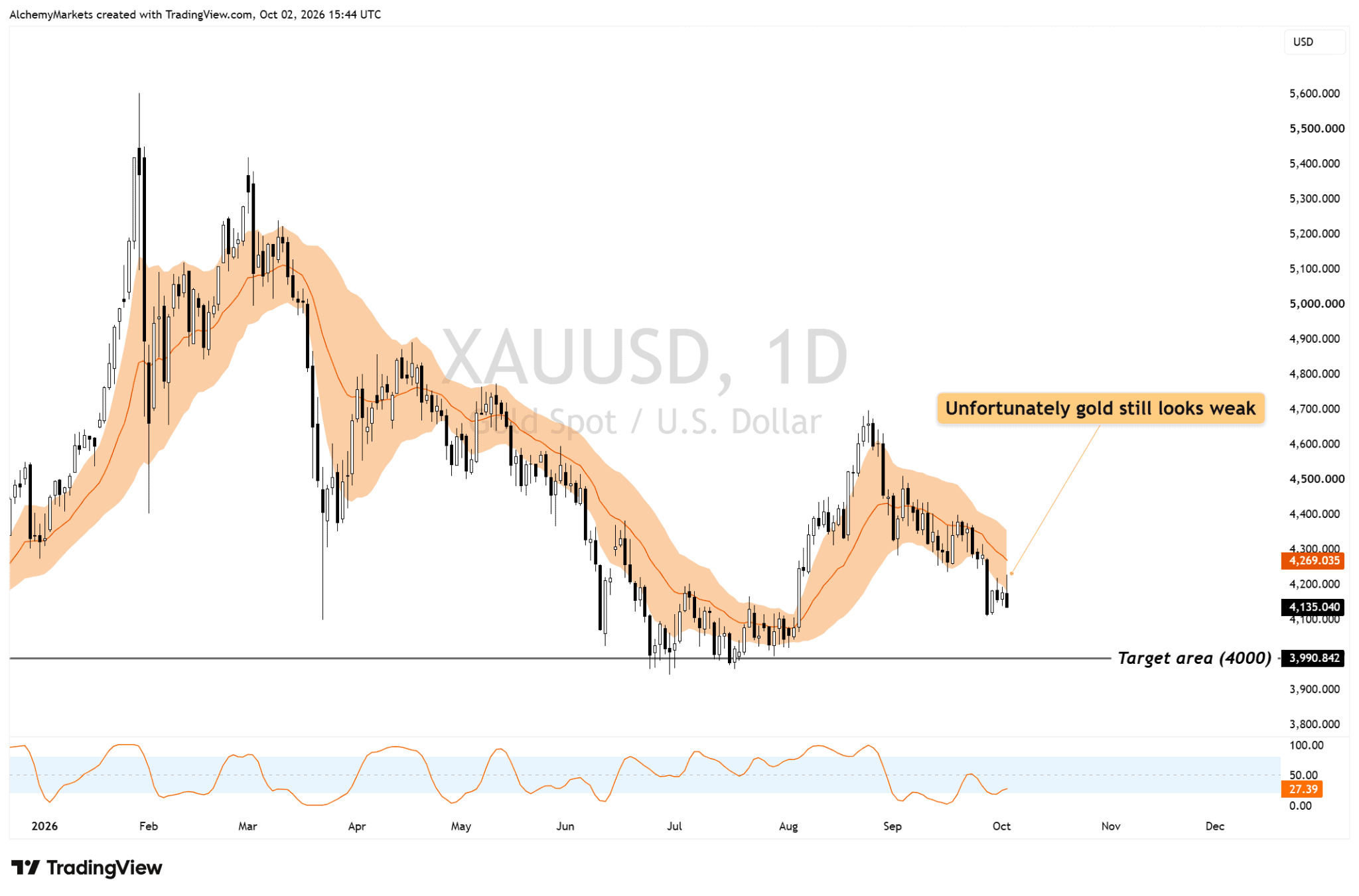
Personally, I still read the chart as weak. The bounce has not reclaimed the band, so I am not treating it as a trend reversal yet. That keeps the $4,000 area in play.
The 2Y to 30Y Spread Is the Extra Signal
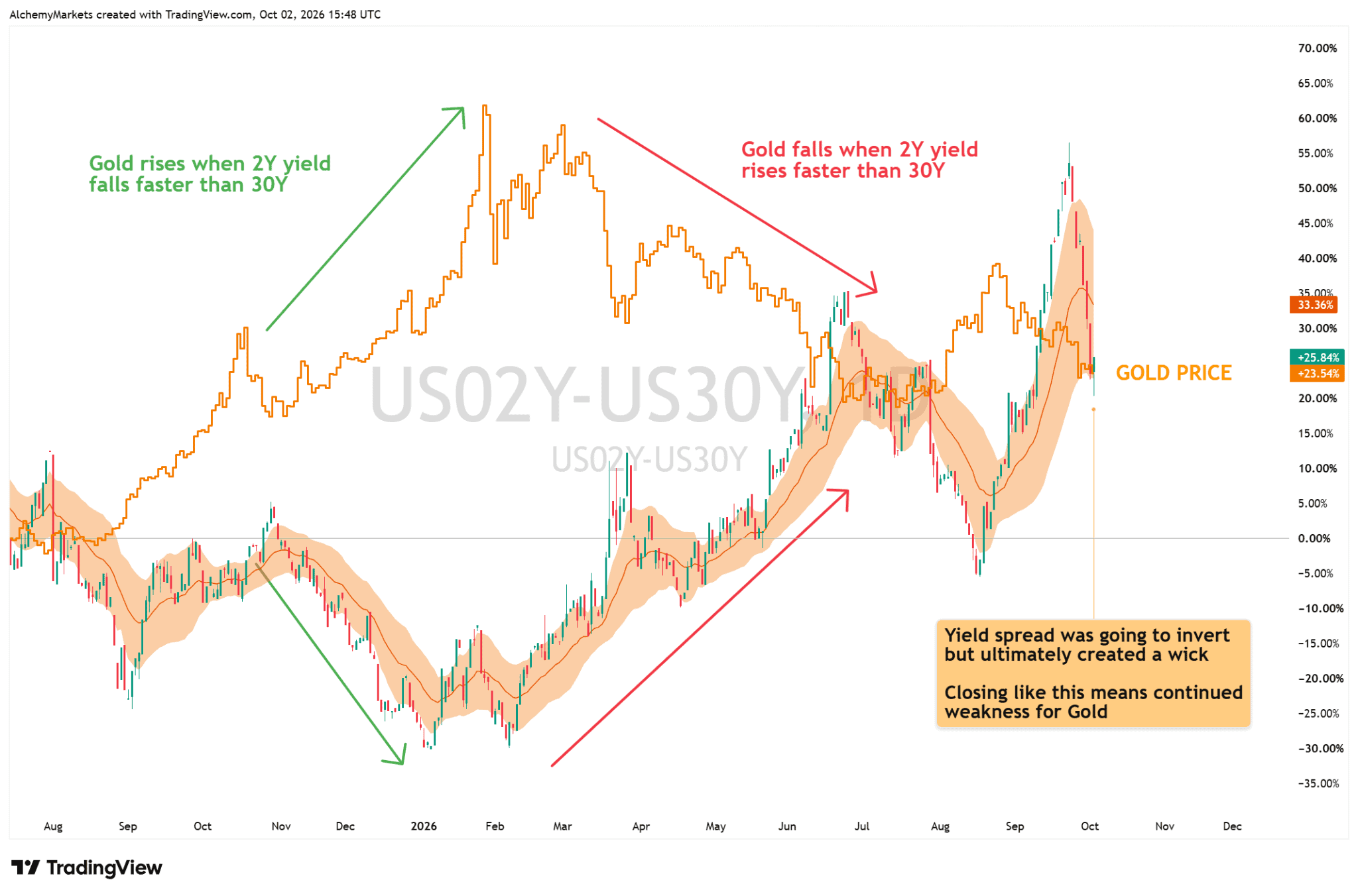
The 2Y to 30Y relationship is useful because it separates Fed pressure from long-end pressure. If the 2Y falls faster than the 30Y, the market is taking some pressure out of the front end. That is usually a better backdrop for gold.
The latest move tried to extend in gold’s favour, but it left a large wick and failed to hold the break.
That is the warning for me. The jobs data moved the front end, but the spread has not confirmed a clean shift and gold has not reclaimed its own daily band.
In fact, the spread appears to even be printing a bullish hammer reversal candle.
If the spread starts holding the move while gold reclaims the band, I would change my read. Until then, $4,000 remains a valid downside target.
What Did NFP Change?
Mostly the timing of the next Fed move.
An October hike is now much harder to justify. The 2Y reacted the way we would expect, and DXY pulled back.
The bigger charts are still stubborn. Long Treasury yields have not broken their daily trend structure. DXY has not broken its 4H band. Gold has not reclaimed its daily band. The 2Y to 30Y move also failed to hold its first break.
So I would be careful with the easy conclusion that one weak NFP print means rates are done and every duration-sensitive asset should move higher.
Bottom Line
NFP has pushed an October hike into the background. The US Rate Regime has not broken yet.
The next confirmation comes from price. I want to see the 10Y and 30Y lose their daily trend bands, DXY break the 4H 20 EMA band, and gold reclaim its daily band.
If those levels hold instead, Friday’s move was relief, not a regime change.