Skriven av:


- Weekly Outlook
- augusti 23, 2026
- 4 min läsning
Fed Focus, Core PCE, Canada GDP and S&P 500 Levels
US: Jackson Hole and Core PCE in Focus
US markets will have plenty to digest next week, with the Federal Reserve and inflation data likely to drive sentiment.
The main event comes on Friday, when Fed Chair Kevin Warsh speaks at the Federal Reserve’s annual Jackson Hole symposium. Markets will be looking for greater clarity on the Fed’s reaction function, particularly after the criticism surrounding his July FOMC press conference.
The backdrop has become slightly more comfortable for policymakers. Recent jobs data have weakened, inflation has cooled and retail sales and confidence figures have softened. That has taken some pressure off the Fed ahead of the September FOMC meeting and suggests policymakers have more time to assess the outlook before making their next move.
Before Jackson Hole, Wednesday’s core PCE price index will be another key release. The Fed’s preferred inflation measure is expected to rise by 0.2% month-on-month and 3.3% year-on-year. While that would still leave inflation above the 2% target, the direction of travel remains important.
For traders, the key question is whether next week’s data and Fed communication reinforce the idea that policy can remain steady for longer, or revive expectations for a more active policy shift later this year.
Canada: Can Growth Rebound in Q2?
Canada’s second-quarter GDP release on Friday will be another key event for traders to watch next week.
Growth is expected to rebound by around 3.4% on an annualised basis after three contractions in the previous four quarters. The Canadian economy has faced considerable pressure from tariff tensions with the US, which remains by far its most important export market.
A stronger second quarter would likely reflect an improvement in net trade, firmer consumer spending and a rebound in business investment after the 4.3% decline recorded in the first quarter.
For markets, the focus will be on whether the rebound is broad enough to suggest the Canadian economy is regaining momentum, or whether ongoing trade uncertainty continues to limit the outlook. A stronger-than-expected reading could support the Canadian dollar, while a softer result may reinforce concerns about the durability of the recovery.
S&P 500 Technical Outlook
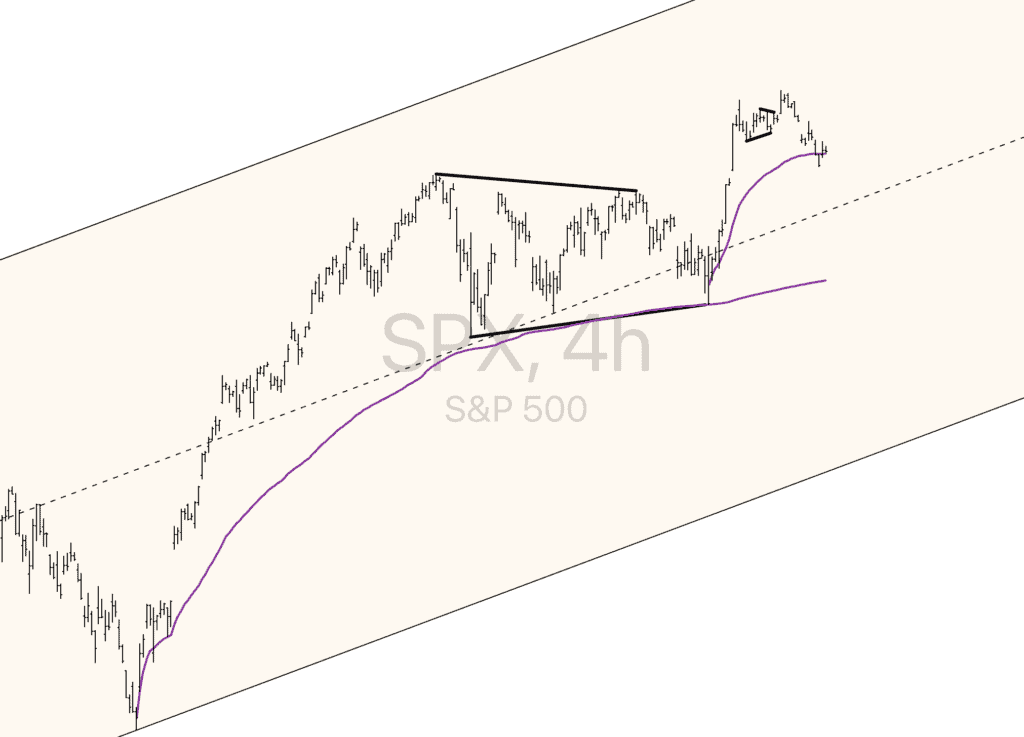
The S&P 500 is pulling back after its recent push higher, with price now testing the anchored VWAP from 29 July.
This is an important near-term level. If the index can reclaim and hold above it, the broader bullish structure remains intact. If price fails to do so, however, the pullback could deepen towards the anchored VWAP from the March 2026 lows, which sits significantly lower and would become the next major area of interest.
Despite the short-term correction risk, the wider trend remains constructive. As long as the broader structure holds, a move towards the 8,000 area in the near-term future remains plausible.
For traders, the key is whether SPX can stabilise around the July anchored VWAP or whether momentum continues to fade and opens the door to a deeper retracement.
What Traders Should Watch Next Week
Next week’s focus will be firmly on central bank expectations, inflation and growth.
In the US, Wednesday’s core PCE release and Friday’s Jackson Hole speech from Fed Chair Kevin Warsh could shape expectations for the September FOMC meeting. Softer recent economic data have reduced some of the pressure on the Fed, but traders will be watching closely for any shift in tone.
In Canada, Friday’s Q2 GDP release will show whether the economy is beginning to recover from recent weakness despite ongoing trade pressures.
From a technical perspective, the S&P 500’s reaction around the anchored VWAP from 29 July will also be important. A successful reclaim could help stabilise the recent pullback, while continued weakness would increase the risk of a deeper correction.
With several major catalysts arriving throughout the week, volatility could pick up as markets reassess the outlook for growth, inflation and interest rates.