Scritto da:

- Opening Bell
- Novembre 25, 2026
- 4 min di lettura
Trump’s Tariff Threat Returns Ahead of US PCE

Just as investors prepare for the Federal Reserve’s preferred inflation reading, President Donald Trump’s tariff agenda has returned to the forefront of financial markets.
Reuters reported on Tuesday that the US administration was preparing to announce the outcome of an investigation into alleged excess manufacturing capacity across 16 trading partners, potentially paving the way for new import duties.
The timing is particularly awkward. US inflation remains above the Fed’s target, markets are already braced for a December rate increase, and fresh tariffs could complicate the outlook for both inflation and economic growth.
What Is Trump Investigating?
The US Trade Representative launched the Section 301 investigation in March, arguing that government support for manufacturing abroad can encourage production beyond market demand and disadvantage American manufacturers.
China, the European Union, Japan, South Korea and Mexico are among the economies under scrutiny. The original investigation also included the following trading partners:
| East and South Asia China, Japan, South Korea, Taiwan, India, Bangladesh | Southeast Asia Singapore, Indonesia, Malaysia, Cambodia, Thailand, Vietnam |
| Europe European Union, Switzerland, Norway | North America Mexico |
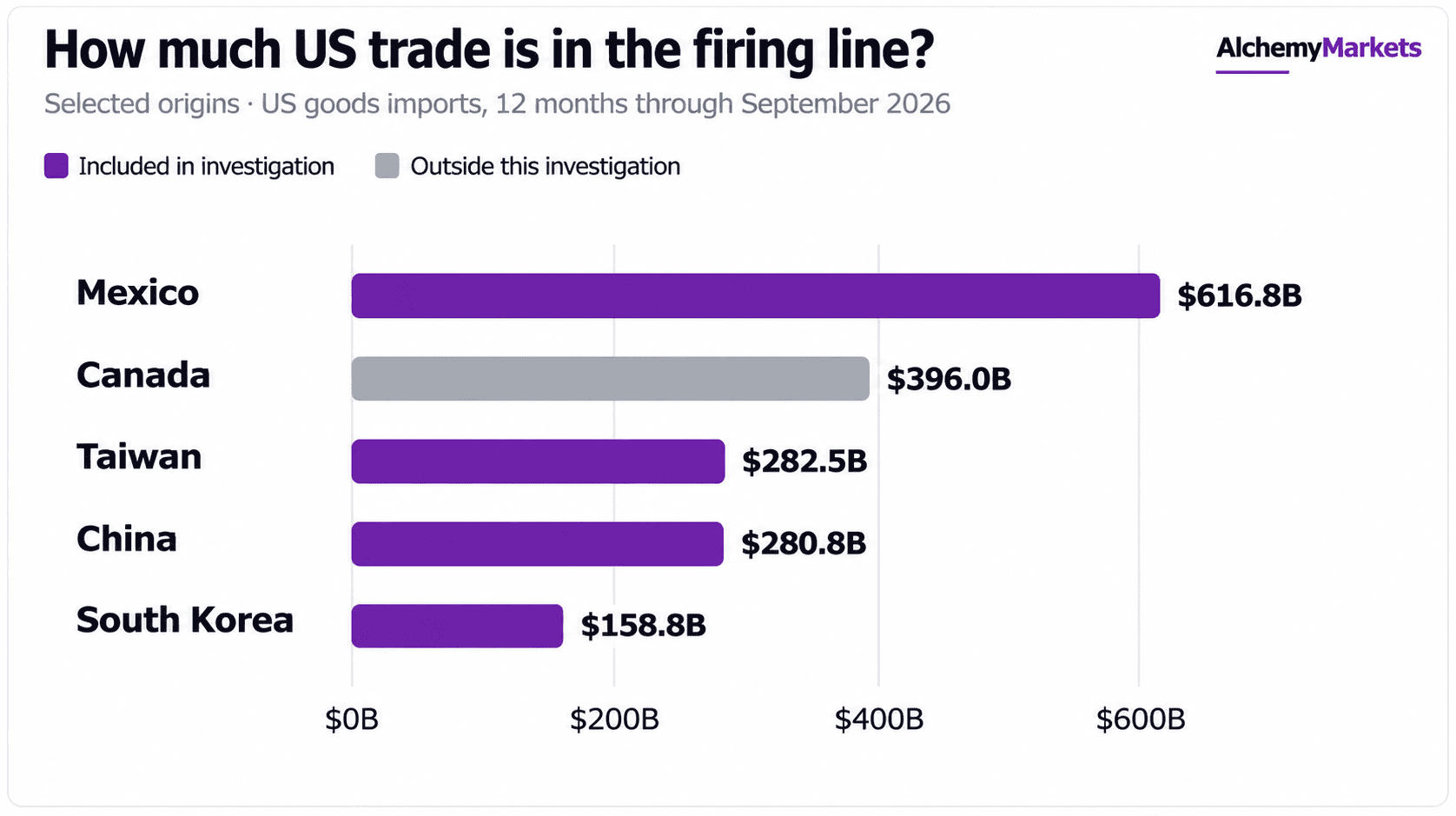
According to the US Joint Economic Committee’s trade update, Mexico alone supplied nearly $617 billion in goods over the year through September. This illustrates the potential significance of the investigation, although the chart shows total imports, not the value of goods that will necessarily face new duties.
For now, the distinction between an investigation, a proposed tariff and an enacted tariff is crucial. The new rates, product coverage and exemptions have yet to be confirmed in the reporting reviewed. On Wednesday, Chinese officials pushed back against US overcapacity claims, while leaving room for negotiations.
Tariffs Could Complicate the Fed’s Inflation Fight
Tariffs increase the cost of importing affected products. US businesses may absorb the increase through lower margins, pass it through to consumers or look for alternative suppliers. The degree of pass-through matters for the Fed, particularly when inflation is already elevated.
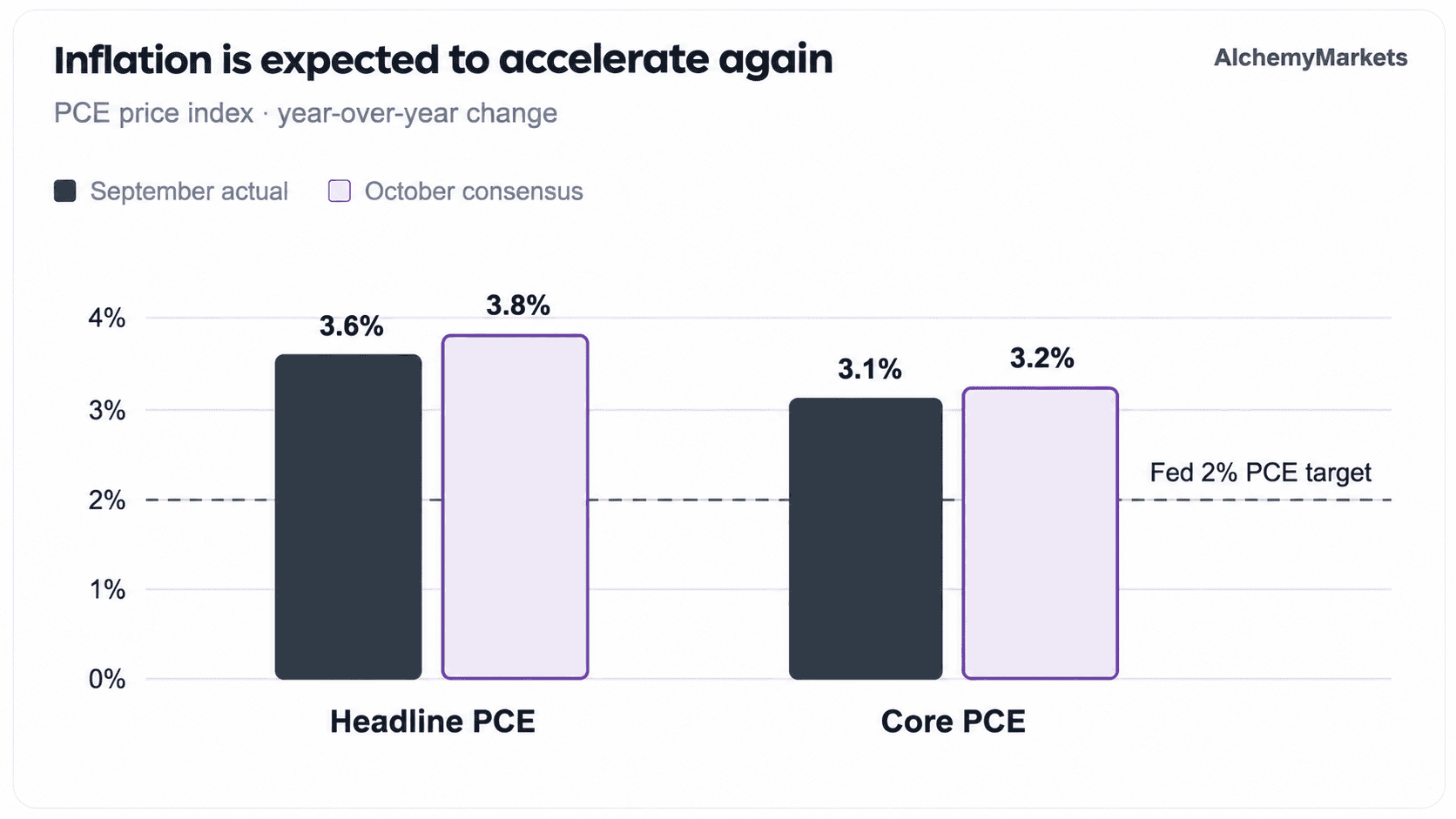
September’s headline PCE inflation was 3.6% year on year, with the core measure at 3.1%. The latest Wall Street Journal survey expects October readings of 3.8% and 3.2% respectively. A monthly slowdown in headline inflation would therefore not necessarily mean annual inflation is cooling.
The October data predates the newly reported tariff plans. It instead establishes how much inflation pressure the economy is already facing before any additional measures take effect.
If fresh tariffs raise prices while weakening demand, policymakers could face a more difficult trade-off between controlling inflation and supporting growth.
What Does This Mean for the US Dollar?
The immediate effect of tariff uncertainty on the dollar is not straightforward.
Higher US inflation expectations and a more restrictive Fed can favour the greenback, while damage to US growth or confidence in US policy can work in the opposite direction.
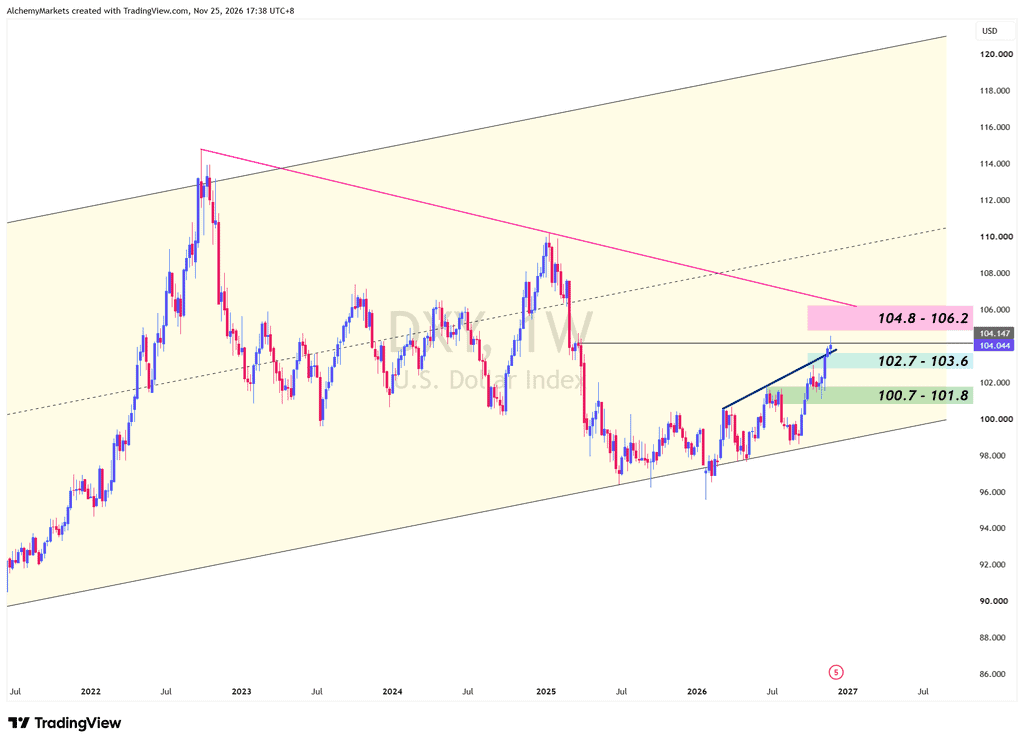
Almost poetically, the DXY appears to be breaking out of a trendline resistance and finding support on it. Yet at the same time, it is running into a previous high resistance at 104.00 to 104.20.
The Australian dollar also came under pressure despite stronger-than-expected domestic inflation, illustrating the importance of global risk appetite for commodity-linked currencies.
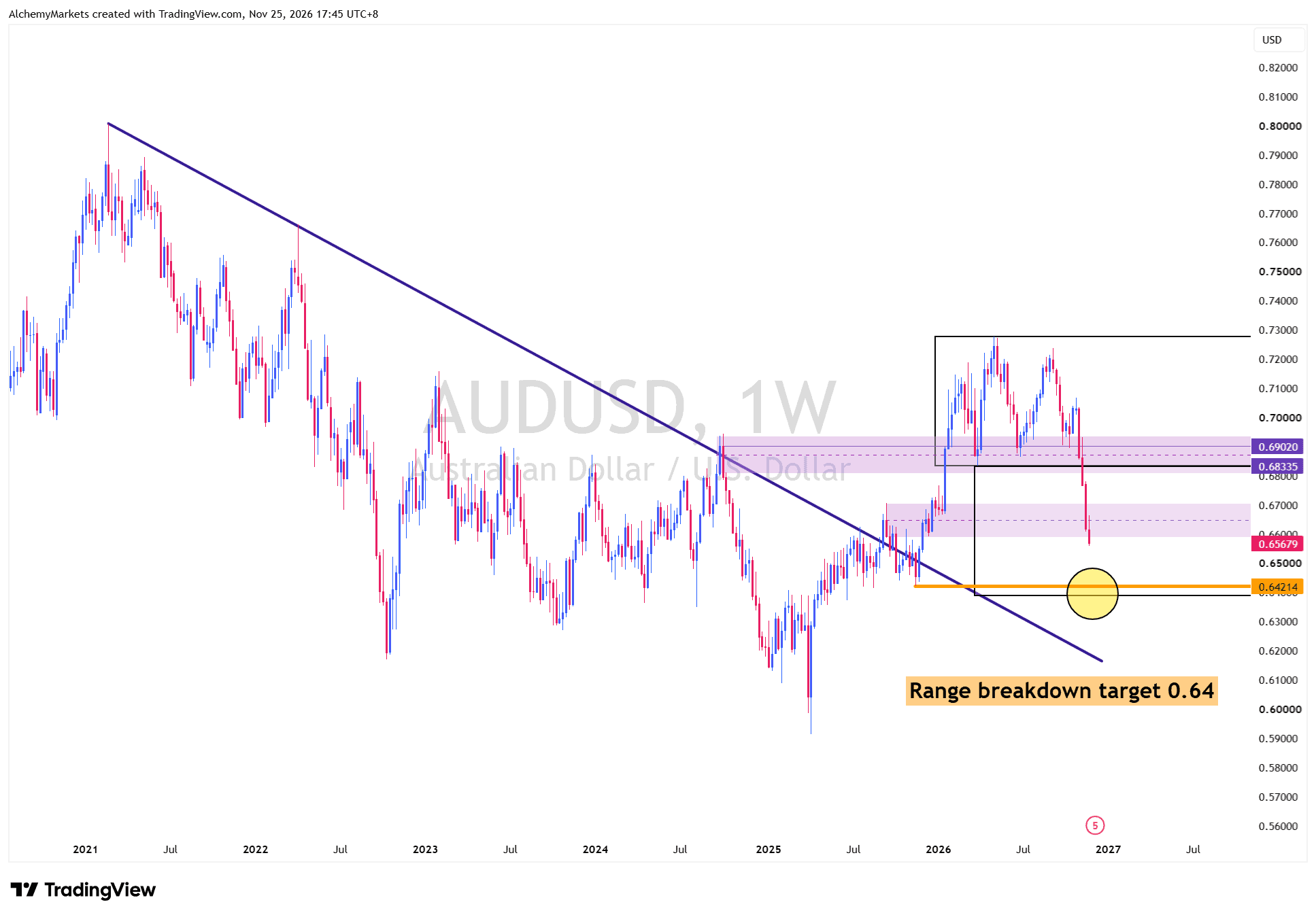
Watch EUR/USD for the combination of US rate expectations and European export exposure, USD/CNH for signs of trade-related pressure or policy support, and AUD/USD for changes in demand for risk-sensitive assets.
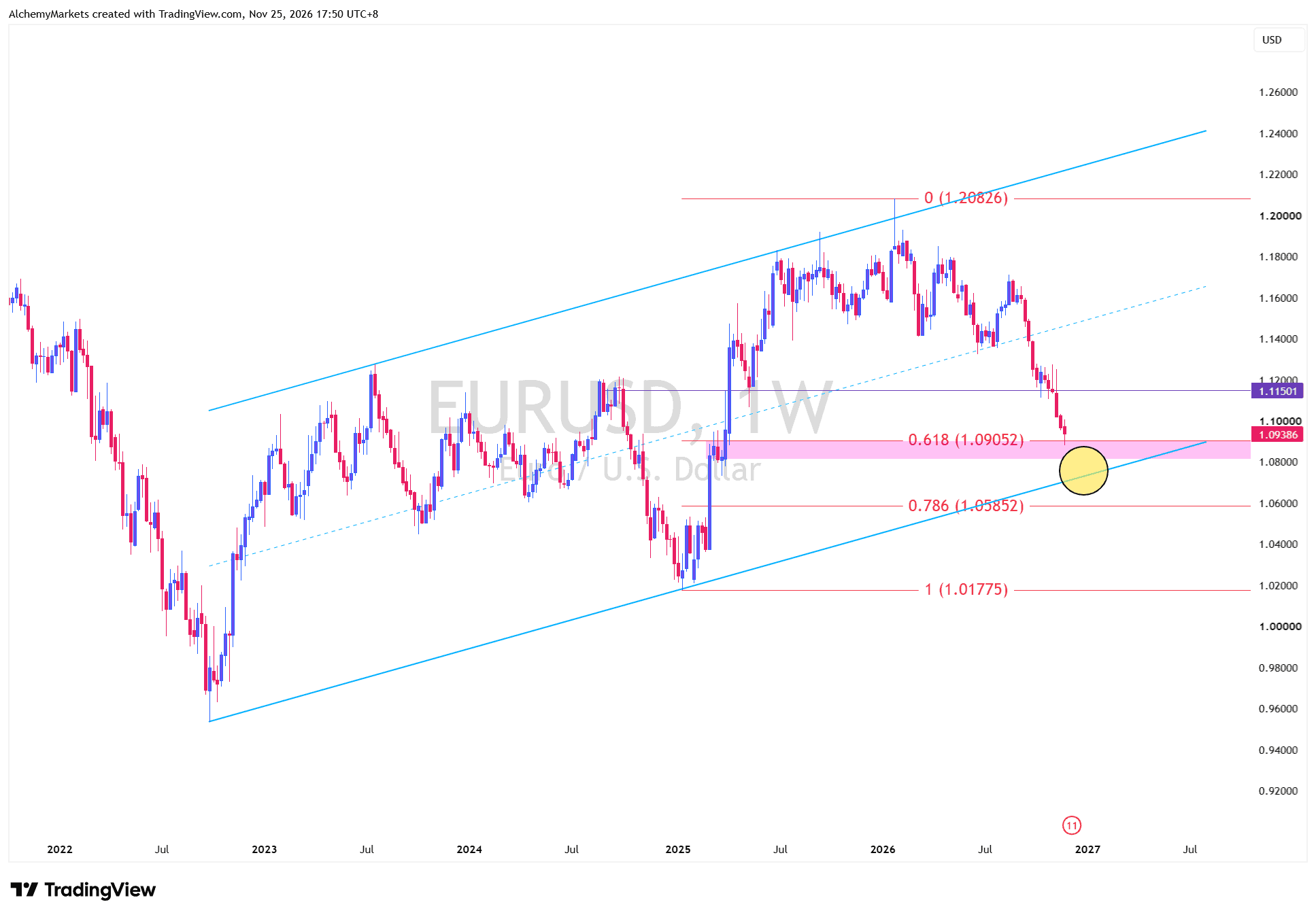
Market Scenarios Ahead of the US Session
| Development | USD / yields | Other markets |
| Hot PCE and broader tariff plans | Higher front-end yields; potential USD support | Pressure on risk-sensitive currencies and gold if real yields rise |
| Soft PCE and limited tariff measures | Potential yield decline and USD weakness | Relief for EUR/USD, AUD/USD and gold if risk appetite improves |
| Tariff escalation raises growth fears | Ambiguous USD; long yields may fall on growth concerns | Export-sensitive currencies vulnerable; gold reaction depends on liquidity and real yields |
With October PCE due at 8:30 am ET, the US two-year Treasury yield will be a useful guide to whether the market sees the incoming data as inflationary or disinflationary.
The dollar’s response to tariff headlines should be read alongside that yield reaction, rather than assuming renewed trade tensions must produce a stronger dollar.