Verfasst von:


- Weekly Outlook
- März 21, 2026
- 6 Min. Lesezeit
Cautious Markets Ahead: Fed Signals Cuts While SPX Faces Critical Breakdown Risk
Global Market Overview
Markets enter the week in a deceptively calm state. While the economic calendar appears quiet, underlying risks are quietly building. Central bank messaging, geopolitical tensions, and technical breakdowns in major indices are setting the stage for potential volatility.
Why This Week Matters Despite Light Data
Even without major data releases, markets are far from idle. Federal Reserve officials are scheduled to speak throughout the week, and their tone could heavily influence expectations around interest rates.
In addition, ongoing geopolitical tensions—particularly in the Middle East—continue to ripple through energy and supply chains.
Key Themes Driving Sentiment
- Increasing fears of stagflation
- Weakening labor market confidence
- Central bank divergence
- Technical fragility in equity markets
United States Outlook
The US outlook remains dominated by monetary policy expectations and rising macroeconomic risks.
Fed Policy Expectations and Rate Cuts
The Federal Reserve’s latest projections still suggest a 25 basis point rate cut this year, followed by another next year. However, markets are becoming more skeptical about the path forward.
Understanding the Dot Plot Signal
The Fed’s “dot plot” reflects policymakers’ expectations for interest rates. Currently, it indicates a gradual easing cycle—but not an aggressive one.
Why Markets Expect Easing
Despite inflation concerns, markets believe:
- Growth is slowing
- Labor demand is weakening
- Financial conditions are tightening
This combination supports the case for rate cuts rather than hikes.
Rising Stagflation Concerns
One of the biggest emerging risks is stagflation—a mix of slow growth and persistent inflation.
Impact of Energy Prices
Higher energy costs are feeding into broader inflation. Oil and gas prices remain sensitive to geopolitical disruptions, especially around critical shipping routes.
Supply Chain Risks via Hormuz
The Straits of Hormuz is a key global trade artery. Any disruption here can significantly affect:
- Energy supply
- Shipping costs
- Industrial production
Fertiliser, Food, and Plastics Pressure
Prolonged disruptions could lead to rising prices in:
- Fertilisers (impacting agriculture)
- Food (consumer inflation)
- Plastics (industrial costs)
While the US is somewhat insulated compared to Europe and Asia, it is not immune.
Labor Market Challenges
The labor market is increasingly becoming a weak link in the US economy.
Weak Hiring Sentiment
Even before geopolitical tensions escalated, hiring momentum was slowing. Businesses are now even less likely to expand headcount amid uncertainty.
Fed’s Dual Mandate Under Pressure
The Fed must balance:
- Price stability
- Maximum employment
With both sides under strain, the argument for rate cuts strengthens further.
United Kingdom Outlook
The UK faces a different but equally complex macro environment.
Inflation Data Preview
February CPI data is due midweek, but its impact is expected to be minimal.
Headline vs Services Inflation
- Headline inflation is likely unchanged
- Services inflation may dip slightly
However, these short-term movements are not driving policy decisions.
Energy Price Lag Effects
The real concern lies ahead.
Natural Gas Impact on CPI
Rising natural gas prices will feed into electricity bills, but with a delay. This means:
- Inflation may fall near 2% temporarily
- But could rise again later in the year
Bank of England Policy Path
The Bank of England is expected to remain cautious.
Why a Prolonged Pause Is Likely
Given:
- Sticky inflation risks
- Delayed energy impacts
- Weak growth outlook
The most likely path is a prolonged pause, rather than immediate rate cuts or hikes.
SPX Technical Analysis
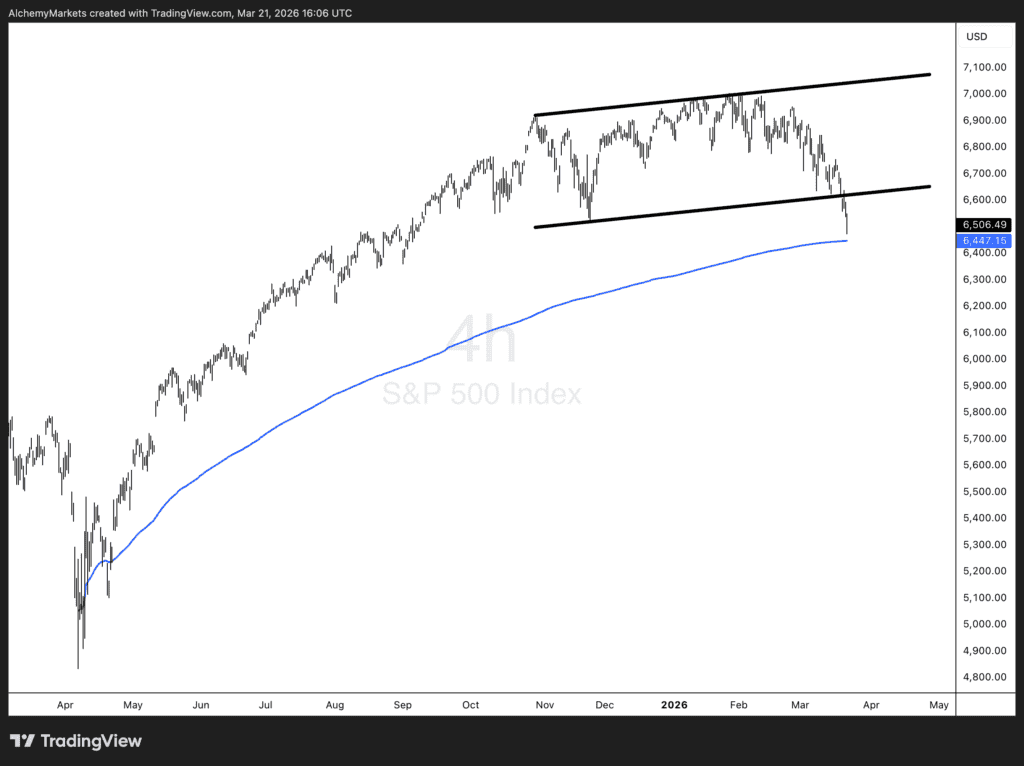
The S&P 500 is sending increasingly concerning signals from a technical perspective.
Rising Channel Breakdown Explained
For several months, the SPX had been trading within a well-defined rising channel. This structure provided a clear trend of higher highs and higher lows.
However, that pattern has now broken.
Key Support Levels Lost
- The lower boundary of the channel has been breached
- The 6500 base level has also been broken
This signals a potential shift in market structure from bullish to neutral or even bearish.
Anchored VWAP as Critical Level
The next key level to watch is the anchored VWAP from the April 2025 lows.
Bullish vs Bearish Scenarios
- Bullish Case:If price reclaims and holds above the VWAP, this could act as dynamic support and stabilise the market.
- Bearish Case:If price fails to break above this level, downside risk increases significantly.This could confirm a broader trend reversal and open the door to deeper corrections.
Key Risks to Watch This Week
Geopolitical Developments
- Middle East tensions
- Shipping disruptions
- Energy market volatility
Central Bank Communication
- Tone of Fed speakers
- Any shift in rate expectations
- Signals from the Bank of England
Weekly Trading Strategy Insights
Defensive vs Opportunistic Positioning
Given current conditions:
Defensive Approach:
- Focus on capital preservation
- Reduce exposure to high-beta assets
Opportunistic Approach:
- Watch key technical levels (VWAP)
- Look for confirmation before entering positions
FAQs
1. Why is the Fed expected to cut rates despite inflation risks?
Because economic growth and employment are weakening, and the Fed must support both sides of its mandate.
2. What is stagflation and why is it a concern?
Stagflation is when inflation remains high while growth slows. It’s difficult for central banks to manage.
3. Why is the Straits of Hormuz important?
It’s a major global shipping route for oil and goods. Disruptions can impact global prices.
4. What does the SPX channel breakdown mean?
It suggests a potential trend reversal and increased downside risk.
5. What is anchored VWAP?
It’s a volume-weighted average price starting from a specific point, often used as a key support/resistance level.
6. What is the Bank of England likely to do next?
The BoE is expected to pause rates for an extended period due to mixed economic signals.
Conclusion
This week may lack headline economic data, but it is far from uneventful. Central bank messaging, geopolitical tensions, and technical signals in equity markets are all aligning to create a cautious outlook.
The Federal Reserve appears increasingly likely to cut rates, but rising stagflation risks complicate the picture. Meanwhile, the UK faces delayed inflation pressures that limit policy flexibility.
From a technical standpoint, the SPX breakdown and its interaction with the anchored VWAP could be a defining moment for market direction. Traders and investors should remain vigilant, as the balance between risk and opportunity becomes more delicate.