Verfasst von:

- Opening Bell
- März 5, 2026
- 3 Min. Lesezeit
EUR/USD Breaks Rising Channel as Energy Prices Surge
EUR/USD is starting the session on the defensive after breaking below the lower boundary of its rising channel on the daily chart, a technical development that signals a potential shift in momentum after months of gradual upside. The pair is now trading near 1.16 and appears vulnerable to a deeper retracement toward the 1.1530–1.1550 support zone, particularly as macro headwinds build for the euro.
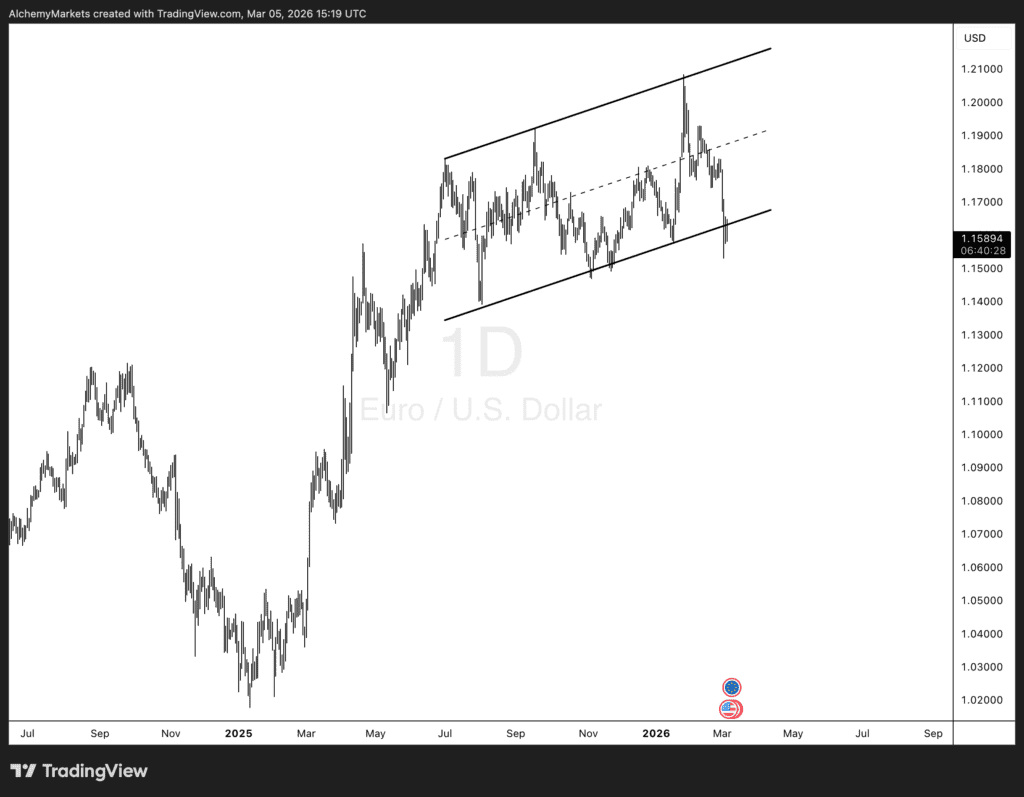
The break lower comes as energy prices move bid again, pushing short-dated yields higher globally and reinforcing pressure on growth-sensitive currencies. While rising yields might normally support a currency, the current move reflects inflation concerns tied to geopolitical tensions and energy supply risks, which are weighing more heavily on European growth expectations than those in the US.
From a technical perspective, the structure that had contained price action since mid-2025 now appears compromised. The daily close below channel support suggests the market may be transitioning from a slow grind higher into a corrective phase. If selling pressure persists, the next notable support sits around 1.1530/50, a zone that previously acted as consolidation support earlier in the year.
On the data front, the US Challenger job cuts report has already been released and failed to deliver the kind of labour-market deterioration that could weaken the dollar. February layoffs came in at 48,307, sharply lower than January’s 108,435 figure, indicating that corporate layoffs eased significantly month-over-month.
While hiring plans remain weak, the drop in announced layoffs suggests the US labour market is not deteriorating rapidly enough to trigger broad dollar selling, limiting any upside relief for EUR/USD.
Attention also turned to ECB speakers through the session. Comments from policymakers including Luis de Guindos and Olli Rehn highlighted concerns that rising energy prices could complicate the inflation outlook and weigh on economic growth if geopolitical tensions persist. Officials warned that sustained energy shocks could push inflation higher again while simultaneously dampening activity — a challenging backdrop for policy.
These remarks reinforce the broader narrative that the eurozone faces a more acute growth risk from the current energy situation than the United States. Even though higher energy prices are pushing yields higher globally, the underlying growth drag is likely to keep the euro offered on rallies.
Christine Lagarde’s appearance later in the day at the Annual Global Risk Lecture echoed similar caution around geopolitical uncertainty and energy-driven inflation risks, adding little in the way of fresh policy guidance. With the ECB already signaling flexibility but no immediate shift in policy stance, markets continue to view the euro as vulnerable to external shocks.
Taken together, the combination of a technical channel break, resilient US labour data, and energy-driven macro risks leaves EUR/USD looking fragile into the next sessions.
Unless energy markets stabilise or US data meaningfully deteriorates, rallies in the pair are likely to remain shallow. For now, the bias appears tilted toward further downside probing toward the 1.1530/50 region, particularly if global risk sentiment remains soft and European equities continue to underperform their US counterparts.